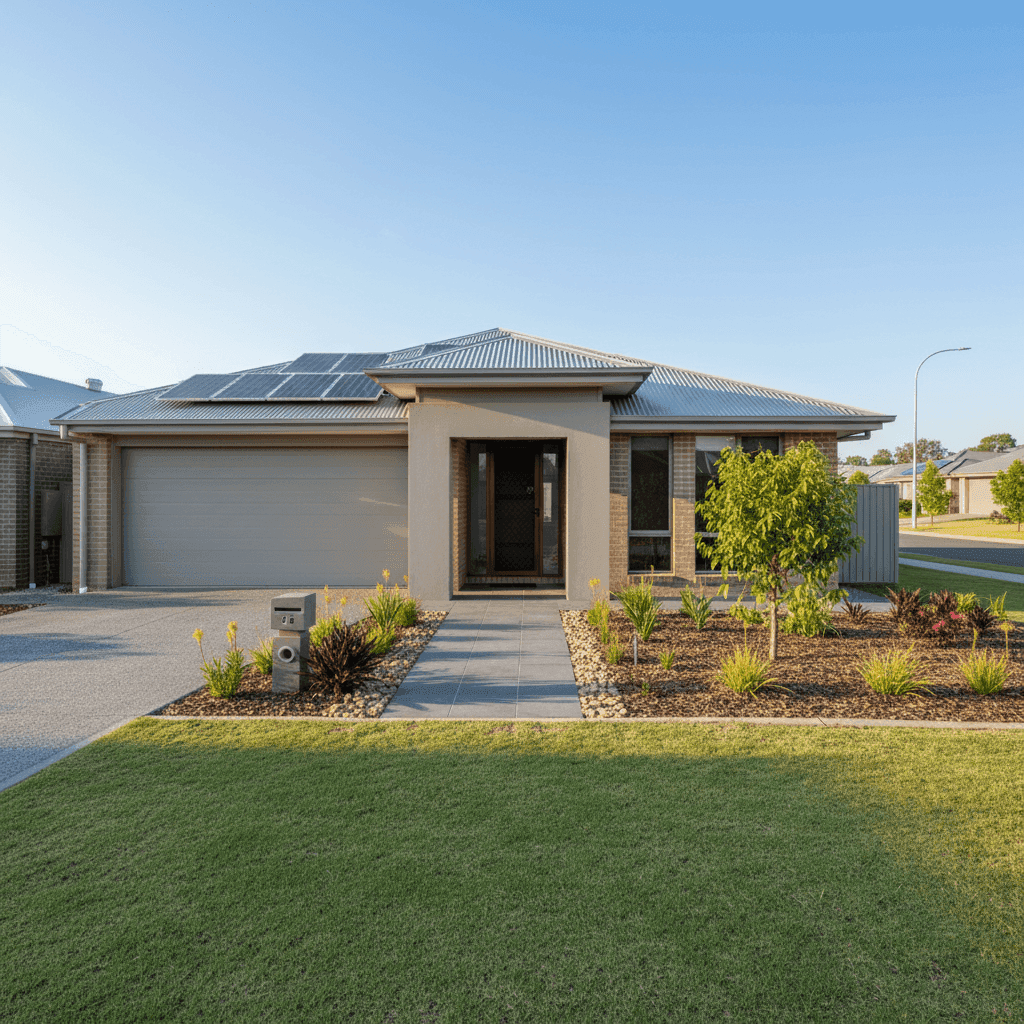
If you own a free standing home in Kelso, QLD 4815, you already know that insuring a property in the Townsville region comes with some unique considerations. From cyclone exposure to the cost of rebuilding in a regional area, home insurance premiums here can vary dramatically — and understanding what's driving your quote is the first step to making sure you're not overpaying.
This article breaks down a real home and contents insurance quote for a four-bedroom, two-bathroom brick veneer home in Kelso, comparing it against local, state, and national benchmarks to help you decide whether it stacks up.
---
Is This Quote Fair?
The quote in question sits at $8,284 per year (or $794/month), covering both building (sum insured: $675,000) and contents ($120,000), with a $2,000 building excess and $1,000 contents excess.
Our price rating for this quote is EXPENSIVE — above average for the suburb.
To put that in context: the average home and contents premium in Kelso is $5,004 per year, and the median sits at $4,004. This quote comes in at roughly 65% above the suburb average and more than double the suburb median. Even compared to the 75th percentile of local quotes ($6,007), this premium is noticeably higher.
That said, "expensive" doesn't automatically mean "wrong." Several property-specific factors — which we'll explore below — can legitimately push a premium above the local norm. The key question is whether the coverage and risk profile justify the price.
---
How Kelso Compares
Understanding where Kelso sits in the broader insurance landscape helps put individual quotes in perspective. Here's how the numbers look across different reference points:
| Benchmark | Average Premium | Median Premium |
|---|---|---|
| Kelso (QLD 4815) | $5,004/yr | $4,004/yr |
| Townsville LGA | $7,340/yr | — |
| Queensland | $9,129/yr | $3,903/yr |
| National | $5,347/yr | $2,764/yr |
A few things stand out here. Queensland's average premium of $9,129 is the highest in the country — largely driven by cyclone-prone coastal and near-coastal regions like Townsville. However, the median of $3,903 tells a different story: the majority of QLD policyholders pay far less, meaning a relatively small number of high-risk properties are pulling the average up significantly.
Kelso's suburb average of $5,004 is below both the Townsville LGA average ($7,340) and the QLD state average, suggesting that while the area carries cyclone risk, it's not among the highest-rated pockets in the region. The quote under review, at $8,284, sits above the Townsville LGA average — which is worth investigating further.
You can explore more data for this suburb at the Kelso insurance stats page, compare it against Queensland-wide figures, or see how it stacks up against the national picture.
---
Property Features That Affect Your Premium
Every property tells its own risk story, and this one has several features that insurers weigh carefully.
Cyclone Risk Area
This is the single biggest factor. Kelso falls within a designated cyclone risk zone, which means insurers apply specific loading to premiums to account for the potential cost of wind, rain, and storm surge damage. Cyclone cover is typically included in standard home insurance policies in QLD, but the associated risk pricing can be substantial — and it's largely non-negotiable based on your postcode.
Brick Veneer Walls & Colorbond Roof
Brick veneer construction is generally viewed favourably by insurers — it's durable, fire-resistant, and performs reasonably well in high-wind events. A steel Colorbond roof is similarly well-regarded in cyclone-prone areas, as it's lightweight, resistant to corrosion, and less prone to debris-related damage than some tile alternatives. These features may actually be working in the homeowner's favour compared to older or timber-framed constructions.
Slab Foundation & Tile Flooring
A concrete slab foundation is solid and stable, reducing the risk of subsidence or termite ingress compared to suspended timber floors. Tile flooring is durable and easy to replace, which can keep contents claims lower. Both are neutral-to-positive factors from an underwriting perspective.
Solar Panels
The property includes rooftop solar panels, which add replacement value to the building sum insured. Solar systems can cost $5,000–$15,000+ to replace, and if they're not adequately covered under the building sum insured, you could be left short after a major weather event. It's worth confirming with your insurer that solar panels are explicitly included in your policy.
Ducted Climate Control
Ducted air conditioning is a significant fixed asset — systems can cost $10,000–$20,000 to replace. Like solar, it contributes to the overall rebuilding cost and should be factored into your building sum insured calculation. Underinsurance is a real risk when high-value fixtures aren't properly accounted for.
Building Size & Sum Insured
At 214 sqm with a building sum insured of $675,000, the implied rebuild cost works out to approximately $3,154 per sqm. This is on the higher end but not unreasonable for a regional Queensland property with modern fittings, solar, and ducted cooling — particularly given elevated construction costs in regional areas post-pandemic.
---
Tips for Homeowners in Kelso
1. Shop Around — Especially in Cyclone Zones
Insurers price cyclone risk very differently. Some have pulled back from the North Queensland market entirely, while others have developed more competitive products. With a 47-quote sample in Kelso showing a wide spread (from $2,649 at the 25th percentile to $6,007 at the 75th), there's clearly significant variation in how insurers assess this suburb. Getting multiple quotes is one of the most effective ways to find a better deal.
2. Review Your Building Sum Insured Annually
Construction costs in regional Queensland have risen sharply in recent years. If your sum insured hasn't kept pace, you may be underinsured — meaning you'd receive a reduced payout after a total loss. Equally, if your sum insured is inflated beyond realistic rebuild costs, you're paying more premium than necessary. Use a building cost calculator or speak to a quantity surveyor to validate your figure.
3. Consider Your Excess Strategy
This quote carries a $2,000 building excess. Opting for a higher voluntary excess can meaningfully reduce your annual premium — particularly useful if you're in a position to self-fund smaller claims. Conversely, a lower excess may be worth paying for if cash flow is a concern after a major event.
4. Confirm Solar and Climate Control Are Covered
Don't assume your policy automatically covers solar panels and ducted systems at full replacement value. Check the policy wording carefully and, if necessary, request a policy endorsement to ensure these assets are explicitly listed and covered.
---
Ready to Compare?
If this quote feels steep, you're not alone — and there's a good chance a better price is available. CoverClub makes it easy to compare home and contents insurance quotes for properties in Kelso and across Queensland, so you can see where your premium sits and whether you're getting fair value.