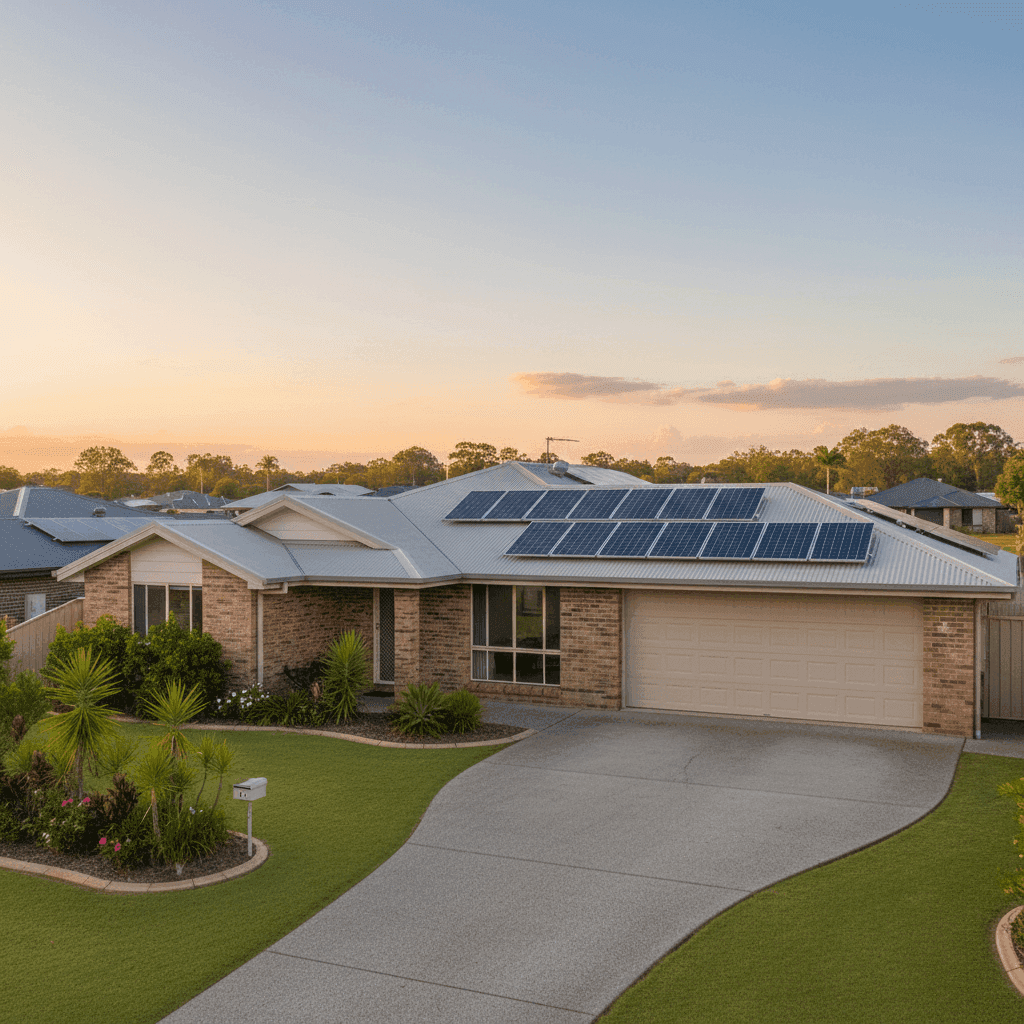
Getting a clear picture of what you should be paying for home insurance in Kelso, QLD 4815 can be surprisingly difficult — especially in a region where premiums vary so dramatically from one property to the next. This article breaks down a real home and contents insurance quote for a three-bedroom, free-standing home in Kelso, examining how it stacks up against local, state, and national benchmarks, and what factors are likely driving the price.
---
Is This Quote Fair?
The short answer: yes — and then some. This quote came in at $1,710 per year (or $171/month), which CoverClub rates as CHEAP — Below Average. That's a strong result for any homeowner, but it's particularly impressive given Kelso's local insurance landscape.
To put it in perspective:
- The suburb average for Kelso (QLD 4815) sits at $7,068/yr, based on 71 quotes in our database
- The suburb median is $4,470/yr
- Even the 25th percentile — meaning only one-quarter of quotes are cheaper — is $2,724/yr
This quote at $1,710 comes in below the cheapest quarter of quotes in the suburb. That's a genuinely exceptional outcome. Homeowners in Kelso are frequently quoted several times this amount, so landing a figure this low suggests a combination of smart cover selections, a well-maintained property, and possibly a very competitive insurer.
It's worth noting that the LGA average for Townsville is even higher at $7,258/yr, reinforcing just how far below the local norm this premium sits.
---
How Kelso Compares
Kelso's insurance costs don't exist in a vacuum — they reflect the broader challenges of insuring property in North Queensland. Here's how the numbers line up across different geographic levels:
| Benchmark | Average Premium | Median Premium |
|---|---|---|
| Kelso (QLD 4815) | $7,068/yr | $4,470/yr |
| Queensland | $4,547/yr | $3,931/yr |
| National | $2,965/yr | $2,716/yr |
The gap between Kelso and the national average is striking. The suburb average is nearly 2.4 times the national average, and even the Kelso median is well above the Queensland state average of $4,547/yr.
This reflects a well-documented reality: North Queensland is one of the most expensive regions in Australia for home insurance. Cyclone exposure, flooding risk, and the high cost of rebuilding in regional areas all push premiums up significantly. You can explore how Kelso's stats compare in detail or zoom out to view national insurance benchmarks for broader context.
At $1,710/yr, this particular quote is $5,358 below the suburb average — an annual saving that's well worth paying attention to.
---
Property Features That Affect Your Premium
Every home tells a story through its features, and insurers read that story carefully when pricing a policy. Here's how the characteristics of this particular property likely influence the premium:
Cyclone Risk Area
This is the elephant in the room for any Kelso property. Located within a designated cyclone risk zone, homes in this area attract significantly higher base premiums from most insurers. The fact that this quote remains low despite this classification is notable.
Brick Veneer Walls & Colorbond Roof
Brick veneer construction is generally viewed favourably by insurers — it's durable, fire-resistant, and holds up reasonably well in high-wind events. Paired with a steel Colorbond roof, which is purpose-built to handle the extremes of the Australian climate (including cyclonic conditions when properly installed), this combination can work in a homeowner's favour at assessment time.
Slab Foundation & Tile Flooring
A concrete slab foundation is a stable, low-maintenance base that reduces concerns about subsidence or underfloor flooding. Tile flooring is similarly practical — it's durable, easy to replace if damaged, and doesn't carry the same water-damage risks as carpet or timber.
Solar Panels
Solar panels are listed as a feature of this property, and it's important to confirm with your insurer that they are explicitly covered under the building sum insured. Some policies include them automatically; others treat them as an optional add-on. Given the $472,000 building sum insured, there should be adequate headroom — but always verify.
Ducted Climate Control
Ducted air conditioning systems are a significant fixed asset and can be costly to repair or replace. Most standard building policies will cover these as part of the structure, but it's worth double-checking the policy wording, particularly around storm or surge damage.
Contents Cover: $40,000
The contents sum insured of $40,000 is on the modest side for a three-bedroom home. While it may be appropriate depending on the household's possessions, it's worth doing a proper contents audit to ensure items like electronics, appliances, furniture, and clothing are adequately covered. Under-insuring contents is a common mistake that only becomes apparent at claim time.
Building Excess: $3,000
The $3,000 building excess is relatively high, which is likely one of the factors contributing to the lower annual premium. A higher excess means the insurer takes on less small-claim risk, and they price accordingly. Just make sure this figure is manageable if you ever need to make a claim.
---
Tips for Homeowners in Kelso
Living in a cyclone-prone region of Queensland comes with unique insurance considerations. Here are four practical tips to help you stay protected and keep costs under control:
- Review your building sum insured annually. Construction costs in regional Queensland have risen sharply in recent years. The $472,000 sum insured should reflect what it would actually cost to rebuild your home from scratch — not its market value. Use a building cost calculator or speak to a local builder to sense-check the figure each year.
- Cyclone-proof your property where possible. Insurers and government programmes sometimes offer premium discounts or rebates for homes that undergo cyclone resilience upgrades — things like roof strapping, impact-resistant shutters, and reinforced garage doors. The Queensland Government's Household Resilience Program has historically provided grants for eligible homeowners; check if any current schemes apply to your property.
- Don't set and forget your contents cover. A $40,000 contents sum may have been accurate when the policy was first taken out, but it's easy for the value of your belongings to creep up over time. New appliances, furniture, and electronics all add up. Revisit this figure each renewal.
- Compare quotes at every renewal. This quote is already well below the suburb average, but the insurance market changes constantly. New insurers enter the market, and pricing models shift. Running a fresh comparison each year through a platform like CoverClub takes only minutes and could save you thousands — particularly in a high-premium suburb like Kelso.
---
Ready to See What You Could Pay?
Whether you're a Kelso local or elsewhere in Queensland, comparing home insurance quotes is one of the simplest ways to avoid overpaying. CoverClub makes it easy to see real quotes side by side, with transparent pricing data drawn from across the market.
Get a home insurance quote today at CoverClub and find out whether your current premium is as competitive as it could be.