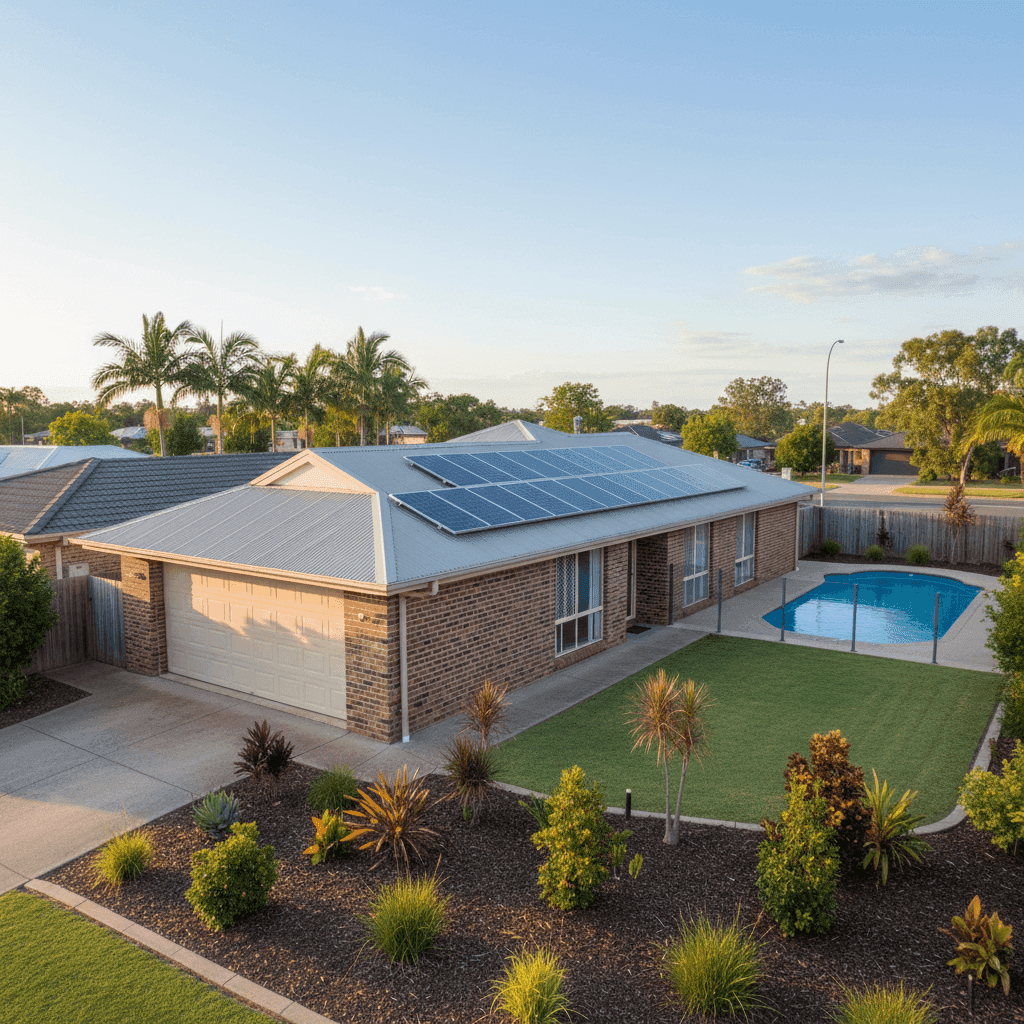
If you own a free standing home in Kelso, QLD 4815, you already know that insurance isn't cheap in this part of North Queensland. But how do you know whether the quote sitting in your inbox is genuinely competitive — or whether you're paying well over the odds? In this article, we break down a real building insurance quote for a four-bedroom, brick veneer home in Kelso, compare it against suburb, state, and national benchmarks, and share practical tips to help you manage your premium.
---
Is This Quote Fair?
The quote in question is $9,868 per year (or $946/month) for building-only cover on a 205 sqm free standing home with a sum insured of $700,000 and a building excess of $5,000.
Our rating for this quote is EXPENSIVE — Above Average.
Based on data from 47 quotes collected for Kelso (postcode 4815), the suburb average sits at $5,004/yr and the median at $4,004/yr. This quote comes in at nearly double the suburb median and sits well above the 75th percentile of $6,007/yr — meaning it's more expensive than at least three-quarters of comparable quotes in the area.
That said, context matters. North Queensland is one of the most challenging insurance markets in Australia, and several features of this particular property — including its cyclone-risk location, swimming pool, and solar panels — push premiums higher than a standard suburban home elsewhere in the country. The $700,000 sum insured is also on the higher end, which directly inflates the annual cost.
---
How Kelso Compares
To put this quote in proper perspective, here's how Kelso stacks up against broader benchmarks:
| Benchmark | Average Premium | Median Premium |
|---|---|---|
| Kelso (4815) | $5,004/yr | $4,004/yr |
| Townsville LGA | $7,340/yr | — |
| Queensland | $9,129/yr | $3,903/yr |
| National | $5,347/yr | $2,764/yr |
A few things stand out here. First, Queensland's state average of $9,129/yr is dramatically higher than the national average of $5,347/yr — a gap driven largely by the cyclone and flood exposure that affects much of the state. Second, the wide spread between Queensland's average ($9,129) and median ($3,903) tells you that a relatively small number of high-risk or high-value properties are pulling the average up significantly.
At $9,868/yr, this quote is actually close to the Queensland state average — which makes it less alarming in a statewide context, but still above what most Kelso homeowners appear to be paying locally. The Townsville LGA average of $7,340/yr provides a useful middle-ground reference: this quote exceeds even that figure by around $2,500/yr.
---
Property Features That Affect Your Premium
Several characteristics of this property have a meaningful impact on what insurers charge. Understanding them helps you assess whether your quote is reasonable — and where there might be room to negotiate or adjust.
📍 Cyclone Risk Zone
Kelso falls within a designated cyclone risk area. This is arguably the single biggest driver of elevated premiums in North Queensland. Insurers price in the likelihood of wind and storm damage, and properties in cyclone-prone regions can pay two to three times more than equivalent homes in southern states. This factor alone explains much of the gap between this quote and the national median.
🏠 Brick Veneer Walls & Colorbond Roof
Brick veneer construction is generally viewed favourably by insurers — it's durable, fire-resistant, and performs reasonably well in high-wind events compared to lighter cladding materials. A steel Colorbond roof is also a solid choice in cyclone country, as it's less prone to lifting than some tile alternatives. These features likely prevent the premium from being even higher.
🏗️ Slab Foundation & Tile Flooring
A concrete slab foundation offers good stability and reduces the risk of underfloor flooding or pest-related structural damage. Combined with tile flooring — which is resilient to moisture and easy to replace — these features present a relatively low-risk profile to insurers from a structural standpoint.
🏊 Swimming Pool
Pools add to the replacement cost of a property and introduce liability considerations that some insurers factor into their pricing. With a $700,000 sum insured, the pool's inclusion in the rebuild cost is already baked in, but it can also affect the risk assessment for certain policy types.
☀️ Solar Panels
Solar panels are increasingly common in Queensland, but they do add to the insured value of a home and can be a source of claims (storm damage, hail, electrical faults). Insurers vary in how they treat solar — some include it automatically in building cover, others require it to be specified. It's worth confirming your policy explicitly covers your solar system.
⭐ Above Average Fittings
Above average fittings quality — think stone benchtops, quality cabinetry, premium fixtures — increases the cost to rebuild or repair, which flows directly into a higher sum insured and, consequently, a higher premium. A $700,000 sum insured for a 205 sqm home reflects this elevated finish level.
---
Tips for Homeowners in Kelso
If you're looking to get better value on your home insurance without compromising on protection, here are four strategies worth considering:
- Shop around every renewal. Loyalty rarely pays in the insurance market. Insurers frequently offer their best rates to new customers, meaning long-term policyholders can end up overpaying. Use a comparison tool like CoverClub at each renewal to ensure you're still on a competitive rate.
- Review your sum insured carefully. Over-insuring is a common and costly mistake. Make sure your $700,000 building sum insured reflects the actual cost to rebuild your home — not its market value, which includes land. A quantity surveyor or online rebuild calculator can help you arrive at a more accurate figure.
- Consider a higher excess to reduce your premium. This quote already carries a $5,000 building excess. If you're comfortable self-insuring smaller claims, accepting a higher excess can meaningfully reduce your annual premium. Just make sure it's an amount you could genuinely afford to pay in the event of a claim.
- Cyclone-proof your home where possible. Some insurers offer discounts for homes that meet cyclone-resilience standards — things like roof tie-downs, shutters, or upgraded fixings. If your home was built in 1990, it may predate some current cyclone-resistance requirements. Upgrades not only improve safety but can also work in your favour at renewal time.
---
Compare Your Options with CoverClub
Whether you're reviewing an existing policy or shopping for cover on a new property, it pays to compare. CoverClub makes it easy to see how your quote stacks up against real data from your suburb and state. Get a quote today and find out if you could be paying less for the same level of protection — or getting more cover for what you're already spending.