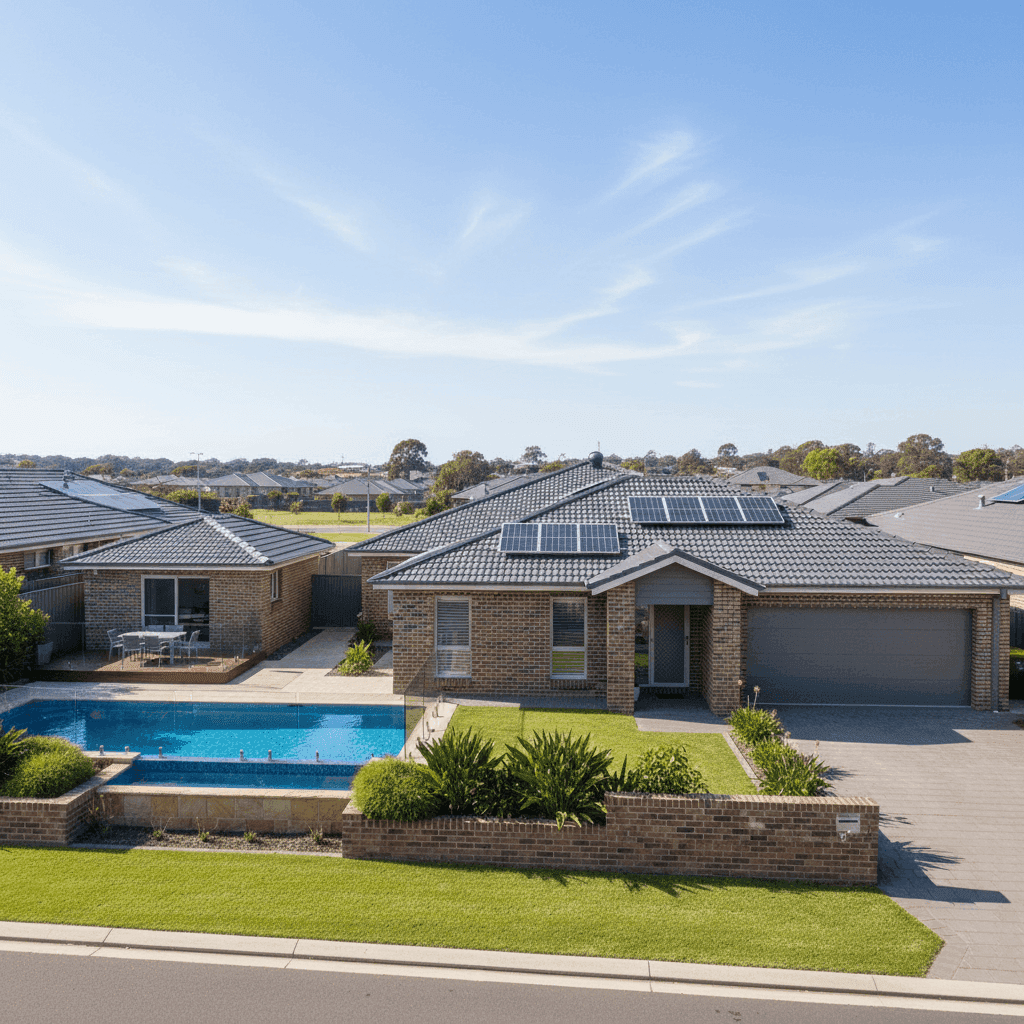
Kembla Grange is a quiet residential suburb nestled in the Wollongong local government area of New South Wales, known for its relaxed lifestyle, proximity to the Illawarra escarpment, and a strong sense of community. For owners of a free standing home in this suburb, understanding what you should be paying for home and contents insurance — and whether your current quote is fair — can make a real difference to your household budget.
This article breaks down a recent home and contents insurance quote for a four-bedroom, three-bathroom free standing home in Kembla Grange (postcode 2526), comparing the premium against local, state, and national benchmarks, and offering practical tips to help you get the best value cover.
---
Is This Quote Fair?
The quote in question comes in at $6,224 per year (or $637/month) for a combined home and contents policy, covering a building sum insured of $988,000 and contents valued at $120,000. The building excess is $3,000 and the contents excess is $1,000.
Our pricing analysis rates this quote as CHEAP — below average relative to comparable policies. That's genuinely good news for the homeowner. Despite a relatively high building sum insured of nearly $1 million — which reflects the size, quality, and features of the property — the annual premium sits well below what many NSW homeowners are paying for similar cover.
To put it in perspective: the NSW state average premium is $9,528 per year, meaning this quote is roughly 35% cheaper than the average policy across the state. Even against the national average of $5,347 per year, this quote is only modestly higher, which is impressive given the significant building value and the range of features on this property.
It's worth noting that averages can be skewed by high-risk properties and high-value policies, so the median is often a more reliable indicator of what a "typical" homeowner pays. The NSW state median sits at $3,770/yr and the national median at $2,764/yr — both lower than this quote. However, those median figures reflect a broad cross-section of properties, many of which are smaller, older, or carry lower sums insured. For a 235 sqm home built in 1995 with a pool, solar panels, ducted climate control, and a granny flat, a premium of $6,224 is very competitive.
---
How Kembla Grange Compares
While suburb-level data for Kembla Grange isn't currently available in our database, we can draw meaningful comparisons using broader benchmarks. You can explore available NSW insurance statistics and national home insurance data on CoverClub.
| Benchmark | Annual Premium |
|---|---|
| This Quote | $6,224 |
| Wollongong LGA Average | $2,751 |
| NSW State Average | $9,528 |
| NSW State Median | $3,770 |
| National Average | $5,347 |
| National Median | $2,764 |
The Wollongong LGA average of $2,751/yr is notably lower than this quote — but that figure encompasses a wide range of properties, including smaller homes, units, and lower-value buildings across the broader Wollongong region. When you account for the scale and features of this particular property (nearly $1.1 million in total insured value), the premium is proportionally reasonable.
Kembla Grange is not classified as a cyclone risk area, which is a meaningful factor — properties in northern Queensland or coastal NT, for example, can attract premiums two to three times higher due to cyclone exposure. This contributes to the relatively favourable pricing seen here.
Check out the Kembla Grange suburb stats page as our data grows, and return to see how local premiums evolve over time.
---
Property Features That Affect Your Premium
Several characteristics of this property directly influence the cost of insurance — some pushing the premium up, others helping to keep it in check.
Brick veneer construction and tiled roof are both viewed favourably by insurers. Brick veneer walls offer solid fire and impact resistance, while tiled roofs are durable and less susceptible to storm damage than corrugated iron or Colorbond in many scenarios. Together, these materials generally attract lower premiums compared to weatherboard or fibro homes.
Slab foundation is standard for homes of this era in NSW and presents no particular risk concerns for insurers, unlike older stumped foundations that can be more vulnerable to subsidence or termite ingress.
The swimming pool adds liability exposure and increases the replacement cost of the property, which is reflected in the building sum insured. Pools also require specific inclusions in your policy to ensure you're covered for accidental damage, leaks, and associated structures.
Solar panels are increasingly common on Australian homes, but they're not always automatically covered under a standard building policy — or they may be covered only up to a sub-limit. It's important to confirm with your insurer that your solar system is explicitly included in the building sum insured.
Ducted climate control is a significant fixed installation that adds to the building's replacement value. Systems like these can cost $10,000–$25,000 or more to replace, so ensuring the building sum insured adequately accounts for this is essential.
The granny flat is perhaps the most significant structural consideration. A secondary dwelling on the same lot adds considerable rebuild cost and potential rental liability. Insurers treat granny flats differently — some include them automatically under the main building policy, while others require a separate endorsement or even a separate policy. Always confirm your granny flat is explicitly covered and that the sum insured reflects its full rebuild value.
---
Tips for Homeowners in Kembla Grange
1. Review your building sum insured carefully At $988,000, the building sum insured is substantial — and rightly so, given the size and features of this home. But it's worth having a quantity surveyor or using an online rebuild cost calculator to verify this figure periodically. Underinsurance is one of the most common — and costly — mistakes Australian homeowners make, particularly as construction costs have risen sharply in recent years.
2. Confirm your granny flat and solar panels are covered Don't assume these are automatically included. Contact your insurer directly and ask for written confirmation that the granny flat is covered under the policy and that the solar panel system is included in the building sum insured (or separately listed). If there are sub-limits, make sure they're adequate.
3. Consider your excess strategy This policy carries a $3,000 building excess and a $1,000 contents excess. A higher excess generally reduces your premium, but it means more out-of-pocket cost when you claim. Review whether these excess levels align with your financial comfort — if you'd struggle to cover a $3,000 excess in an emergency, it may be worth paying a slightly higher premium for a lower excess.
4. Compare at renewal time Even if this quote is priced below average today, premiums can shift significantly at renewal. Insurers regularly reprice based on claims history, reinsurance costs, and updated risk modelling. Set a reminder to compare your options at least 30 days before your policy renews — it takes only a few minutes and could save you hundreds of dollars.
---
Ready to Compare?
Whether you're reviewing an existing policy or shopping for cover for the first time, comparing quotes is the smartest way to make sure you're getting genuine value. Get a home insurance quote on CoverClub and see how your premium stacks up against the market — it's free, fast, and tailored to your property.