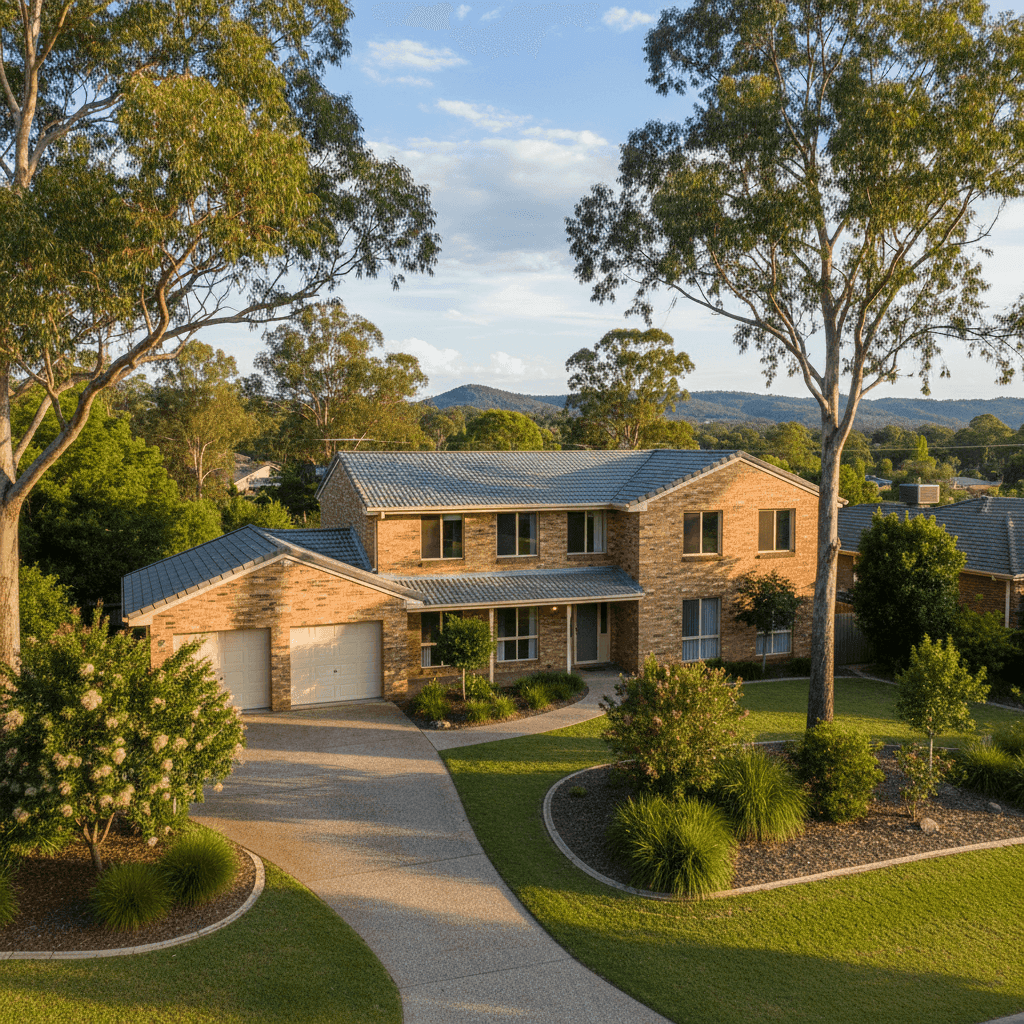
If you own a free standing home in Kenmore, QLD 4069, you're probably wondering whether you're paying a fair price for building insurance — or leaving money on the table. This article breaks down a real building-only insurance quote for a four-bedroom, double brick home in Kenmore, comparing it against suburb, state, and national benchmarks to give you a clear picture of where this premium sits in the market.
---
Is This Quote Fair?
The short answer: yes — and then some. This quote came in at $1,849 per year (or roughly $176 per month), which earns a price rating of CHEAP — meaning it's well below average for the area.
To put that into perspective, the suburb average premium in Kenmore is $4,261 per year, and the median sits at $3,829 per year. That means this quote is saving the homeowner over $2,400 annually compared to what a typical Kenmore property owner pays. Even against the suburb's 25th percentile — the cheapest quarter of quotes — the figure is $2,831 per year, still nearly $1,000 more than this quote.
So whether you benchmark against the middle of the market or the cheaper end, this premium stands out as genuinely competitive. For a building sum insured of $500,000 with a $2,500 excess, that works out to excellent value per dollar of coverage.
---
How Kenmore Compares
Kenmore sits in Brisbane's leafy western suburbs, and insurance pricing here reflects a market that skews noticeably more expensive than national norms. Here's how the numbers stack up:
| Benchmark | Annual Premium |
|---|---|
| This Quote | $1,849 |
| Kenmore Suburb Average | $4,261 |
| Kenmore Suburb Median | $3,829 |
| Kenmore 25th Percentile | $2,831 |
| Kenmore 75th Percentile | $5,467 |
| QLD State Average | $4,547 |
| QLD State Median | $3,931 |
| Brisbane LGA Average | $4,485 |
| National Average | $2,965 |
| National Median | $2,716 |
Kenmore's suburb average of $4,261 is 43% above the national average of $2,965, and sits broadly in line with the broader Brisbane LGA average of $4,485. Queensland as a whole is one of Australia's most expensive states for home insurance, largely driven by severe weather risk — including storms, flooding, and hail — that affects much of the state.
You can explore more pricing data for this postcode at the Kenmore suburb stats page, or compare against all of Queensland and national benchmarks.
Based on a sample of 53 quotes in the Kenmore area, the spread between the 25th and 75th percentiles — $2,831 to $5,467 — shows just how much premiums can vary depending on the insurer, the property, and the level of cover chosen. Shopping around clearly pays off.
---
Property Features That Affect Your Premium
Several characteristics of this particular property work in the homeowner's favour when it comes to pricing:
Double Brick Construction
Double brick is one of the most insurer-friendly wall types in Australia. It's highly resistant to fire, wind damage, and general wear — all factors that reduce the likelihood and severity of a claim. Many insurers apply lower risk ratings to double brick homes compared to timber or weatherboard construction, which can translate directly into lower premiums.
Tiled Roof
Concrete or terracotta tiles are considered a durable and low-risk roofing material by most insurers. They perform well in hail events (compared to Colorbond in some scenarios) and have a long lifespan, reducing the chance of weather-related damage claims.
Slab Foundation
A concrete slab foundation is generally viewed as stable and low-maintenance. It reduces the risk of subsidence or structural movement claims that can be associated with older pier-and-beam or timber stump foundations — particularly relevant for a 1977 build.
Age of Construction (1977)
Homes built in the 1970s can sometimes attract higher premiums due to older wiring, plumbing, and materials. However, double brick construction from this era tends to age well, and the solid build quality likely offsets some of the age-related risk factors.
No Pool, No Solar, No Ducted Climate Control
Each of these features can add complexity — and cost — to a home insurance policy. Pools introduce liability considerations, solar panels add replacement cost, and ducted systems can be expensive to repair or replace. The absence of all three keeps this risk profile clean and straightforward.
Building Size: 214 sqm
At 214 square metres, this is a comfortably sized four-bedroom home. The $500,000 sum insured works out to approximately $2,336 per square metre — broadly in line with current construction cost estimates for Queensland, suggesting the sum insured is reasonably calibrated.
---
Tips for Homeowners in Kenmore
1. Review your sum insured regularly Construction costs have risen significantly in recent years. If your home was last valued a few years ago, there's a real chance it's underinsured. Use a building cost calculator or speak to a quantity surveyor to make sure your $500,000 cover still reflects what it would actually cost to rebuild today.
2. Consider adding contents cover This quote covers building only. If you haven't arranged separate contents insurance, your furniture, appliances, and personal belongings have no protection in the event of fire, storm, or theft. Many insurers offer combined building and contents policies that can be more cost-effective than two separate policies.
3. Ask about your excess options A $2,500 excess is on the higher end of the standard range. While a higher excess generally lowers your premium, it's worth checking whether a mid-range excess (say, $1,000–$1,500) would meaningfully change your annual cost — particularly given how competitive this premium already is.
4. Don't auto-renew without comparing Even if your current premium is excellent, insurers adjust their pricing each year. What's cheap today may not be cheap at renewal. Set a reminder to compare quotes on CoverClub before your policy rolls over — it takes minutes and could save you hundreds.
---
Compare Your Home Insurance Today
Whether your current quote looks like this one or sits much higher, it always pays to see what else is available. CoverClub aggregates real home insurance data from across Australia so you can see exactly where your premium sits — and whether there's a better deal waiting. Get a quote now and find out how your home compares.