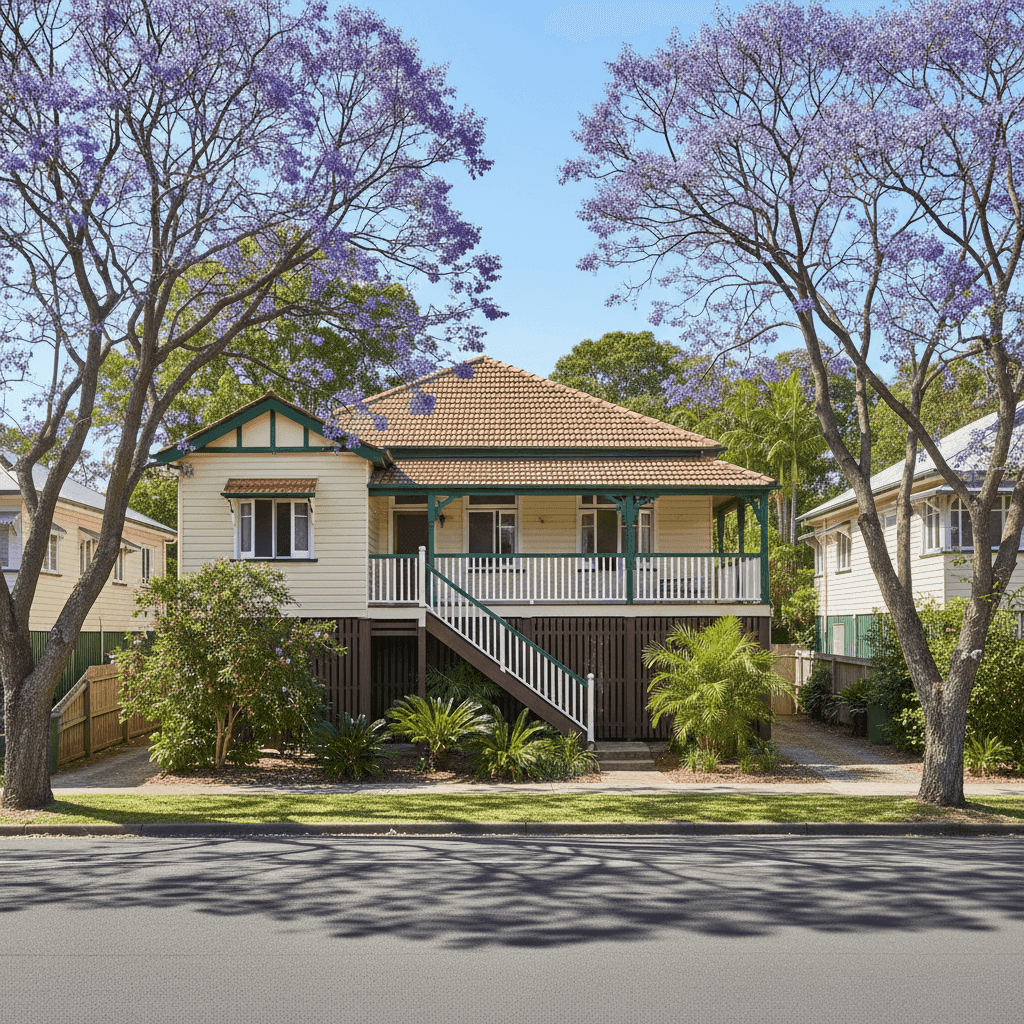
If you own a free standing home in Keperra, QLD 4054, you've probably noticed that home insurance premiums can vary enormously — sometimes in ways that are hard to explain. This article breaks down a real home and contents insurance quote for a three-bedroom, two-bathroom weatherboard home in Keperra, comparing it against suburb, state, and national benchmarks to help you understand whether you're getting a fair deal.
---
Is This Quote Fair?
The annual premium for this property came in at $2,423 per year (or roughly $232 per month), covering both building ($526,000 sum insured) and contents ($50,000) with a $1,000 excess on each. Our pricing engine has rated this quote as Fair — Around Average.
That assessment holds up well under scrutiny. The premium sits just below the suburb median of $2,703 per year, meaning roughly half of comparable Keperra properties are paying more. It's also comfortably below the Queensland state median of $3,903 and the national median of $2,764 — both solid indicators that this isn't an overpriced policy.
For a 1980-built elevated weatherboard home on a pole foundation, a sub-$2,500 annual premium is a reasonable outcome. Older construction styles and elevated designs can attract higher premiums from some insurers, so landing below the local median suggests this quote is competitive without being suspiciously cheap.
---
How Keperra Compares
Understanding where your premium sits in the broader market is one of the most useful things you can do as a homeowner. Here's how this quote stacks up:
| Benchmark | Premium |
|---|---|
| This Quote | $2,423/yr |
| Keperra Suburb Median | $2,703/yr |
| Keperra Suburb Average | $56,810/yr |
| QLD State Median | $3,903/yr |
| QLD State Average | $9,129/yr |
| National Median | $2,764/yr |
| National Average | $5,347/yr |
| Brisbane LGA Average | $16,277/yr |
A few things stand out immediately. The Keperra suburb average of $56,810 is dramatically higher than the median of $2,703 — a classic sign that a small number of very high-risk or high-value properties are pulling the mean upward. With only 14 quotes in the suburb sample, a single outlier can skew the average significantly. The median is almost always the more reliable benchmark in small samples like this.
Compared to the broader Brisbane LGA average of $16,277, this quote looks particularly strong. Brisbane as a whole carries elevated insurance costs due to flood exposure, storm risk, and the concentration of older housing stock — but this Keperra property is coming in well under that LGA benchmark.
Across Queensland, premiums are notably higher than the national median, largely driven by tropical storm risk in the north, flood-prone areas in South East Queensland, and the general cost of rebuilding in a high-demand construction market. That this quote tracks below both the QLD and national medians is a positive sign.
You can explore more data for this postcode at the Keperra suburb stats page, or zoom out to see the full Queensland insurance landscape and national benchmarks.
---
Property Features That Affect Your Premium
Several characteristics of this property have a direct influence on what insurers charge. Understanding them helps you anticipate how your premium is calculated — and where there might be room to negotiate or shop around.
Weatherboard timber walls are one of the most significant factors. Timber homes are considered higher risk than brick veneer or full brick construction because they are more susceptible to fire spread and can be more costly to repair or replace. Some insurers price this risk more aggressively than others, so it pays to compare.
Pole/stump foundations with elevated flooring are a hallmark of classic Queensland architecture. The good news is that elevation of at least one metre can actually reduce flood risk exposure, since water needs to rise considerably before it reaches the living areas. This may be partly why the premium is sitting below local medians despite the timber construction.
Tiled roof is generally viewed favourably by insurers. Terracotta or concrete tiles are durable, fire-resistant, and perform well in hail events compared to metal or Colorbond roofing. This is likely a moderating influence on the premium.
Timber and laminate flooring throughout the home is a consideration for contents and building cover alike. Timber floors can be expensive to repair or replace if water damage occurs, which is worth keeping in mind when assessing whether your sum insured is adequate.
Ducted climate control adds to the rebuild cost and is factored into the building sum insured. At $526,000 for a 130 sqm home built in 1980, the sum insured appears to account for the full cost of demolition, removal, and reconstruction to current building standards — which is the right approach.
No pool and no solar panels simplifies the risk profile slightly. Both features can add complexity (and cost) to insurance policies, so their absence keeps things straightforward.
---
Tips for Homeowners in Keperra
1. Review your sum insured annually Construction costs in South East Queensland have risen sharply over recent years. A building sum insured that was accurate in 2022 may be significantly underinsured today. Use a building cost calculator or speak with a quantity surveyor to make sure $526,000 still reflects full replacement value — including demolition and professional fees.
2. Consider your flood and storm exposure Keperra sits in the northern suburbs of Brisbane, an area that has experienced significant rainfall events and localised flooding. Check whether your policy includes flood cover as standard or as an optional add-on, and review the flood mapping for your specific location via the Brisbane City Council flood maps.
3. Maintain your weatherboard cladding Timber weatherboard homes require regular maintenance to keep them insurable and to avoid claim complications. Peeling paint, rotting boards, or untreated timber can be flagged as pre-existing damage. Keeping up with maintenance also protects the structural integrity of the home, which matters at claim time.
4. Shop around at renewal A "Fair" rating means this quote is around average — but that also means better deals may exist. Insurers price risk differently, and a timber elevated home in Keperra will attract very different premiums across the market. Use a comparison tool to benchmark your renewal quote before automatically accepting it.
---
Ready to Compare?
Whether you're renewing your existing policy or shopping for cover on a new purchase, comparing quotes is the single most effective way to avoid overpaying. Get a home insurance quote at CoverClub and see how your premium stacks up against real market data for your suburb — in seconds.