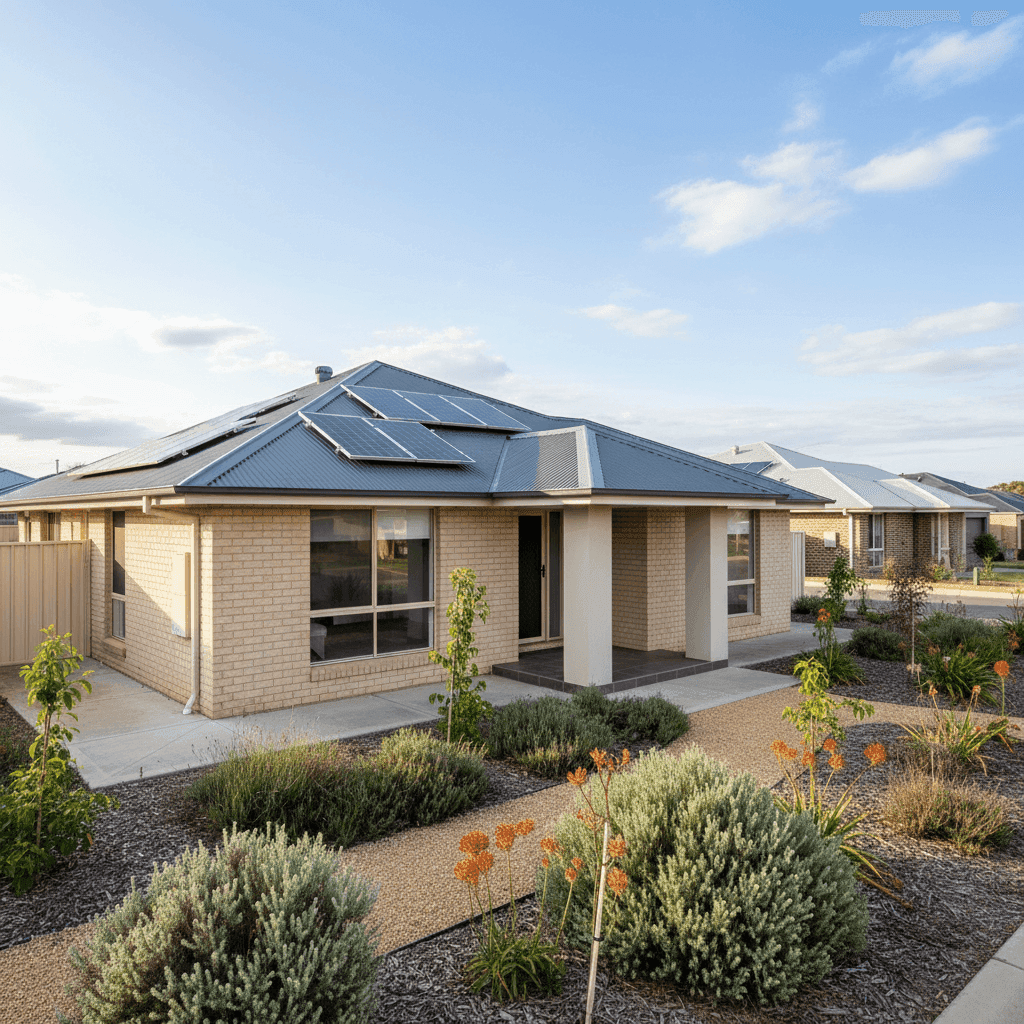
Kerang is a regional town in northern Victoria, sitting within the Swan Hill Local Government Area and surrounded by the Murray–Darling Basin's irrigation country. If you own a free standing home here, understanding what drives your insurance premium — and whether you're paying a fair price — can save you hundreds of dollars a year. This article breaks down a real home and contents insurance quote for a 3-bedroom, 2-bathroom property in Kerang (VIC 3579) and puts it into context against local, state, and national benchmarks.
---
Is This Quote Fair?
The quote in question comes in at $1,932 per year (or $192/month) for combined home and contents cover, with a building sum insured of $806,000 and contents valued at $97,000. The building excess is $3,000 and the contents excess is $1,000.
Our pricing engine rates this quote as FAIR — Around Average, which is a reasonable outcome for a property of this type and location. It sits above the suburb median of $1,554/yr but comfortably within the 25th–75th percentile range of $1,230–$1,979/yr recorded across 101 quotes in Kerang. In practical terms, you're not being overcharged, but there's still room to shop around if you want to push toward the lower end of the range.
The higher building sum insured ($806,000 for a 139 sqm home) is worth noting — this is likely reflecting quality finishes, the cost of double brick construction, and current rebuild cost estimates rather than market value. Insurers price on rebuild cost, not real estate value, so a well-specified sum insured is important and can legitimately push a premium upward compared to a property with a lower insured amount.
---
How Kerang Compares
One of the most striking things about this quote is just how affordable Kerang is relative to the rest of Victoria and the country at large.
| Benchmark | Average Premium | Median Premium |
|---|---|---|
| Kerang (3579) | $1,757/yr | $1,554/yr |
| LGA (Swan Hill) | $2,484/yr | — |
| Victoria | $3,000/yr | $2,718/yr |
| National | $5,347/yr | $2,764/yr |
Compared to the Victorian state average of $3,000/yr, the suburb average in Kerang is roughly 41% lower — a significant difference. And when stacked against the national average of $5,347/yr, Kerang homeowners are paying a fraction of what many Australians face, particularly those in coastal, cyclone-prone, or flood-affected regions.
Even within the Swan Hill LGA, Kerang comes in noticeably cheaper — the LGA average sits at $2,484/yr, suggesting that some surrounding areas carry higher risk profiles or property values that push premiums up.
This is generally good news for Kerang homeowners. The area doesn't sit in a cyclone risk zone, and while parts of the broader region can experience flooding, the relatively modest premiums suggest insurers are pricing the local risk environment reasonably.
---
Property Features That Affect Your Premium
Every element of a property's construction and configuration plays a role in how insurers calculate risk. Here's how the features of this particular home stack up:
Double Brick Walls Double brick is one of the most insurer-friendly construction types in Australia. It's highly resistant to fire, wind, and impact, which typically results in lower premiums compared to timber or cladding-based homes. This is a genuine advantage for this property.
Steel/Colorbond Roof Colorbond roofing is durable, low-maintenance, and performs well in both heat and moderate weather events. Insurers generally view it favourably compared to older tile or fibrous cement roofing. Combined with the double brick walls, this home presents a solid risk profile from a structural standpoint.
Slab Foundation Concrete slab foundations are standard in modern builds and are considered stable and low-risk. There's no underfloor space to worry about, which reduces exposure to certain types of damage.
Built in 2016 A relatively modern construction year works in the homeowner's favour. Newer homes are built to more recent Australian Standards, meaning better structural integrity, updated electrical and plumbing systems, and improved fire resistance. Older homes often attract higher premiums due to aging infrastructure.
Solar Panels The presence of solar panels adds a modest layer of complexity to a home insurance policy. Panels are typically covered under the building sum insured, but it's worth confirming with your insurer that the panels and inverter are explicitly included — and that the sum insured accounts for their replacement cost. At current prices, a standard residential solar system can cost $8,000–$15,000 to replace.
Tile Flooring & Standard Fittings Tile flooring is durable and less susceptible to water damage than carpet or timber, which can be a minor positive from an insurer's perspective. Standard fittings (rather than high-end or custom finishes) keep the rebuild cost estimate grounded and help avoid over-insurance.
No Pool, No Ducted Climate Control The absence of a pool removes a common liability risk, and no ducted system means one less mechanical component that could cause water damage or require expensive repair. Both factors contribute to keeping this premium in check.
---
Tips for Homeowners in Kerang
1. Review your sum insured regularly Building costs have risen significantly across regional Victoria in recent years. It's worth getting an independent building cost estimate every year or two to make sure your $806,000 sum insured still reflects actual rebuild costs — not just at the time of purchase, but at the time of a claim.
2. Confirm solar panel coverage explicitly Don't assume your panels are covered. Ask your insurer in writing whether the solar panels and inverter are included in your building cover, what the sub-limit is (if any), and whether accidental damage and storm damage are both covered. If they're not adequately covered, you may need to adjust your sum insured or seek an endorsement.
3. Consider your excess settings carefully This quote carries a $3,000 building excess and $1,000 contents excess. A higher excess generally reduces your premium, but make sure you could comfortably cover those amounts out of pocket in the event of a claim. If cash flow is a concern, it may be worth requesting a quote with a lower excess to compare the trade-off.
4. Shop around at renewal time Even with a FAIR rating, loyalty doesn't always pay in insurance. Insurers regularly adjust their pricing models, and the competitive landscape shifts. Running a comparison at renewal — particularly through a platform like CoverClub — takes only a few minutes and could reveal meaningfully cheaper options for the same level of cover.
---
Compare Your Home Insurance Today
Whether you're renewing an existing policy or buying cover for the first time, it pays to know where your premium sits relative to the market. CoverClub makes it easy to compare home and contents insurance quotes for properties across Kerang and regional Victoria. Get a quote today and see how much you could save — or simply confirm that you're already getting a fair deal.