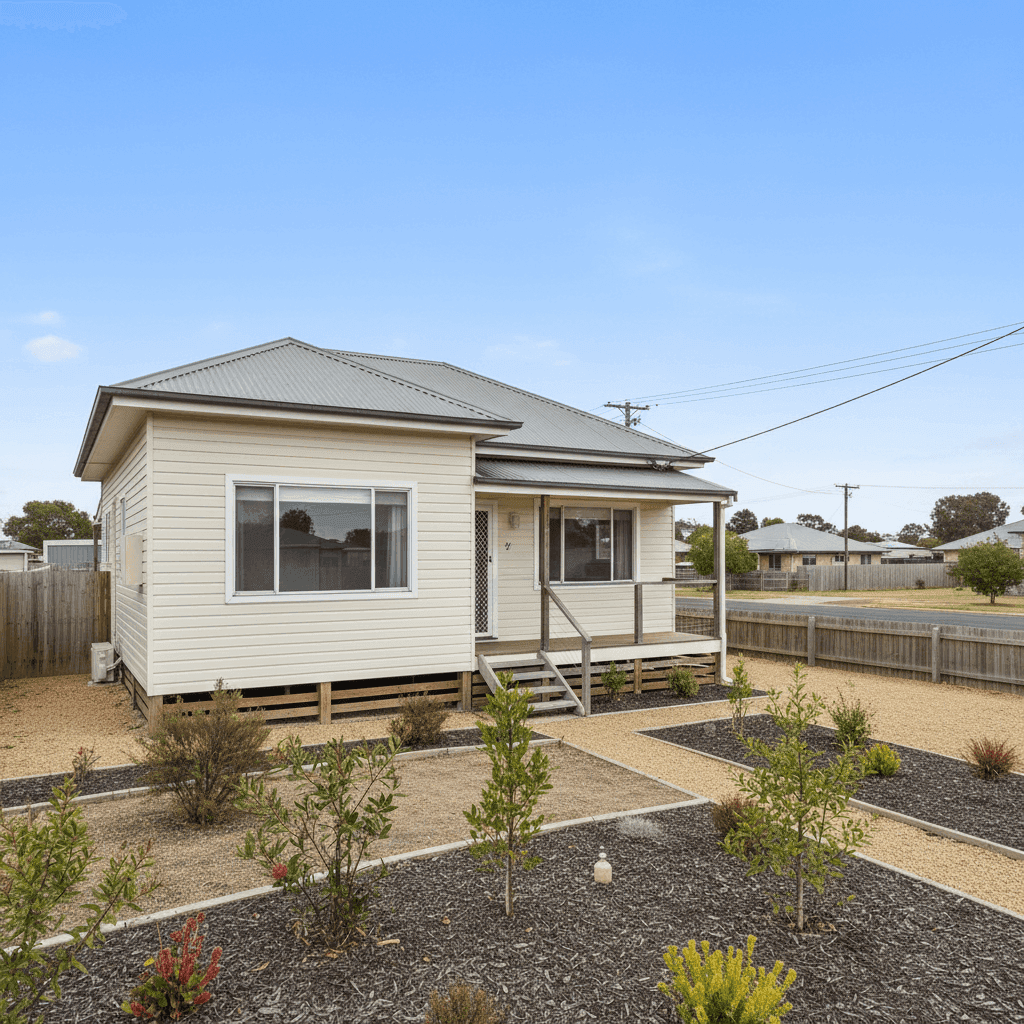
Kerang is a quiet regional town in northern Victoria, sitting in the heart of the Loddon–Mallee region along the Loddon River. For owners of free standing homes in this part of the state, understanding what a fair insurance premium looks like can be tricky — especially when prices vary so widely across insurers. This article breaks down a real home and contents insurance quote for a three-bedroom free standing home in Kerang (VIC 3579), and puts it in context against suburb, state, and national benchmarks.
---
Is This Quote Fair?
The annual premium for this property came in at $927 per year (or roughly $88 per month), covering both building and contents. The building is insured for $460,000 with a $3,000 excess, and contents are covered for $50,000 with a $1,000 excess.
Our pricing analysis rates this quote as CHEAP — Below Average, which is genuinely good news for the homeowner. To put that in perspective:
- The suburb average for Kerang (based on 143 quotes) sits at $2,193/yr
- The suburb median is $1,918/yr
- Even the 25th percentile — meaning the cheapest quarter of quotes in the area — comes in at $1,374/yr
This quote lands well below even the cheapest tier of local pricing, suggesting the homeowner has either found an exceptionally competitive insurer, or a combination of property and coverage factors has worked in their favour. Either way, it represents strong value relative to what most Kerang residents are paying.
---
How Kerang Compares
Zooming out beyond the suburb level tells an even more striking story. You can explore the full data on the Kerang suburb insurance stats page.
| Benchmark | Annual Premium |
|---|---|
| This quote | $927 |
| Kerang suburb average | $2,193 |
| Kerang suburb median | $1,918 |
| LGA (Swan Hill) average | $2,816 |
| VIC state average | $2,921 |
| VIC state median | $2,694 |
| National average | $2,965 |
| National median | $2,716 |
The VIC state average of $2,921/yr and the national average of $2,965/yr both dwarf this quote by a factor of more than three. Even within the Swan Hill LGA — where Kerang sits — the average premium of $2,816/yr is dramatically higher.
It's worth noting that Kerang's suburb average of $2,193/yr is already notably lower than the broader LGA and state figures, which suggests the local risk profile is relatively moderate. That said, this particular quote still undercuts even the local market significantly.
---
Property Features That Affect Your Premium
Several characteristics of this property are likely contributing to its competitive premium. Here's what stands out:
Construction Era and Materials
Built in 1950, this home is now over 70 years old — an age bracket that can sometimes attract higher premiums due to concerns about ageing wiring, plumbing, and structural integrity. However, the external walls are clad in Hardiplank/Hardiflex, a fibre cement product that is fire resistant, durable, and generally viewed favourably by insurers. This modern cladding may help offset any age-related risk loading.
Steel/Colorbond Roof
A steel Colorbond roof is one of the better roof types from an insurance perspective. It's highly resistant to fire, handles hail well compared to terracotta or concrete tiles, and has a long serviceable life. This is a genuine premium-reducing feature.
Stump Foundation
The home sits on stumps, which is common for older Victorian homes. While this foundation type allows for good underfloor ventilation and can be advantageous in some soil conditions, it may introduce some exposure to subsidence or shifting — something insurers factor in differently depending on the local geography.
No Pool, No Solar
The absence of a swimming pool and solar panels simplifies the risk profile. Pools add liability exposure, while solar panels can complicate roof claims and add replacement cost. Neither being present keeps the quote cleaner.
Ducted Climate Control
The property does include ducted climate control, which adds some value to the building sum insured. Ducted systems can be expensive to repair or replace, so it's important this is factored into the building coverage — and at $460,000, the sum insured appears to account for it.
Standard Fittings and Modest Size
At 130 sqm with standard fittings, this is a no-frills family home. High-end kitchens, stone benchtops, and luxury bathrooms all push rebuilding costs — and therefore premiums — higher. Standard fittings keep the rebuild estimate grounded and the premium in check.
---
Tips for Homeowners in Kerang
Whether you're reviewing your current policy or shopping around for the first time, here are some practical steps Kerang homeowners can take to get the best outcome:
1. Review Your Sum Insured Annually
Building costs in regional Victoria have risen sharply in recent years. A sum insured of $460,000 for a 130 sqm home may be appropriate today, but it's worth reassessing each year — particularly given rising labour and materials costs. Being underinsured at claim time can be financially devastating.
2. Consider Your Excess Carefully
This quote carries a $3,000 building excess, which is on the higher side. A higher excess typically lowers your premium, but it means you'll need to fund more out of pocket if you make a claim. Make sure the excess level genuinely suits your financial situation.
3. Don't Overlook Contents Coverage
At $50,000, the contents cover is relatively modest. Take the time to do a proper home inventory — furniture, appliances, clothing, electronics, tools, and jewellery all add up quickly. Many homeowners discover they're underinsured on contents when it's too late.
4. Compare Quotes Before Renewing
The fact that this quote is dramatically cheaper than the suburb average is a good reminder that premiums vary enormously between insurers — even for identical properties. Never simply auto-renew without checking the market. Compare home insurance quotes at CoverClub to make sure you're not overpaying.
---
Ready to See What You Could Pay?
Whether you own a home in Kerang or anywhere else in Australia, comparing quotes is the single most effective way to ensure you're getting fair value. CoverClub makes it easy to see real market data alongside your quote, so you always know where you stand. Get a home insurance quote today and find out if you're paying too much.