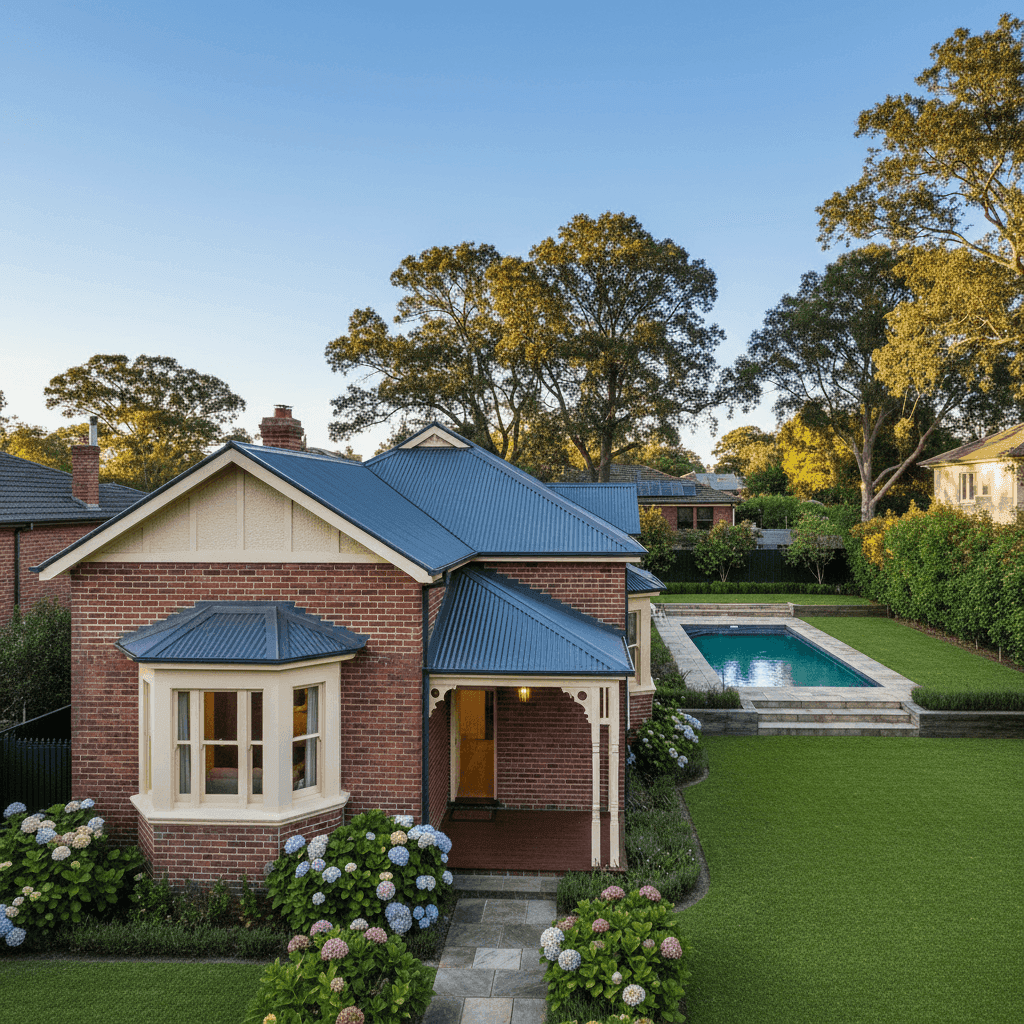
If you own a free standing home in Kew, VIC 3101, you already know you're sitting on one of Melbourne's most prestigious addresses. The leafy streets, heritage architecture, and proximity to the CBD make Kew a highly desirable — and historically significant — suburb. But with prestige comes complexity when it comes to insuring your home, particularly for properties that carry the character and quirks of a century-old build. This article breaks down a real home and contents insurance quote for a 3-bedroom, 2-bathroom free standing home in Kew, helping you understand what's driving the price and whether there's room to do better.
---
Is This Quote Fair?
The quote in question comes in at $3,392 per year (or $325 per month) for combined home and contents cover, with a building sum insured of $1,502,000 and contents valued at $155,000. Both the building and contents excess are set at $1,000.
Our price rating for this quote is EXPENSIVE — above average for the area.
To put that in context: the suburb average for Kew sits at $2,541 per year, with a median of $2,593. This quote lands well above the 75th percentile for the suburb ($2,936), meaning it's pricier than at least three-quarters of comparable quotes we've seen in the postcode. That's a meaningful gap — roughly $851 more per year than the local average.
That said, it's worth noting that this property has some features that legitimately push premiums higher (more on those below), so the premium isn't entirely without justification. The key question is whether you could find equivalent cover for less.
---
How Kew Compares
Understanding your quote means looking beyond your street. Here's how Kew stacks up across different benchmarks:
| Benchmark | Average Premium | Median Premium |
|---|---|---|
| Kew (3101) | $2,541/yr | $2,593/yr |
| LGA (Boroondara) | $2,673/yr | — |
| Victoria | $3,000/yr | $2,718/yr |
| National | $5,347/yr | $2,764/yr |
A few things stand out here. First, Kew's suburb average of $2,541 is actually below the Victorian state average of $3,000, which suggests the postcode is relatively well-regarded by insurers from a risk perspective — no flood zones, no cyclone risk, and a generally stable claims environment.
Second, the national average of $5,347 is dramatically higher than both the local and state figures, largely because it's skewed by high-risk postcodes in Queensland and Western Australia (think cyclone-prone coastal areas and flood-affected regions). So while the national number sounds alarming, it's not a useful comparison for a Melbourne homeowner.
What is useful is comparing against the Victorian state average of $3,000 — and on that measure, this quote of $3,392 is still above average, reinforcing the "expensive" rating.
---
Property Features That Affect Your Premium
Several characteristics of this property have a direct bearing on what insurers charge. Here's what's at play:
Age of Construction (1890)
This is arguably the single biggest factor. A home built in 1890 is now 135 years old, and while double brick construction from that era is remarkably durable, it presents real challenges for insurers. Older homes often have legacy plumbing, original wiring, and structural elements that are expensive to repair or replace to modern building codes. Insurers price in the higher likelihood of claims and the greater cost of like-for-like restoration.
Double Brick Walls
Double brick is generally viewed favourably — it's fire-resistant, thermally efficient, and structurally robust. However, for a heritage-era home, the cost of repairing or rebuilding double brick to match original specifications can be significantly higher than modern construction. This contributes to the elevated building sum insured of $1,502,000.
Steel / Colorbond Roof
A Colorbond roof is a positive for insurers. It's lightweight, resistant to fire and corrosion, and performs well in storms. This likely provides some downward pressure on the premium compared to older terracotta or slate roofing, which can be fragile and expensive to source for period homes.
Swimming Pool
The presence of a pool adds to the insured risk profile of the property. Pools introduce liability considerations (particularly around public liability cover), as well as the cost of the pool structure itself in a building claim. This is a standard premium driver across most insurers.
Ducted Climate Control
Ducted heating and cooling systems are an expensive asset to replace and can be a source of claims (particularly water damage from ducted systems). Their inclusion typically nudges premiums upward slightly.
Building Sum Insured: $1,502,000
This is a high sum insured, and for good reason — rebuilding a 160 sqm double brick home in Kew to heritage standards would be extraordinarily expensive. However, it's worth periodically reviewing this figure with a quantity surveyor to ensure it reflects current rebuild costs accurately. Both under-insurance and over-insurance carry risks.
---
Tips for Homeowners in Kew
1. Shop Around — Seriously
Given this quote sits above the 75th percentile for Kew, there's a strong case for comparing alternatives. Insurers price risk differently, and a heritage double brick home will be viewed more favourably by some underwriters than others. Use CoverClub's quote comparison tool to see what competing insurers would offer for the same cover.
2. Review Your Sum Insured Regularly
With construction costs rising sharply across Victoria in recent years, your building sum insured needs to keep pace. Equally, if your sum insured is higher than the true rebuild cost, you may be paying unnecessary premium. A professional building valuation every few years is money well spent.
3. Consider Your Excess Strategy
Both excesses on this policy are set at $1,000. Increasing your excess — say, to $2,000 or $2,500 — can meaningfully reduce your annual premium. If you have sufficient savings to cover a higher out-of-pocket cost in a claim, this is often a smart trade-off.
4. Bundle Thoughtfully, But Don't Assume It's Cheaper
Some insurers offer discounts for combining home and contents cover under one policy. This quote already does that, which is good. However, don't assume bundling always delivers the best price — occasionally, separate policies from different providers can be more competitive. It's worth running the comparison both ways.
---
Ready to Find a Better Rate?
Whether this quote is your current policy or one you're shopping around, the data is clear: there may be room to pay less for equivalent cover in Kew. CoverClub makes it easy to compare home and contents insurance quotes side by side, with real pricing data from across the market. Get a quote today and see how much you could save — or at the very least, confirm you're already getting a fair deal.
For more localised data on insurance pricing in your area, visit our Kew suburb stats page or explore Victoria-wide insurance trends.