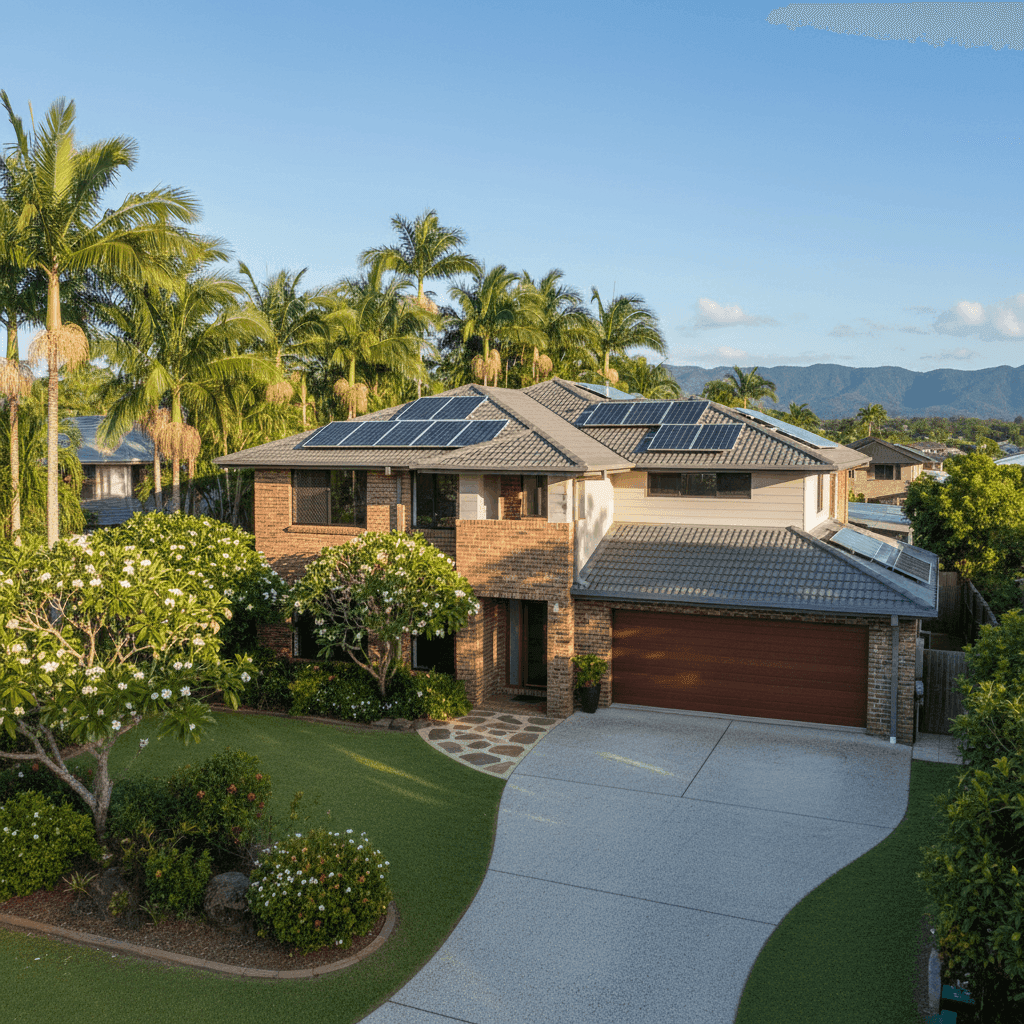
Kewarra Beach is one of Cairns' most sought-after coastal suburbs — a quiet, leafy pocket of Far North Queensland that attracts families and sea-changers alike. But living close to the Coral Sea comes with its own insurance story. For owners of free standing homes in this postcode, understanding what drives your premium — and whether you're paying a fair price — can make a real difference at renewal time.
This article breaks down a recent building insurance quote for a four-bedroom, two-bathroom brick veneer home in Kewarra Beach (QLD 4879), and puts it in context against suburb, state, and national benchmarks.
---
Is This Quote Fair?
The quoted annual premium for this property is $2,842 per year (or roughly $256 per month), covering building only with a $5,000 excess and a sum insured of $726,000.
Our price rating for this quote is FAIR — Around Average.
At first glance, $2,842 might feel like a significant outlay. But when you dig into the local data, it's actually sitting in a reasonably competitive position. The suburb's 25th percentile — meaning the cheapest quarter of quotes we've seen in Kewarra Beach — comes in at $2,694 per year. This quote sits just above that threshold, which means it's performing better than many comparable properties in the area.
The suburb's median premium is $4,175 per year, so this homeowner is paying well below the midpoint for the area. That's a meaningful saving, particularly given the cyclone-risk designation that applies to this postcode.
In short: while there's always room to shop around, this quote is holding its own in a suburb where premiums can climb steeply.
---
How Kewarra Beach Compares
To really understand this quote, it helps to zoom out and look at the broader picture. Here's how Kewarra Beach stacks up against state and national figures:
| Benchmark | Average Premium | Median Premium |
|---|---|---|
| Kewarra Beach (suburb) | $7,465/yr | $4,175/yr |
| Queensland (state) | $9,129/yr | $3,903/yr |
| Australia (national) | $5,347/yr | $2,764/yr |
| Cairns LGA | $12,404/yr | — |
A few things stand out here. The Cairns LGA average of $12,404 per year is extraordinarily high — one of the steepest in the country — driven almost entirely by the region's cyclone exposure and flood risk. Kewarra Beach's suburb average of $7,465 is lower than the broader LGA figure, but still well above the national average.
What's particularly interesting is the gap between averages and medians across the board. In Queensland, the average ($9,129) is more than double the median ($3,903), which tells us that a relatively small number of very high-risk properties are pulling the average up significantly. The same dynamic plays out at the suburb level.
For this homeowner, landing at $2,842 — below both the suburb median and the national median of $2,764 — is a solid result given the local risk environment. You can explore the full data for this area on our Kewarra Beach insurance stats page, or compare it against the Queensland state overview and national benchmarks.
---
Property Features That Affect Your Premium
Every home is different, and insurers weigh up a range of property characteristics when calculating your premium. Here's how the key features of this property are likely influencing the quote:
Cyclone Risk Area
This is the single biggest factor for any property in Kewarra Beach. The suburb sits within a designated cyclone risk zone, which means insurers apply significant loadings to account for the potential cost of storm and wind damage. Cyclone cover is standard in Queensland policies, but the premium impact in Far North Queensland is substantial.
Brick Veneer Walls and Tiled Roof
Brick veneer construction is generally viewed favourably by insurers — it's more resilient to wind and fire than timber weatherboard, and more affordable to build than full double brick. Combined with a tiled roof, this construction profile sits in a mid-tier risk category. Tiles can be vulnerable to hail and high winds, but they're a common and well-understood material that most insurers price with confidence.
Concrete Slab Foundation
A slab foundation is a neutral-to-positive factor in most assessments. It provides structural stability and reduces the risk of subsidence or movement compared with older pier-and-beam constructions.
Solar Panels
The property has solar panels installed, which adds a small amount of complexity to the insurance picture. Panels represent an additional asset that needs to be covered under the building sum insured, and they can be damaged in hail or cyclone events. Homeowners should confirm with their insurer that solar panels are explicitly included in their policy and that the sum insured accounts for their replacement cost.
1995 Construction
A home built in 1995 sits in an interesting zone. It predates some of the more stringent cyclone-resistant building codes introduced after Cyclone Larry (2006) and Cyclone Yasi (2011), which means it may not have the same structural resilience as newer builds. Insurers may factor this into their risk assessment, though the brick veneer construction provides some mitigation.
Standard Fittings
Standard-quality fittings keep the rebuild cost estimate — and therefore the sum insured — at a reasonable level. High-end finishes can push rebuild costs significantly higher, so standard fittings help keep premiums grounded.
---
Tips for Homeowners in Kewarra Beach
If you own a home in this part of Far North Queensland, here are some practical steps to help manage your insurance costs without compromising on cover:
- Review your sum insured annually. Building costs in Queensland have risen sharply in recent years. Make sure your $726,000 sum insured still reflects current rebuild costs — underinsurance is a serious risk, particularly after a major weather event. Consider using a professional quantity surveyor or your insurer's rebuild cost calculator.
- Confirm cyclone and storm surge cover. Not all policies treat these the same way. Check whether your policy covers damage from storm surge (water driven inland by cyclone winds), as this is sometimes excluded or subject to separate conditions. Read the Product Disclosure Statement carefully.
- Ask about your excess options. This quote carries a $5,000 building excess, which is on the higher end. A higher excess typically reduces your premium, but make sure you're comfortable covering that amount out of pocket in the event of a claim. If cash flow is a concern, it may be worth comparing quotes with a lower excess to understand the premium trade-off.
- Shop around at renewal. The spread of premiums in Kewarra Beach is wide — from $2,694 at the 25th percentile to $5,356 at the 75th percentile. That's a difference of over $2,600 per year for broadly similar properties. Loyalty doesn't always pay in insurance; comparing quotes at renewal is one of the most effective ways to keep costs down.
---
Compare Your Own Quote
Whether you're a first-time buyer in Kewarra Beach or a long-term homeowner reviewing your cover, it pays to see what the market is offering. CoverClub aggregates real quote data so you can make an informed decision — not just take whatever your current insurer sends you at renewal.
Get a building insurance quote for your Kewarra Beach home →