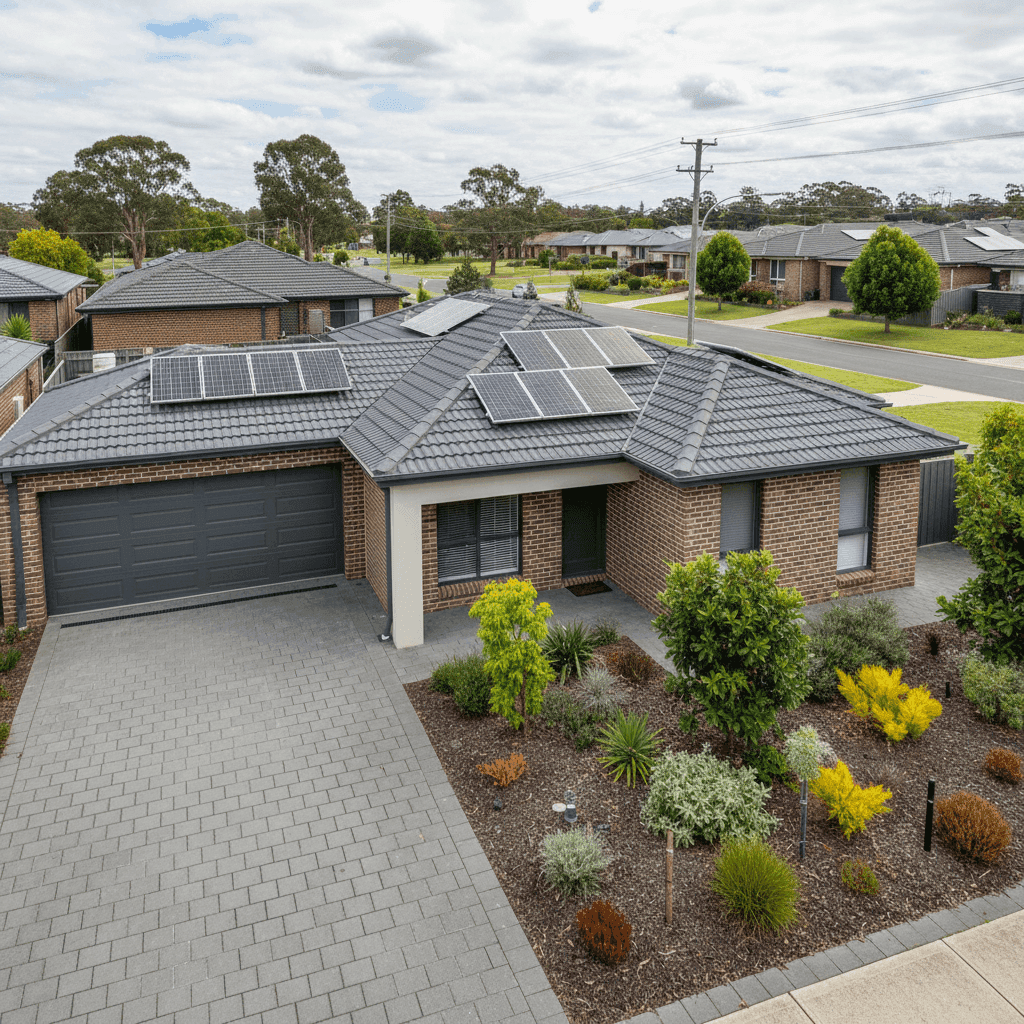
Keysborough, nestled in Melbourne's south-eastern suburbs within the City of Greater Dandenong, is a well-established residential area popular with families drawn to its spacious blocks, quality schools, and easy freeway access. For owners of free standing homes in this postcode, understanding what drives your home insurance premium — and whether you're getting a fair deal — can make a meaningful difference to your household budget.
This article breaks down a real home and contents insurance quote for a four-bedroom, three-bathroom free standing home in Keysborough (VIC 3173), comparing it against local, state, and national benchmarks to help you make a more informed decision.
---
Is This Quote Fair?
The annual premium in this quote comes in at $2,185 per year (or roughly $214 per month), covering both building (sum insured: $910,000) and contents ($50,000), each with a $1,000 excess.
Our price rating for this quote is FAIR — Around Average. That assessment is well-supported by the data. The quoted premium sits just above the Keysborough suburb average of $2,120 per year, and comfortably within the middle of the local market range. It's notably higher than the suburb median of $1,756, which suggests there are cheaper options available locally — but it's also well below the 75th percentile of $2,386, meaning roughly a quarter of comparable Keysborough quotes are actually more expensive.
In plain terms: you're not overpaying dramatically, but there's room to do better if you shop around.
---
How Keysborough Compares
One of the most striking findings when you zoom out is just how affordable Keysborough is relative to broader benchmarks. Here's how the numbers stack up:
| Benchmark | Average Premium | Median Premium |
|---|---|---|
| Keysborough (3173) | $2,120/yr | $1,756/yr |
| Greater Dandenong LGA | $1,868/yr | — |
| Victoria (VIC) | $3,000/yr | $2,718/yr |
| National | $5,347/yr | $2,764/yr |
Keysborough homeowners pay significantly less than the Victorian state average — roughly $880 less per year on average. Compared to the national average, the gap is even more dramatic, largely because that figure is heavily skewed by high-risk coastal and cyclone-prone regions in Queensland and Western Australia.
The Keysborough suburb stats page (based on 88 quotes) shows a 25th percentile of just $1,390 per year, which tells us that budget-conscious homeowners who compare effectively can find genuinely competitive cover in this area.
For broader context, you can explore Victoria-wide insurance data or the national insurance statistics to see how your suburb stacks up across the country.
---
Property Features That Affect Your Premium
Insurers assess risk at a granular level, and the specific characteristics of this property play a meaningful role in how the premium is calculated.
Brick Veneer Walls & Tiled Roof Brick veneer construction with a tiled roof is considered a relatively low-risk combination by Australian insurers. These materials are durable, fire-resistant, and widely used in Melbourne's suburban housing stock. Compared to weatherboard or lightweight cladding, brick veneer typically attracts more favourable premiums.
Slab Foundation A concrete slab foundation is standard for homes built in this era and region, and it's generally viewed positively by insurers. There's no underfloor cavity to worry about, and slab homes tend to perform well in the event of storms or flooding.
Construction Year: 2005 At around 20 years old, this home sits in a sweet spot for insurers — modern enough to meet contemporary building codes (including improved bushfire and structural standards introduced in the early 2000s), yet old enough to have a proven track record. Homes built after 1990 generally attract lower premiums than older stock.
Above-Average Fittings The above-average fittings quality is an important factor here. Kitchens with stone benchtops, quality appliances, and premium bathroom fixtures cost significantly more to repair or replace. This is reflected in the higher building sum insured of $910,000 for a 315 sqm home — and rightly so. Underinsuring a well-appointed home is a common and costly mistake.
Solar Panels This property has solar panels installed, which adds a modest layer of complexity to the insurance picture. Solar systems can be damaged by hail, storms, or fire, and not all policies automatically cover them as part of the building. It's worth confirming explicitly with your insurer that your solar system is included in your building cover.
Ducted Climate Control Ducted heating and cooling systems are expensive to repair or replace — often $10,000–$20,000 or more for a full system in a home of this size. Ensuring your building sum insured accounts for this is important when reviewing your cover.
No Pool, No Cyclone Risk The absence of a swimming pool removes a common liability and maintenance risk factor. And as a non-cyclone zone, Keysborough avoids the significant premium loadings applied to properties in northern Australia.
---
Tips for Homeowners in Keysborough
1. Don't Set and Forget Your Sum Insured Building costs have risen sharply across Victoria in recent years due to labour shortages and material price inflation. A sum insured of $910,000 for a 315 sqm home with above-average fittings is reasonable today, but revisit this figure annually. Use a building cost calculator or ask your insurer to confirm it still reflects full replacement value.
2. Confirm Solar Panel Coverage Ask your insurer directly: are your solar panels covered under the building policy, and up to what value? Some policies include them automatically; others treat them as an optional add-on. Given the cost of a quality solar system, this is worth a five-minute phone call.
3. Compare at Least Every Two Years The local market data shows a wide spread of premiums in Keysborough — from $1,390 at the 25th percentile to $2,386 at the 75th percentile. That's nearly $1,000 per year separating budget-savvy shoppers from those who haven't compared recently. Use a platform like CoverClub to benchmark your current premium against the market.
4. Consider Raising Your Excess to Lower Your Premium With both building and contents excesses set at $1,000, there may be room to increase these slightly (say, to $1,500 or $2,000) in exchange for a lower annual premium — particularly if you have a solid emergency fund and are unlikely to make small claims. Just ensure you're comfortable covering the excess amount if something does go wrong.
---
Ready to Compare?
Whether you're renewing your existing policy or shopping for cover on a new home, comparing quotes is the single most effective way to ensure you're not overpaying. Get a home insurance quote on CoverClub and see how your premium stacks up against real data from your suburb and across Victoria.