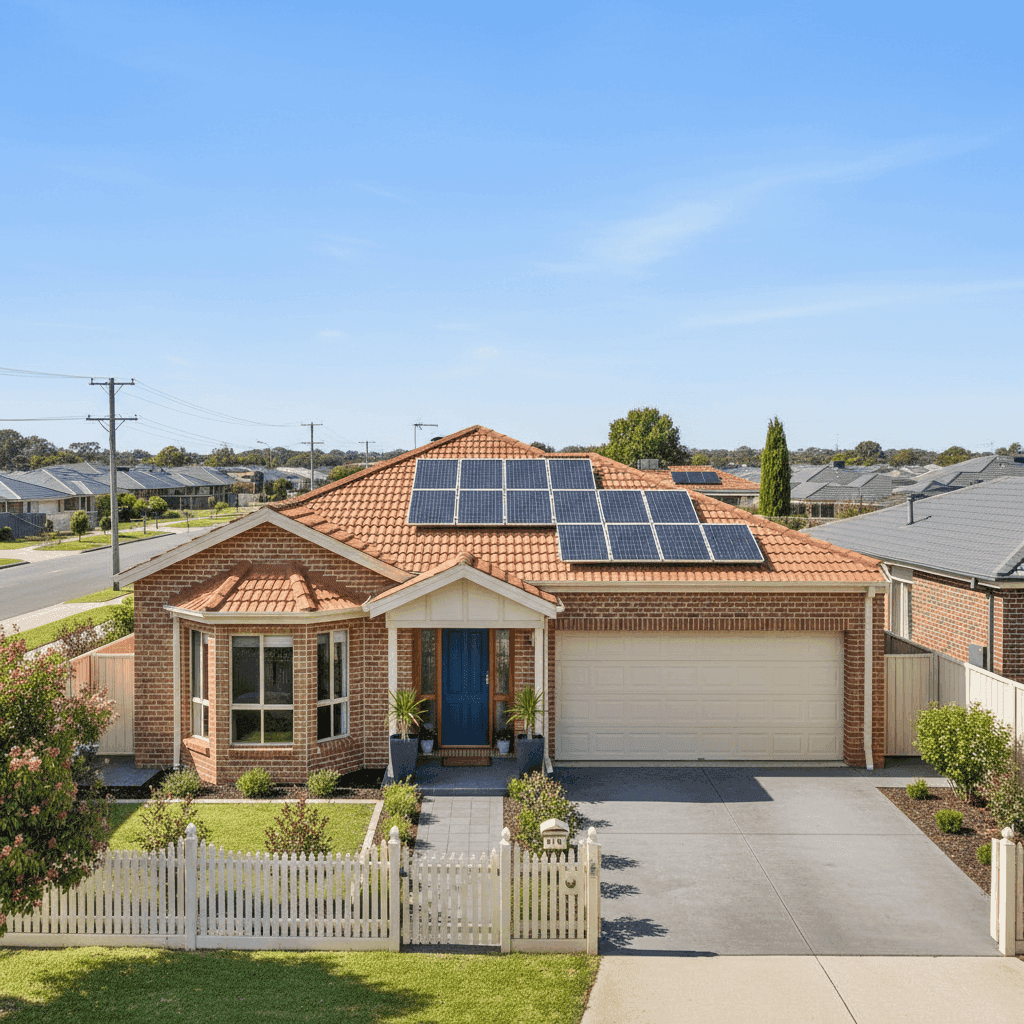
Kialla is a growing residential suburb on the southern fringe of Shepparton in north-central Victoria. With its relatively modern housing stock and semi-rural character, it attracts families looking for space and value — and that includes the insurance market. This article takes a close look at a recent home and contents insurance quote for a four-bedroom, two-bathroom free-standing home in Kialla (postcode 3631), breaking down whether the premium is competitive and what factors are driving the cost.
---
Is This Quote Fair?
The quoted annual premium of $5,465 (or $524 per month) covers both building (insured for $787,000) and contents ($106,000), with a $5,000 excess applying to both. Our pricing engine rates this quote as Fair — Around Average.
That rating holds up when you look at the numbers in context. The suburb median for Kialla sits at $4,548 per year, meaning this quote lands above the midpoint but comfortably within the normal range. The suburb's 75th percentile is $7,228, so roughly a quarter of comparable properties in the area attract premiums higher than this one. In other words, this homeowner is not being overcharged — but there is room to explore whether a better price exists elsewhere.
It's also worth noting the wide spread of premiums in Kialla. Based on 148 quotes collected for this suburb, the 25th percentile sits at just $3,215 per year, while the average is a notably high $10,899. That gap between the median and the average suggests a small number of very expensive quotes are pulling the mean upward — a common pattern in areas with mixed property profiles and risk characteristics.
---
How Kialla Compares
To put this quote in broader perspective, here's how Kialla stacks up against Victorian and national benchmarks:
| Benchmark | Average Premium | Median Premium |
|---|---|---|
| Kialla (suburb) | $10,899/yr | $4,548/yr |
| Kialla LGA (Strathbogie) | $4,647/yr | — |
| Victoria (state) | $3,000/yr | $2,718/yr |
| Australia (national) | $5,347/yr | $2,764/yr |
A few things stand out here. First, the quoted premium of $5,465 is actually very close to the national average of $5,347 — a reassuring sign that this is a market-rate price. Second, it sits noticeably above the Victorian state average of $3,000, which reflects the fact that Kialla's premiums are influenced by regional factors beyond just being in Victoria.
The LGA average for Strathbogie Shire ($4,647) provides a useful local anchor. The quote is moderately above this figure, which is consistent with the property's larger-than-average building size and the higher sum insured.
One important caveat: state and national averages include a wide variety of property types, sizes, and cover levels. A 214 sqm brick veneer home with a $787,000 building sum insured is likely above average in size and replacement value, which naturally attracts a higher premium than a smaller or older dwelling.
---
Property Features That Affect Your Premium
Several characteristics of this particular property will be influencing the quoted price — some favourably, others less so.
Brick veneer construction and tiled roof are generally viewed positively by insurers. Both materials offer solid fire resistance and durability compared to timber weatherboard or corrugated iron alternatives. This combination typically results in a more competitive premium.
Slab foundation is another neutral-to-positive factor. Concrete slab homes tend to be straightforward to assess for insurers and don't carry the additional risks associated with older suspended timber floors or stumped foundations.
Solar panels add a layer of complexity. While they're a great investment for energy bills, solar systems represent an additional asset that insurers need to account for — both in terms of replacement cost and the risk of damage during storms or hail events. Homeowners should confirm their policy explicitly covers solar panels, as some standard policies treat them as an optional extra.
Ducted climate control is another feature that can influence premiums. These systems are expensive to repair or replace and are factored into the overall building replacement cost. At $787,000, the sum insured here appears to account for a well-appointed home with quality fixtures.
Standard fittings quality keeps things grounded. Homes with high-end or bespoke finishes — think imported stone benchtops, custom cabinetry, or premium flooring — typically attract higher rebuild costs and therefore higher premiums. A standard fittings rating helps keep the sum insured reasonable.
No pool and no cyclone risk are both premium-friendly factors. Pools introduce liability and maintenance considerations, and cyclone-rated areas (predominantly northern Queensland) can see dramatically elevated premiums. Kialla benefits from neither of these risk factors.
The 2015 construction year is also a positive signal. Modern homes are built to more stringent building codes, with better waterproofing, electrical standards, and structural integrity — all of which reduce the likelihood of a claim.
---
Tips for Homeowners in Kialla
1. Review your building sum insured annually Construction costs have risen significantly across regional Victoria in recent years. It's worth checking whether your $787,000 sum insured still reflects the actual cost to rebuild your home from scratch — including demolition, professional fees, and current labour rates. Underinsurance is one of the most common and costly mistakes homeowners make.
2. Ask about solar panel coverage specifically Don't assume your solar panels are covered under a standard building policy. Ask your insurer directly whether panels are included, whether storm and hail damage is covered, and whether the inverter and battery storage (if applicable) are part of the policy.
3. Compare quotes — the spread in Kialla is wide With a 25th percentile of $3,215 and a 75th percentile of $7,228, there's a significant difference between the cheapest and most expensive quotes in this suburb. That range suggests insurers are pricing this area quite differently, which means shopping around could yield meaningful savings without sacrificing cover quality.
4. Consider your excess carefully Both the building and contents excess on this policy sit at $5,000 — which is on the higher end. A higher excess typically reduces your premium, but it also means you'll need to fund the first $5,000 of any claim yourself. Make sure this level of self-insurance aligns with your financial position and risk appetite.
---
Compare Your Home Insurance at CoverClub
Whether you're reviewing an existing policy or shopping for the first time, CoverClub makes it easy to see how your quote stacks up against real data from your suburb. Get a home insurance quote today and find out if you're paying a fair price — or if there's a better deal waiting for you.