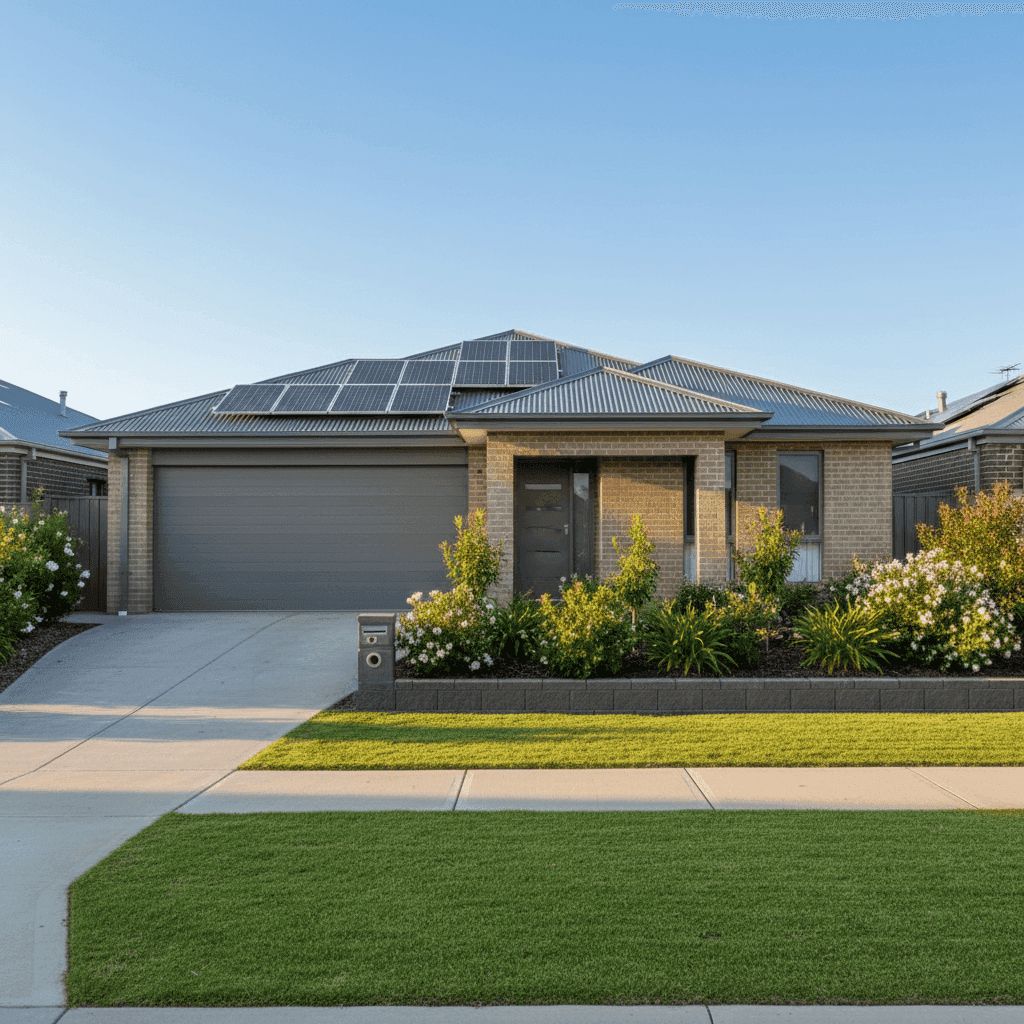
Kialla is a growing residential suburb on the southern fringe of Shepparton in northern Victoria. Known for its modern housing estates and family-friendly streets, it's become a popular destination for buyers seeking newer builds at relatively affordable prices compared to major metro areas. If you own a free standing home here, understanding what you should be paying for home and contents insurance — and why — can save you thousands each year.
This article breaks down a real insurance quote for a four-bedroom, two-bathroom free standing home in Kialla (postcode 3631), comparing it against suburb, state, and national benchmarks to help you make a more informed decision.
---
Is This Quote Fair?
The quote in question comes in at $3,843 per year (or $371/month) for combined home and contents cover, with a building sum insured of $816,000 and contents valued at $101,000. Both the building and contents excess are set at $1,000.
Our price rating for this quote is CHEAP — below average — and the data backs that up convincingly.
The suburb average for Kialla sits at $7,254 per year, meaning this quote is roughly 47% below what most homeowners in the area are paying. Even compared to the suburb's 25th percentile — the cheapest quarter of quotes — this premium of $3,843 undercuts the $5,148 mark by a significant margin.
Put simply, if you've received a quote in this range for a comparable property in Kialla, you're doing very well. That said, it's always worth confirming the policy inclusions are appropriate for your needs, as a lower premium can sometimes reflect narrower cover or higher base excesses.
---
How Kialla Compares
Kialla's insurance costs are notably elevated compared to both state and national figures, which makes this particular quote even more impressive in context.
| Benchmark | Average Premium | Median Premium |
|---|---|---|
| Kialla (suburb) | $7,254/yr | $7,132/yr |
| Strathbogie LGA | $4,601/yr | — |
| Victoria (state) | $2,921/yr | $2,694/yr |
| Australia (national) | $2,965/yr | $2,716/yr |
A few things stand out here. First, Kialla's suburb average of $7,254 is nearly 2.5 times the Victorian state average of $2,921. That's a substantial loading, likely driven by the area's exposure to flood risk along the Goulburn River floodplain, as well as bushfire risk classifications that affect parts of northern Victoria.
Interestingly, the Strathbogie LGA average of $4,601 sits well below the Kialla suburb average, suggesting that Kialla-specific risk factors — particularly flood exposure — push local premiums higher than the broader local government area.
You can explore more detailed benchmarks on the Victoria insurance stats page or compare against the national insurance averages.
Based on a sample of 149 quotes collected for this suburb, the interquartile range runs from $5,148 (25th percentile) to $9,046 (75th percentile), confirming that pricing in Kialla is both high and highly variable. Shopping around here isn't just advisable — it's essential.
---
Property Features That Affect Your Premium
Several characteristics of this particular property work in the homeowner's favour when it comes to pricing.
Construction year (2019): A relatively modern build, this home benefits from compliance with current building codes, which typically means better structural resilience, improved fire ratings, and more robust weatherproofing. Insurers generally view newer homes as lower risk.
Brick veneer external walls: Brick veneer is one of the more favoured wall materials from an insurance perspective. It offers good fire resistance and durability compared to weatherboard or fibre cement, which can contribute to a more competitive premium.
Steel/Colorbond roof: Colorbond roofing is highly regarded by insurers in Australia. It's resistant to ember attack (important in bushfire-prone regions), handles hail well, and has a long service life. This is a meaningful positive for properties in regional Victoria.
Concrete slab foundation: A slab foundation is generally considered low-risk for subsidence and movement compared to pier-and-beam or older strip footings, particularly in areas with reactive soils.
Solar panels: While solar panels add value to a property, they also add replacement cost exposure. It's important to confirm with your insurer that solar panels are explicitly included in your building sum insured — some policies cover them automatically, while others require specific endorsement.
Timber/laminate flooring: Contents and internal finishes like timber or laminate flooring can influence the cost to rebuild or repair. These materials can be moderately expensive to replace, which is worth keeping in mind when setting your building sum insured.
No pool, no ducted climate control: The absence of a pool and ducted air conditioning removes two common sources of claims and premium loading, keeping costs lower.
Building size (214 sqm): At 214 square metres, this is a mid-to-large family home. The $816,000 building sum insured translates to approximately $3,813 per square metre — broadly in line with current construction costs in regional Victoria, though it's worth reviewing this figure periodically as building costs continue to rise.
---
Tips for Homeowners in Kialla
1. Verify your flood cover status Kialla falls within the broader Goulburn River catchment, and parts of the suburb have flood risk classifications that significantly influence premiums. Check your policy's Product Disclosure Statement (PDS) carefully — flood cover is not automatically included by all insurers, and some may exclude it entirely or apply a separate flood excess. Given how much this affects local pricing, knowing exactly what you're covered for is critical.
2. Review your building sum insured annually Construction costs in regional Victoria have risen sharply in recent years. The cost to rebuild your home today may be considerably higher than it was even two or three years ago. Underinsurance is one of the most common and costly mistakes homeowners make — use a building cost calculator or speak with a quantity surveyor to validate your sum insured each year.
3. Shop around — the data says it pays off With a suburb premium range stretching from $5,148 to $9,046, there's clearly enormous variation in what insurers are charging for comparable properties in Kialla. The quote analysed here came in well below that range entirely. Comparing multiple quotes through a platform like CoverClub takes minutes and could save you thousands annually.
4. Confirm solar panel coverage With solar panels installed on this property, it's worth a quick call or review of your policy documents to confirm how panels are treated. Are they covered under the building sum insured? Is there a per-panel limit? What happens if a panel is damaged by hail or a storm? Getting clear answers now avoids nasty surprises at claim time.
---
Compare Your Own Quote
Whether you're a current Kialla homeowner wondering if you're overpaying, or you're in the market for a new policy, CoverClub makes it easy to see how your quote stacks up. With real comparison data drawn from hundreds of quotes across the suburb, you'll know instantly whether you're getting a fair deal or leaving money on the table.