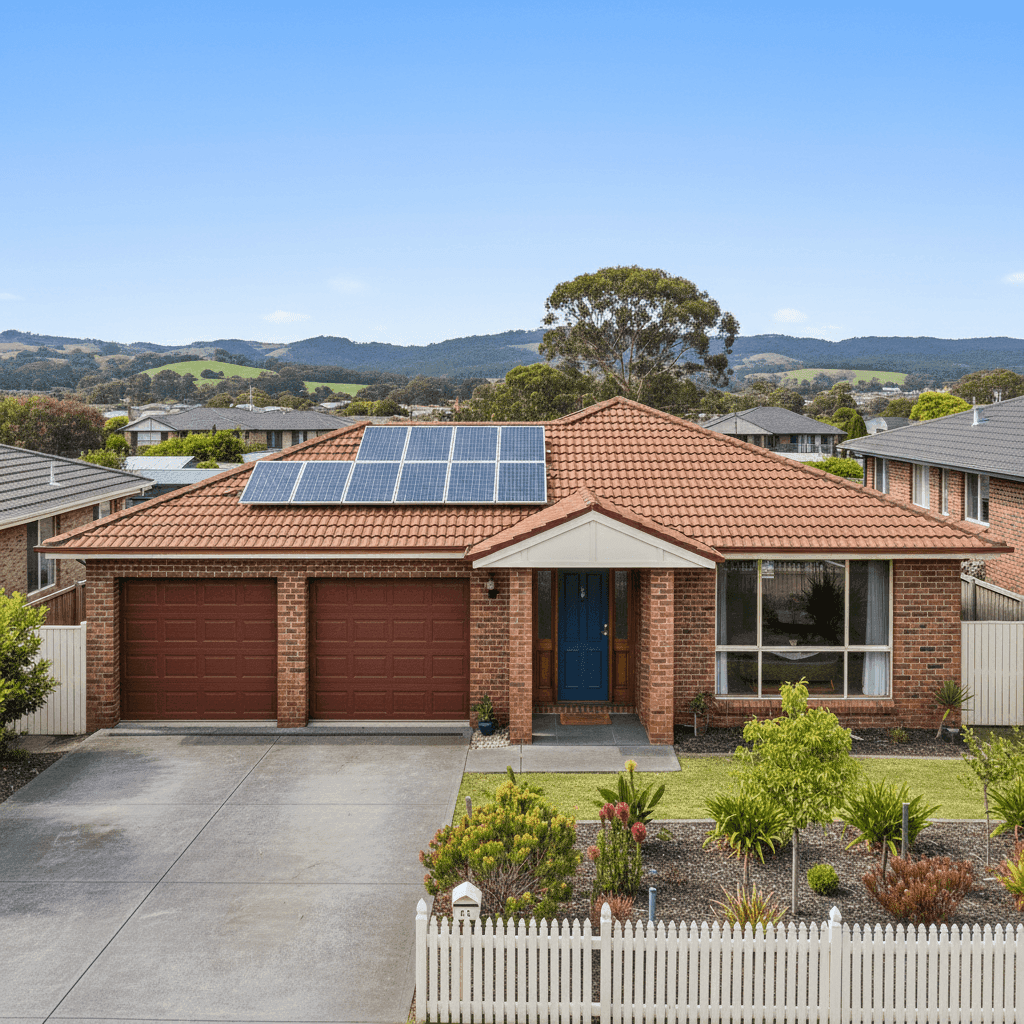
Kiama Downs is a relaxed coastal suburb on the NSW Illawarra coast, popular with families drawn to its beaches, green spaces, and easy commute to Wollongong. It's also a suburb where home insurance premiums can vary quite a bit — so if you've recently received a quote for your free standing home here, it's worth knowing exactly where it sits in the market.
This article breaks down a recent building-only insurance quote for a four-bedroom, two-bathroom free standing home in Kiama Downs (postcode 2533), examining whether the price is competitive, what local and national benchmarks look like, and what property features are likely influencing the cost.
---
Is This Quote Fair?
The annual premium for this quote comes in at $2,136 per year (or roughly $205 per month), covering the building only with a sum insured of $528,000 and a building excess of $5,000.
Our price rating for this quote is FAIR — Around Average.
That rating reflects a premium that sits just above the suburb's 25th percentile ($2,128/yr) and meaningfully below both the suburb average ($2,781/yr) and median ($2,502/yr). In practical terms, this homeowner is paying less than the majority of comparable quotes we've seen in the area, but they're not in the cheapest tier either.
It's also worth noting that the building excess here is $5,000 — higher than a typical excess. A higher excess generally reduces your premium, so part of the reason this quote looks competitive may be the trade-off in out-of-pocket costs if a claim arises. Homeowners should weigh that carefully before assuming the lower annual cost is purely a win.
---
How Kiama Downs Compares
Understanding where your premium sits relative to local and broader benchmarks is one of the most useful things you can do as a homeowner. Here's how this quote stacks up:
| Benchmark | Premium |
|---|---|
| This quote | $2,136/yr |
| Kiama Downs suburb average | $2,781/yr |
| Kiama Downs suburb median | $2,502/yr |
| Kiama Downs 25th percentile | $2,128/yr |
| Kiama Downs 75th percentile | $2,991/yr |
| Kiama LGA average | $3,332/yr |
| NSW state median | $3,770/yr |
| National median | $2,764/yr |
A few things stand out here. First, Kiama Downs premiums are notably lower than the broader Kiama LGA average of $3,332/yr, which likely reflects the mix of property types and risk profiles across the LGA. Second, NSW as a whole has a state median of $3,770/yr — significantly higher than what this Kiama Downs homeowner is paying. The NSW state average of $9,528/yr is heavily skewed by high-risk and high-value properties, which is why the median is a more useful comparison point.
Compared to the national median of $2,764/yr, this quote is slightly below — a positive sign for a coastal property in NSW, where many suburbs attract storm and flood loading.
> Note: The suburb sample size here is 14 quotes, which is a reasonable but modest dataset. Benchmarks will become more precise as more data is collected for this postcode.
---
Property Features That Affect Your Premium
Insurers assess risk based on a combination of location, construction, and individual property features. Here's how the key characteristics of this home likely influence its premium:
Brick Veneer Walls & Tiled Roof
Brick veneer construction is generally viewed favourably by insurers. It offers solid fire resistance and durability compared to weatherboard or fibre cement, which can translate to lower premiums. A tiled roof similarly signals longevity and resilience, though tiles can be more susceptible to hail damage than Colorbond — something worth checking your policy covers adequately.
Construction Year: 1985
A home built in 1985 is now over 40 years old. While it's well past the "new build" stage, it's also not so old as to raise major concerns about outdated wiring or plumbing — provided it has been reasonably maintained. Some insurers apply age-related loadings for older homes, particularly if they haven't been substantially renovated. It's worth disclosing any significant updates (electrical, roofing, plumbing) when getting quotes, as these can work in your favour.
Slab Foundation
A concrete slab foundation is standard for Australian homes of this era and is generally considered a neutral-to-positive factor by underwriters. It reduces the risk of subfloor damage and pest ingress compared to raised timber floors.
Solar Panels
Solar panels add replacement value to a home and can slightly increase the sum insured required. They also introduce a minor additional risk (electrical fault, storm damage) that some insurers factor in. Ensure your policy explicitly covers solar panels as part of the building — not all standard policies do by default.
Ducted Climate Control
Ducted air conditioning is a significant fixed asset that should be captured in your building sum insured. At $528,000, the sum insured here appears to account for a well-appointed home of 214 sqm — though it's always worth running a rebuild cost estimate to make sure you're not underinsured.
Coastal Location
Kiama Downs sits close to the NSW South Coast, which means storm and wind events are a real consideration. While it's not classified as a cyclone risk area, east coast lows and severe storms can cause significant damage in this region. Check whether your policy includes storm surge and storm damage as standard inclusions.
---
Tips for Homeowners in Kiama Downs
1. Review your sum insured annually Building costs have risen sharply in recent years. A 214 sqm brick veneer home with ducted climate control and solar panels in NSW could cost significantly more to rebuild today than even a few years ago. Use a building cost calculator or speak to a quantity surveyor to ensure $528,000 still reflects current rebuild costs.
2. Understand your excess trade-off A $5,000 building excess is on the higher end. Before renewing, consider whether a lower excess (say, $1,000–$2,500) might be worth a modest premium increase — particularly for a coastal home where storm-related claims are more likely.
3. Check solar panel coverage explicitly Ask your insurer directly whether your solar panels are covered under the building policy, and for what events. Damage from storms, hail, or electrical faults should ideally be included. Some policies treat panels as optional extras.
4. Compare at renewal, not just when you first buy Many homeowners set and forget their home insurance. Given the spread of premiums in Kiama Downs — from $2,128/yr at the 25th percentile to $2,991/yr at the 75th — there's real money to be saved by shopping around each year. A few minutes comparing quotes can easily save hundreds of dollars.
---
Compare Home Insurance Quotes in Kiama Downs
Whether you're reviewing an existing policy or shopping for the first time, comparing quotes is the single most effective way to make sure you're not overpaying. CoverClub makes it easy to see real premium data for your suburb and get quotes tailored to your property. Start comparing home insurance quotes today — it takes just a few minutes and could save you a significant amount at renewal.