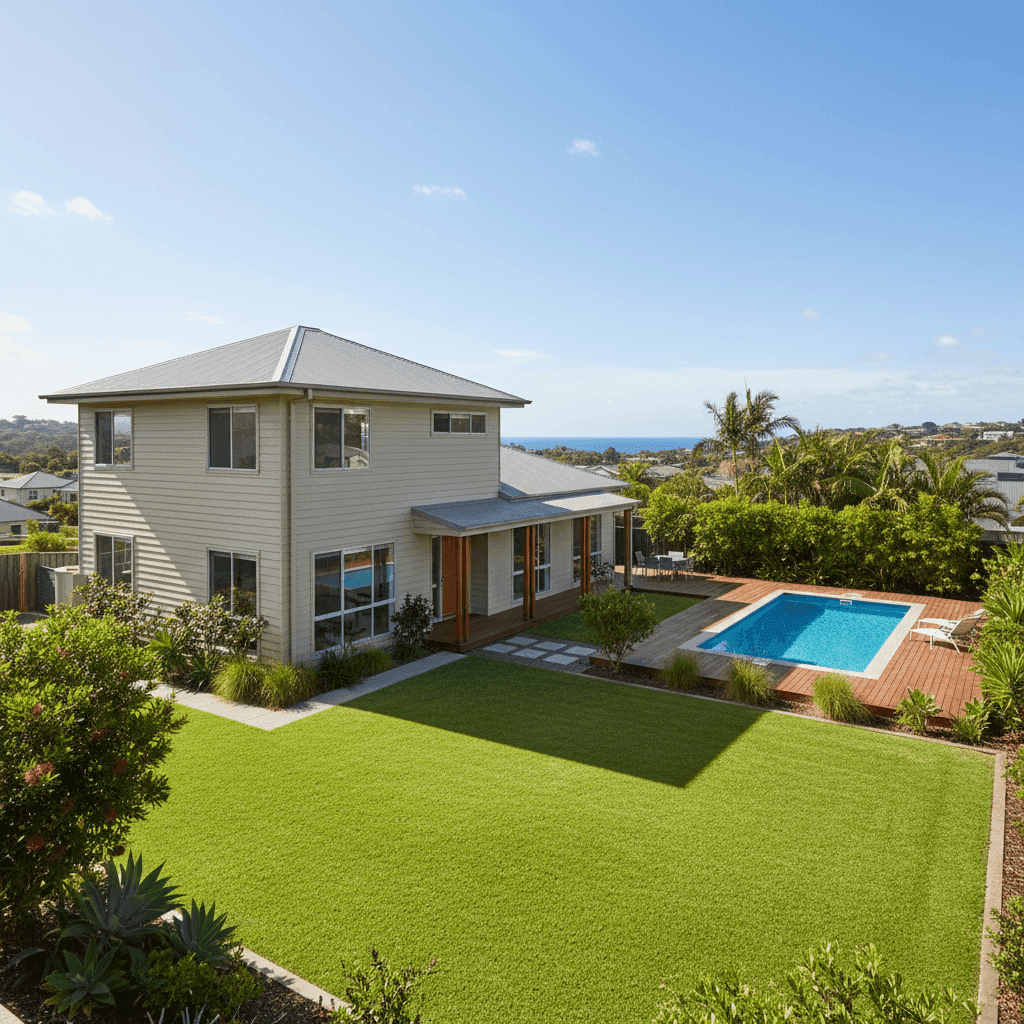
Kiama is one of the New South Wales South Coast's most desirable addresses — a coastal town known for its dramatic blowhole, lush hinterland, and a strong property market that continues to attract families and sea-changers alike. If you own a large free standing home here, protecting it with the right insurance policy is essential. This article breaks down a real home and contents insurance quote for a seven-bedroom property in Kiama (postcode 2533), examines how the premium stacks up against local, state, and national benchmarks, and offers practical tips to help you get better value on your cover.
---
Is This Quote Fair?
The quote in question comes in at $6,766 per year (or $648 per month) for combined home and contents insurance, covering a building sum insured of $1,400,000 and contents valued at $200,000. Both the building and contents excess are set at $500.
Our price rating for this quote is Expensive — Above Average.
To put that in context: the average annual premium for home insurance in Kiama sits at just $2,638, with a median of $2,411. This quote is more than 2.5 times the suburb average, which immediately raises the question — why?
The answer lies largely in the scale of the property itself. A seven-bedroom, five-bathroom home built to a 214 sqm footprint with a $1.4 million building sum insured is a significantly larger and more valuable asset than the typical Kiama home being insured. When you factor in the pool, ducted climate control system, and the premium cost of replacing Hardiplank Hardiflex cladding and a Colorbond roof, the higher premium begins to make more sense — even if it still warrants scrutiny and comparison shopping.
---
How Kiama Compares
Understanding where your premium sits relative to broader benchmarks is key to assessing value. Here's how this quote compares across different levels:
| Benchmark | Annual Premium |
|---|---|
| This Quote | $6,766 |
| Kiama Suburb Average | $2,638 |
| Kiama Suburb Median | $2,411 |
| Kiama 25th Percentile | $1,515 |
| Kiama 75th Percentile | $3,747 |
| Kiama LGA Average | $3,332 |
| NSW State Average | $9,528 |
| NSW State Median | $3,770 |
| National Average | $5,347 |
| National Median | $2,764 |
(Based on a sample of 22 quotes in the Kiama suburb. [View full Kiama suburb stats](https://coverclub.com.au/stats/NSW/2533/kiama) | [NSW state data](https://coverclub.com.au/stats/NSW) | [National data](https://coverclub.com.au/stats/national))
A few things stand out here. While this quote is well above the Kiama suburb average and median, it actually sits below the NSW state average of $9,528 — which reflects the fact that many NSW properties, particularly in flood-prone or high-risk areas, attract significantly higher premiums. The quote also exceeds the national average of $5,347, though again, the property's size and insured value justify some of that gap.
The suburb's 75th percentile sits at $3,747, meaning roughly 75% of Kiama quotes in our dataset come in cheaper than this one — but those are almost certainly for smaller homes with lower sums insured. For a property of this scale, the premium isn't unreasonable, though there may still be room to reduce it by shopping around.
---
Property Features That Affect Your Premium
Several characteristics of this property have a direct influence on what insurers charge. Here's what's most relevant:
Size and Sum Insured
At 214 sqm with seven bedrooms and five bathrooms, this is a large home by any measure. A building sum insured of $1,400,000 reflects the genuine cost to rebuild, and insurers price their risk accordingly. Larger homes cost more to rebuild, which means higher premiums — full stop.
Hardiplank Hardiflex Cladding
Hardiplank (also known as Hardiflex) is a fibre cement cladding product that is generally well regarded by insurers. It offers good fire resistance and durability compared to traditional timber weatherboards, which can work in your favour at assessment time. That said, it can be more expensive to repair or replace than standard brick veneer, which may offset some of the rating benefit.
Steel / Colorbond Roof
Colorbond steel roofing is one of the most insurer-friendly roofing materials available in Australia. It's fire-resistant, durable in coastal environments, and less susceptible to storm damage than terracotta or concrete tiles. Being in a coastal town like Kiama — where salt air and occasional severe weather are realities — a Colorbond roof is a genuine asset for both the home and your insurance rating.
Swimming Pool
The presence of a pool adds to both the replacement value of the property and the insurer's liability exposure. Pool equipment, fencing, and surrounds all need to be accounted for in your sum insured, and some insurers factor pool ownership into their risk assessment.
Ducted Climate Control
A ducted air conditioning system is a significant fixed asset that adds to the cost of reinstatement. Insurers consider this when calculating building premiums, as replacing a full ducted system can run into tens of thousands of dollars.
Slab Foundation and Timber/Laminate Flooring
A concrete slab foundation is generally considered low-risk from an insurer's perspective — no subfloor cavity means less exposure to moisture and pest-related claims. Timber and laminate flooring, however, can be costly to replace following water damage events, which is worth keeping in mind when reviewing your contents and building cover limits.
Construction Year (2017)
A home built in 2017 benefits from modern building codes, including improved cyclone and bushfire construction standards (though this property is not in a cyclone risk area). Newer builds tend to attract slightly lower premiums than older homes, all else being equal.
---
Tips for Homeowners in Kiama
1. Review Your Sum Insured Annually
With construction costs rising across Australia, it's critical that your building sum insured keeps pace with actual rebuild costs. Underinsurance is a widespread problem — if your $1.4 million cover doesn't reflect today's rebuild cost per square metre, you could be left short at claim time. Use a building cost calculator or speak with a quantity surveyor to validate your figure each year.
2. Compare Multiple Quotes — Don't Auto-Renew
Insurers rely on inertia. Many homeowners simply accept their renewal notice without checking whether a better deal exists elsewhere. Given that this quote is rated as expensive, it's worth running a comparison at CoverClub to see what other insurers would charge for the same level of cover on a property like yours.
3. Ask About Bundling Discounts
Some insurers offer a meaningful discount when you hold both home and contents policies with them — which this quote already does. However, it's worth confirming that the bundled premium is genuinely competitive, rather than simply convenient. A combined policy that's overpriced is no bargain.
4. Check Your Excess Settings
The $500 excess on both building and contents is relatively modest. Increasing your excess — say, to $1,000 or $2,000 — can reduce your annual premium noticeably. If you have the financial buffer to cover a higher out-of-pocket amount in the event of a claim, this is often a smart trade-off for a large property where small claims are unlikely to be worth making anyway.
---
Ready to Find a Better Deal?
Whether you're renewing your existing policy or shopping for the first time, comparing quotes is the single most effective thing you can do to avoid overpaying. CoverClub makes it easy to see what's available for your specific property in Kiama — just enter your address to get started. You might be surprised how much the right insurer can save you.