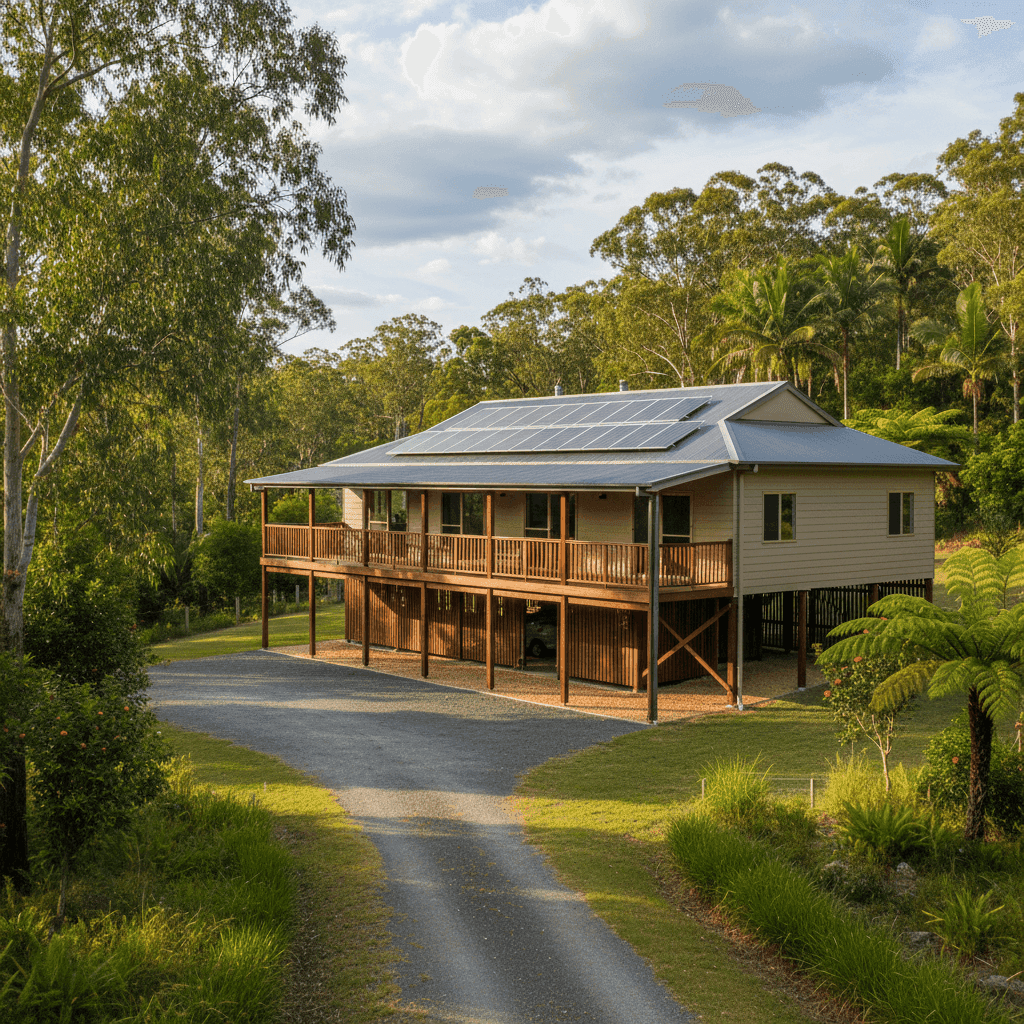
Kielvale is a quiet rural locality tucked into the hinterland of the Northern Rivers region in New South Wales, sitting within the Kyogle Local Government Area. It's the kind of place where properties tend to have a bit of character — and this four-bedroom, two-bathroom free-standing home built in 1965 is no exception. At 214 square metres, it's a well-sized family home with a number of features that are worth unpacking when it comes to understanding what you're paying for home and contents insurance.
This article breaks down a recent insurance quote for a property like this in Kielvale, compares it against local, state, and national benchmarks, and offers practical advice for homeowners in the area.
---
Is This Quote Fair?
The short answer: yes — this is an excellent result.
The quote in question comes in at $1,666 per year (or around $162 per month) for combined home and contents cover, with a building sum insured of $454,000 and contents valued at $195,000. Our price rating for this quote is CHEAP — meaning it sits well below average for comparable cover.
To put that in perspective:
- The NSW state average for home insurance is $3,801/year, with a median of $3,410
- The national average sits at $2,965/year, with a median of $2,716
- Crucially, the Kyogle LGA average is a hefty $5,204/year
Against all three benchmarks, this quote is remarkably competitive. Compared to the Kyogle LGA average alone, this homeowner is saving over $3,500 annually — a significant sum that speaks to the value of shopping around rather than simply accepting a renewal notice.
It's worth noting that the Kyogle LGA tends to attract higher premiums due to a combination of factors including flood risk in certain pockets, bushfire exposure, and the older housing stock common to the region. That makes a sub-$1,700 quote even more impressive.
---
How Kielvale Compares
While suburb-level data for Kielvale specifically is limited, the broader regional picture tells a clear story. You can explore Kielvale insurance statistics as more data becomes available, but here's how the numbers currently stack up:
| Benchmark | Annual Premium |
|---|---|
| This Quote | $1,666 |
| NSW State Average | $3,801 |
| NSW State Median | $3,410 |
| National Average | $2,965 |
| National Median | $2,716 |
| Kyogle LGA Average | $5,204 |
The gap between this quote and the Kyogle LGA average is striking. Insurers price risk at a granular level, and premiums within a single LGA can vary enormously depending on specific flood mapping, bushfire hazard ratings, and individual property characteristics. Homeowners in the Northern Rivers who haven't compared recently may be significantly overpaying.
For broader context, you can also browse NSW home insurance statistics or check out national home insurance data to see how your area stacks up across the country.
---
Property Features That Affect Your Premium
Several characteristics of this particular property influence how insurers assess and price the risk.
Construction Materials
The home features Hardiplank/Hardiflex external walls — a fibre cement cladding that's common in Australian homes of this era. It's considered a relatively fire-resistant and durable material, which insurers generally view favourably compared to weatherboard or timber cladding. The steel/Colorbond roof is another positive — it's long-lasting, low-maintenance, and performs well in both high-wind and fire-prone conditions.
Stumped Foundation
Built in 1965, this home sits on stumps — a classic construction style for the Northern Rivers and broader Queensland border region. Elevated homes on stumps offer some natural protection from minor flooding and ground moisture, though insurers will assess the specific flood mapping for the site. The elevation here is less than one metre, which keeps it in a moderate category rather than a high-set Queenslander style.
Timber and Laminate Flooring
Timber and laminate flooring can be a cost consideration in claims — particularly in flood or water damage events — as these materials can be expensive to replace. However, this is a standard feature in homes of this age and style, and most insurers price it accordingly.
Solar Panels
This property has solar panels, which are increasingly common and generally covered under building insurance as a fixed structure. It's important to confirm with your insurer that your solar system is explicitly included in your building sum insured, as some policies have specific conditions or exclusions around solar equipment.
No Pool, No Ducted Climate Control
The absence of a swimming pool removes a common liability and maintenance risk factor. Similarly, no ducted climate control system means one fewer complex mechanical system for insurers to account for in a potential claim.
Fittings Quality
Standard-grade fittings keep the replacement cost estimate grounded. Homes with high-end or custom fittings can attract higher premiums due to the increased cost of like-for-like replacement.
---
Tips for Homeowners in Kielvale
1. Don't Let Your Policy Auto-Renew Without Comparing
The Kyogle LGA average of $5,204/year shows just how wide the spread can be in this region. If you've been with the same insurer for several years without reviewing your options, there's a real chance you're overpaying. Use a comparison tool like CoverClub to benchmark your current premium.
2. Review Your Building Sum Insured Annually
Construction costs have risen significantly in recent years, particularly in regional NSW where trades and materials can carry a premium. Make sure your building sum insured reflects current rebuild costs — not what you paid for the property or what it was insured for five years ago. Underinsurance is one of the most common and costly mistakes homeowners make.
3. Check Your Solar Panels Are Covered
If you have solar panels (as this property does), confirm with your insurer exactly how they're covered. Are they included in the building sum insured? Is there a sub-limit? What happens if they're damaged by hail or storm? Getting clarity now avoids nasty surprises at claim time.
4. Understand Your Excess Structure
This quote carries a $3,000 building excess and a $1,000 contents excess. A higher excess typically results in a lower premium, but it's important to ensure you can comfortably cover that amount out of pocket if you need to make a claim. If the building excess feels too high, it's worth asking your insurer whether a lower excess option is available — and what the premium difference would be.
---
Compare Home Insurance Quotes in Kielvale
Whether you're reviewing an existing policy or taking out cover for the first time, it pays to compare. The data above shows that premiums in the Kyogle LGA can vary dramatically — and the difference between the best and worst quotes can run into thousands of dollars per year.
Get a home insurance quote at CoverClub and see how your current premium stacks up against the market in seconds. It's free, it's fast, and it could save you a significant amount at renewal time.