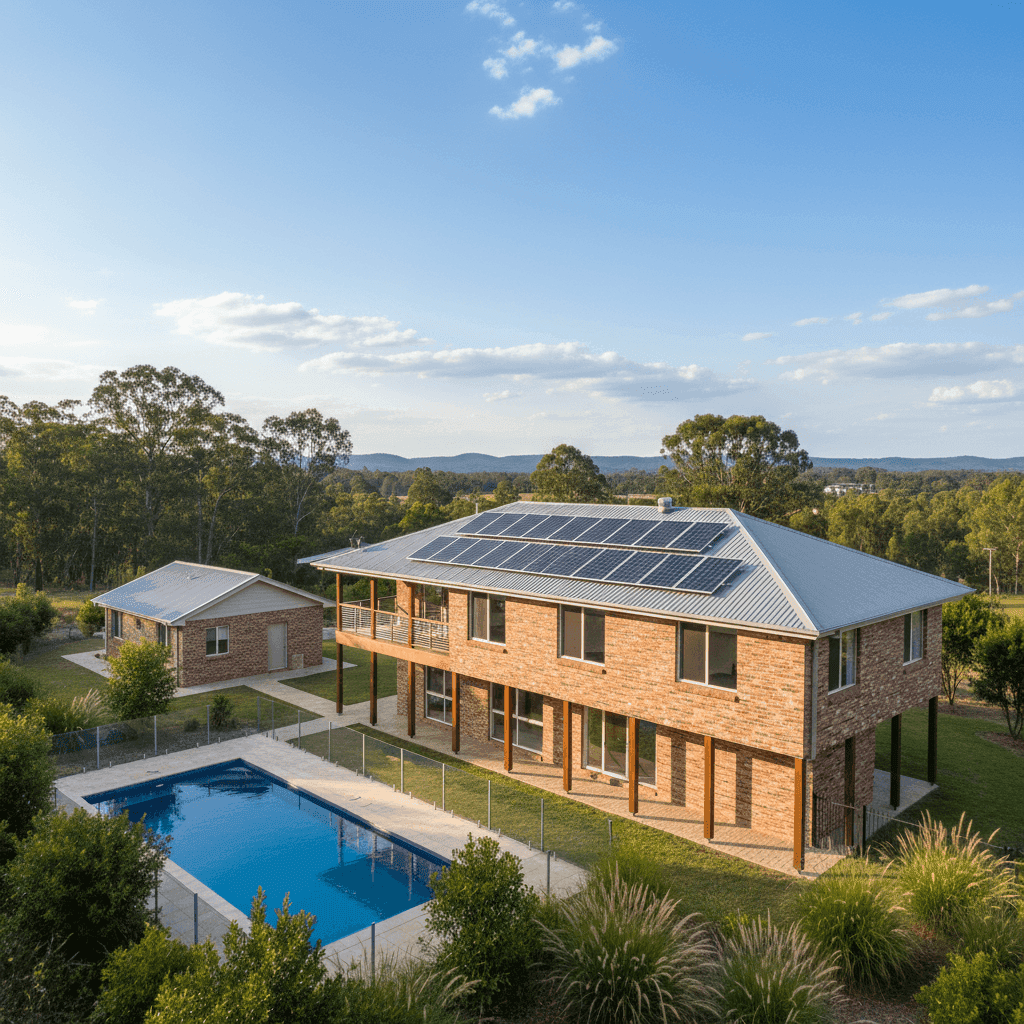
If you own a free standing home in Killabakh, NSW 2429, you're living in a semi-rural Mid North Coast community that sits within the Port Macquarie-Hastings Local Government Area. It's a beautiful part of New South Wales — but like many regional properties, the characteristics of your home and its surroundings play a significant role in what you'll pay for insurance. This article breaks down a real home and contents insurance quote for a 3-bedroom, 3-bathroom free standing home in Killabakh, and puts that number in context against suburb, state, and national benchmarks.
---
Is This Quote Fair?
The quote in question comes in at $3,043 per year (or $304/month) for combined home and contents cover, with a building sum insured of $780,000 and contents valued at $99,000. The building excess is set at $3,000 and the contents excess at $1,000.
Our price rating for this quote is FAIR — Around Average, and the data backs that up. At $3,043/yr, this premium sits:
- Below the suburb average of $3,301/yr for Killabakh
- Just above the suburb median of $2,966/yr
- Well below the Port Macquarie-Hastings LGA average of $5,055/yr — a striking difference that suggests this property's individual risk profile is working in the homeowner's favour
- Below the NSW state average of $3,801/yr
So while it's not a bargain-basement price, it's a reasonable outcome given the property's features and location. There's likely still room to shop around, but this quote is broadly competitive.
---
How Killabakh Compares
Understanding where your premium sits relative to broader benchmarks is one of the most useful things you can do as a homeowner. Here's a snapshot:
| Benchmark | Annual Premium |
|---|---|
| This Quote | $3,043 |
| Killabakh Suburb Average | $3,301 |
| Killabakh Suburb Median | $2,966 |
| Killabakh 25th Percentile | $2,949 |
| Killabakh 75th Percentile | $4,455 |
| NSW State Average | $3,801 |
| NSW State Median | $3,410 |
| National Average | $2,965 |
| National Median | $2,716 |
| Port Macquarie-Hastings LGA Average | $5,055 |
A few things stand out here. First, the LGA average of $5,055 is dramatically higher than this quote — nearly $2,000 more per year. This is likely because the LGA encompasses coastal and flood-prone areas around Port Macquarie itself, where premiums are significantly elevated. Killabakh, being further inland and in a less flood-exposed pocket, appears to attract lower base rates.
Second, this quote is above the national average and median, which is typical for regional NSW properties. Insurers price in factors like distance from emergency services, building replacement costs in regional areas, and local weather risk.
You can explore more localised data on the Killabakh suburb stats page, compare it against the NSW state overview, or see how it stacks up on the national insurance stats page.
> Note: The suburb sample size for Killabakh is currently 5 quotes, so these averages should be treated as indicative rather than definitive. More data will improve accuracy over time.
---
Property Features That Affect Your Premium
This particular home has a number of characteristics that insurers weigh carefully when calculating risk and replacement cost. Here's how the key features likely influence the premium:
Elevated on Stumps
The home is elevated by at least 1 metre on a stump foundation — a common construction style in regional NSW. On the positive side, elevation can reduce flood and moisture damage risk. However, stumped homes can be more expensive to repair after events like storms or subsidence, which insurers factor into their pricing.
Brick Veneer Walls & Colorbond Roof
Brick veneer is generally viewed favourably by insurers — it's durable, fire-resistant, and relatively low maintenance. A steel Colorbond roof is similarly well-regarded: it handles extreme weather well and is less prone to hail damage than some alternatives. Together, these materials typically support a more competitive premium.
Timber and Laminate Flooring
Timber flooring — particularly in an elevated home — can be vulnerable to moisture ingress and requires careful claims assessment. It can also be costly to replace, which may nudge the contents or building sum insured upward.
Swimming Pool
The presence of a pool adds to the insured value of the property and introduces additional liability considerations. Most insurers will factor pool fencing compliance and maintenance into their assessment.
Solar Panels
Solar panels are now a standard feature on many Australian homes, but they do add to the replacement cost of the building. At $780,000 sum insured, it's worth confirming that your policy explicitly covers solar panel damage — not all standard policies do without an endorsement.
Granny Flat
A secondary dwelling on the property increases the overall replacement cost and may introduce additional liability. It's worth checking whether your policy covers the granny flat as part of the main building sum insured or whether it requires separate cover.
No Cyclone Risk
Killabakh falls outside designated cyclone risk zones, which is a meaningful premium advantage compared to properties in far north Queensland or the NT.
---
Tips for Homeowners in Killabakh
Whether you're reviewing an existing policy or shopping for the first time, here are four practical steps to make sure you're getting the right cover at the right price.
- Review your building sum insured carefully. At $780,000, this figure needs to reflect the full cost of rebuilding — not the market value of the property. With a granny flat, solar panels, and elevated construction, rebuilding costs can escalate quickly. Use a quantity surveyor or your insurer's calculator to validate this figure annually.
- Check your granny flat is explicitly covered. Secondary dwellings are a common source of claim disputes. Ask your insurer directly whether the granny flat is included in the building sum insured or whether it needs to be listed separately. Don't assume.
- Confirm solar panel coverage. Solar systems can cost $10,000–$25,000 to replace. Check your policy wording to confirm panels are covered for storm, hail, and accidental damage — and that the sum insured accounts for them.
- Compare at least three quotes before renewing. The spread between the 25th and 75th percentile premiums in Killabakh ($2,949 to $4,455) shows there's real variation in the market. Loyalty doesn't always pay — shopping around at renewal time is one of the simplest ways to reduce your premium without changing your cover.
---
Ready to Compare?
If this quote has prompted you to wonder whether you could do better, the answer is: possibly. The best way to find out is to compare multiple insurers side by side. Get a home insurance quote at CoverClub and see how your property stacks up — it takes just a few minutes and could save you hundreds of dollars a year.