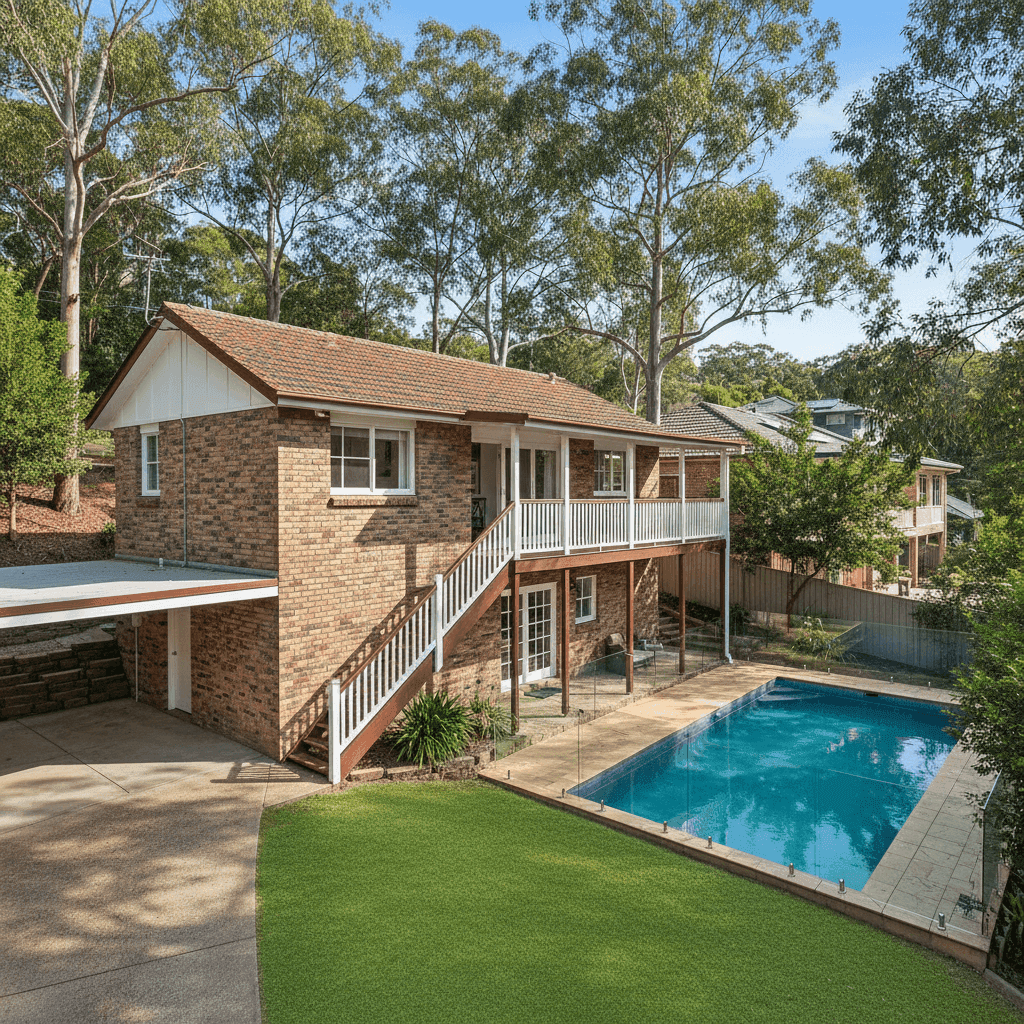
If you own a free standing home in Killarney Heights, NSW 2087, you already know the appeal — leafy streets tucked into the Northern Beaches bushland, elevated outlooks, and a relaxed suburban lifestyle that's hard to beat. But when it comes to protecting one of your most valuable assets, understanding whether you're paying a fair price for home insurance is just as important as finding the right coverage in the first place.
In this article, we analyse a recent building insurance quote for a 4-bedroom, 3-bathroom brick veneer home in Killarney Heights and benchmark it against suburb, state, and national data to help you make a more informed decision.
---
Is This Quote Fair?
The quote in question comes in at $1,607 per year (or around $157 per month) for building-only cover on a home insured for $375,000, with a building excess of $2,000.
Our rating? Cheap — well below average.
To put that in perspective, the suburb average for Killarney Heights sits at $3,500 per year, with a median of $2,965. That means this quote is coming in at less than half the local average — a significant saving by any measure. Even compared to the suburb's 25th percentile (the cheapest quarter of quotes in the area) of $2,656 per year, this premium is still considerably lower.
For a homeowner budgeting carefully, this is the kind of result that makes a real difference. At $1,607 annually, you're saving over $1,900 compared to what the typical Killarney Heights homeowner pays — money that could go toward home improvements, an emergency fund, or simply back in your pocket.
That said, it's always worth checking what's included in the policy. A low premium is only good value if the cover is appropriate for your needs. Make sure your sum insured accurately reflects what it would cost to rebuild your home from scratch — not just its market value.
---
How Killarney Heights Compares
Understanding where your suburb sits in the broader insurance landscape gives you important context. Here's how Killarney Heights stacks up:
| Benchmark | Annual Premium |
|---|---|
| This Quote | $1,607 |
| Killarney Heights 25th Percentile | $2,656 |
| Killarney Heights Median | $2,965 |
| Killarney Heights Average | $3,500 |
| Killarney Heights 75th Percentile | $4,265 |
| LGA Average (Northern Beaches) | $3,266 |
| NSW State Median | $3,770 |
| NSW State Average | $9,528 |
| National Median | $2,764 |
| National Average | $5,347 |
(Based on a sample of 16 quotes collected for the Killarney Heights area.)
A few things stand out here. First, the NSW state average of $9,528 is extraordinarily high — this figure is heavily skewed by extremely expensive premiums in flood-prone, cyclone-affected, or high-risk regional areas of the state. The median of $3,770 is a far more representative benchmark for most NSW homeowners.
At the national level, the average of $5,347 tells a similar story — pulled upward by high-risk postcodes across Queensland and northern Australia. The national median of $2,764 is again more instructive.
Compared to any of these figures, a $1,607 annual premium is genuinely competitive. Killarney Heights itself isn't a cheap suburb to insure — the local average of $3,500 reflects a range of risk factors — so securing cover well below that threshold is a strong outcome.
---
Property Features That Affect Your Premium
Several characteristics of this particular property likely contribute to its favourable premium. Let's unpack the key ones.
Brick Veneer Construction
Brick veneer walls are generally viewed favourably by insurers. While not as robust as full double-brick, brick veneer offers solid fire resistance and durability compared to weatherboard or fibre cement alternatives. This can translate into lower premiums.
Tiled Roof
A tiled roof is another tick in the right column. Tiles are durable, fire-resistant, and long-lasting — typically seen as lower risk than corrugated iron or older materials like asbestos sheeting. Combined with brick veneer walls, this home presents a relatively solid construction profile.
Elevated on Poles (at Least 1 Metre)
This is an interesting factor. Homes elevated on poles — common in the Northern Beaches and across older bushland suburbs — can cut both ways. On one hand, elevation reduces the risk of ground-level flooding and moisture damage. On the other, elevated homes can be more exposed to wind and may cost more to repair due to the complexity of the subfloor structure. Insurers assess this differently, and the relatively low premium here suggests it's been rated favourably.
1977 Build Year
Older homes can attract higher premiums due to the cost of replacing period materials and features, as well as the potential for outdated plumbing or wiring. A 1977 build isn't ancient, but it's worth ensuring your sum insured accounts for the true cost of rebuilding with modern materials and labour — particularly given recent construction cost inflation across Australia.
Swimming Pool
A pool adds value to a property but also adds liability and replacement cost. Pools are factored into building cover and can nudge premiums upward slightly, so it's worth confirming your policy explicitly covers pool infrastructure.
Standard Fittings
Standard-quality fittings (as opposed to high-end or luxury finishes) keep replacement costs — and therefore premiums — more predictable. Homes with premium fixtures, custom joinery, or imported materials typically cost more to insure.
---
Tips for Homeowners in Killarney Heights
Whether you're reviewing your current policy or shopping for a new one, here are a few practical steps worth taking.
1. Review your sum insured regularly. Construction costs in Australia have risen sharply in recent years. A sum insured that was adequate three years ago may no longer cover a full rebuild today. Use a building cost calculator or speak with a quantity surveyor to get an updated figure — underinsurance is one of the most common and costly mistakes homeowners make.
2. Don't overlook your elevated subfloor. Homes on poles have unique maintenance needs. Insurers may ask about the condition of stumps or piers, and damage to subfloor structures can be expensive to repair. Keep records of any inspections or maintenance work done on the foundation.
3. Factor in your pool. Confirm that your policy covers the pool shell, equipment, and associated structures (fencing, decking, filtration systems). Some policies limit pool cover or exclude certain types of damage, so read the Product Disclosure Statement carefully.
4. Compare quotes at renewal time. Even if you're happy with your current insurer, premiums can shift significantly year to year. Running a comparison before your renewal date takes only a few minutes and could save you hundreds of dollars — as this quote clearly demonstrates.
---
Ready to See What You Could Pay?
If you own a home in Killarney Heights or anywhere else in Australia, it pays to know whether your current premium is competitive. At CoverClub, we make it easy to compare building and contents insurance quotes side by side — no jargon, no pressure, just clear information to help you decide.
Get a quote today at CoverClub and find out if you're paying more than you need to.