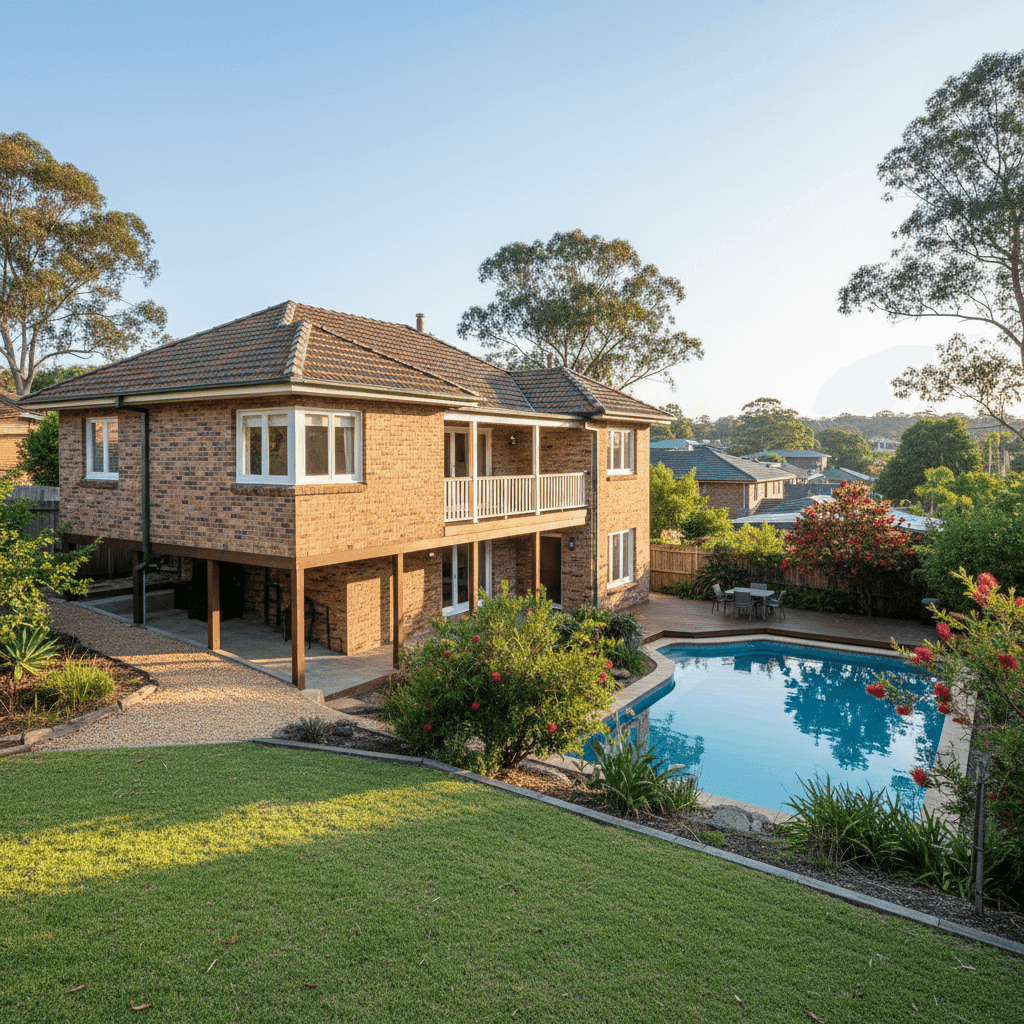
If you own a free standing home in Killarney Heights, NSW 2087, you're sitting in one of Sydney's Northern Beaches Council area gems — a leafy, hilly suburb perched between Garigal National Park and Middle Harbour. It's a beautiful place to live, but like any property in greater Sydney, getting the right home insurance at the right price takes a little know-how. We recently analysed a building-only insurance quote for a four-bedroom, three-bathroom home in this suburb, and the results are worth unpacking.
---
Is This Quote Fair?
The short answer: yes — and then some. The quote in question comes in at $1,667 per year (or roughly $163 per month), which earns a "Cheap" price rating from CoverClub — meaning it sits well below the average for the area.
To put that in perspective, the suburb average for Killarney Heights is $3,500 per year, and the median sits at $2,965. Even the cheapest quarter of quotes in the suburb (the 25th percentile) averages $2,656 per year — still nearly $1,000 more than this quote. In other words, this premium isn't just below average; it's notably lower than what most homeowners in the area are paying.
For a building sum insured of $380,000, that works out to an effective rate of around 0.44% of the insured value per year — a reasonable ratio for a well-constructed brick veneer home in a suburban Sydney setting.
The building excess is set at $2,000, which is on the higher side and is one of the key levers that keeps the premium down. A higher excess means you're agreeing to cover more of any claim yourself, which reduces the insurer's risk and, in turn, your upfront cost. It's a trade-off worth understanding before you commit.
---
How Killarney Heights Compares
Zooming out to a broader view, the numbers tell an interesting story. Check out the full Killarney Heights insurance stats here.
| Benchmark | Annual Premium |
|---|---|
| This Quote | $1,667 |
| Suburb Average (Killarney Heights) | $3,500 |
| Suburb Median | $2,965 |
| LGA Average (Northern Beaches) | $3,266 |
| NSW Median | $3,770 |
| National Median | $2,764 |
One figure that stands out is the NSW state average of $9,528 per year — which is dramatically higher than the median of $3,770. This gap signals that a relatively small number of very expensive properties (think high-value homes in flood zones, coastal erosion areas, or bushfire-prone regions) are pulling the average upward significantly. The median is almost always the more useful benchmark for a typical homeowner.
Compared to the national median of $2,764, Killarney Heights sits slightly above average — not surprising given Sydney's elevated property values and the associated rebuild costs. But this particular quote, at $1,667, actually comes in below the national median, which is a strong result.
Note that the suburb sample size here is 16 quotes, so while the data is directionally useful, a larger sample would give even greater confidence in these benchmarks.
---
Property Features That Affect Your Premium
Several characteristics of this specific property play a meaningful role in how insurers assess and price the risk.
Brick Veneer Walls & Tiled Roof
Brick veneer construction is well-regarded by insurers for its fire resistance and structural durability. Paired with a tiled roof — another solid, fire-resistant material — this home presents a relatively low-risk profile from a construction standpoint. Both materials are common in Sydney's post-war suburban housing stock and tend to attract more competitive premiums than, say, weatherboard cladding or corrugated iron roofing.
Built in 1977
Homes from the 1970s are old enough to raise a few eyebrows among insurers — particularly around plumbing, electrical wiring, and roofing materials that may not meet modern standards. However, a well-maintained 1977 home with no major defects can still attract reasonable premiums. It's worth ensuring your sum insured accounts for the cost of bringing any rebuilt structure up to current building codes, which can add to reconstruction costs beyond the raw market value.
Pole/Stump Foundation & Elevated Position
This home sits elevated by at least one metre on a pole or stump foundation — a classic feature of older Australian homes built on sloped terrain. The good news: elevation often reduces flood risk, which can lower premiums in flood-affected postcodes. The consideration, however, is that elevated homes can be more exposed to wind and storm damage underneath the structure, and the subfloor area may require specific coverage attention.
Timber & Laminate Flooring
Timber and laminate floors are a premium feature aesthetically but can be costly to replace after water damage or fire. Ensure your sum insured reflects realistic replacement costs for these finishes.
Swimming Pool
A pool adds value to the property but also adds a small layer of liability and replacement cost. Most standard building policies cover the pool structure itself, but it's worth confirming exactly what's included — particularly for pool equipment like pumps and filtration systems.
Standard Fittings
With standard-quality fittings (rather than high-end or luxury fixtures), the rebuild cost is more predictable and typically lower than a premium-fitted home. This helps keep the sum insured — and therefore the premium — at a manageable level.
---
Tips for Homeowners in Killarney Heights
1. Review your sum insured regularly $380,000 may be appropriate today, but building costs in Sydney have risen sharply in recent years. Underinsurance is one of the most common and costly mistakes homeowners make. Use an independent building cost calculator or speak to a quantity surveyor to validate your figure annually.
2. Understand your excess before you claim A $2,000 building excess is a meaningful amount. Before you lodge a claim for minor damage, consider whether the repair cost genuinely exceeds the excess by enough to justify the potential impact on your renewal premium. For smaller jobs, self-funding the repair may be the smarter move.
3. Check your subfloor and drainage Elevated homes on poles can accumulate moisture and debris under the floor, which can lead to timber rot and structural issues over time. Regular subfloor inspections and good drainage maintenance can prevent costly claims — and keep your insurer happy at renewal.
4. Compare at renewal, every year The insurance market is competitive and premiums shift. The fact that this quote came in well below the suburb average is a good reminder that loyalty doesn't always pay. Use CoverClub to benchmark your renewal quote against the market each year so you're never overpaying.
---
Ready to Compare Your Options?
Whether you're a first-time buyer in Killarney Heights or a long-time homeowner due for renewal, it pays to know what the market looks like. CoverClub makes it easy to compare home insurance quotes and understand exactly where your premium sits relative to your neighbours. Get a quote today at CoverClub and make sure you're getting the cover you need at a price that makes sense.