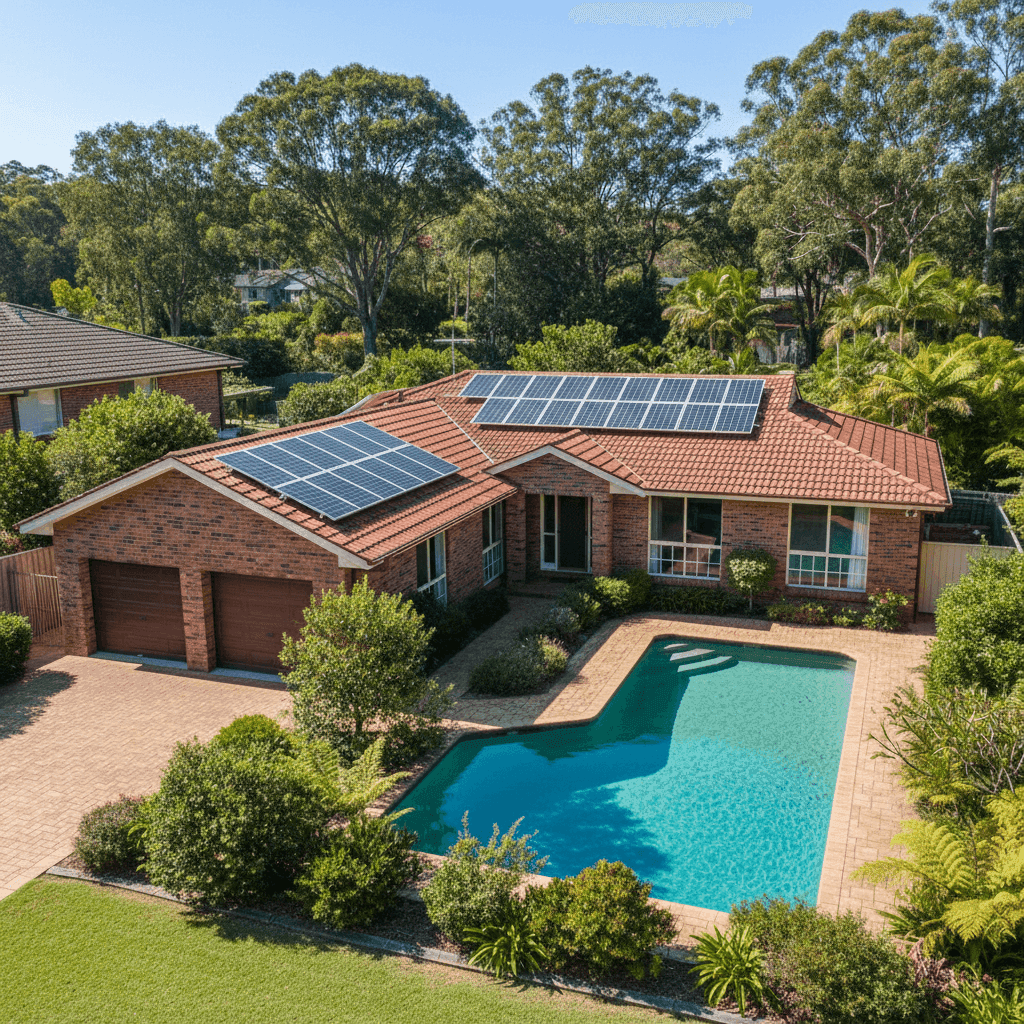
Killarney Heights is one of Sydney's most sought-after northern suburbs — a leafy, elevated pocket on the Northern Beaches that offers bushland tranquillity without sacrificing proximity to the city. Homes here tend to be substantial, well-established properties, and insuring them appropriately is an important financial consideration. This article breaks down a recent home and contents insurance quote for a four-bedroom, free-standing home in Killarney Heights (NSW 2087), examines whether the pricing stacks up, and offers practical guidance for local homeowners looking to get the best value from their cover.
---
Is This Quote Fair?
The annual premium on this quote comes in at $4,186 per year (or $401/month) for combined home and contents cover, with a building sum insured of $1,303,000 and contents valued at $115,000. Both the building and contents excess are set at $1,000.
Our price rating for this quote is FAIR — Around Average, and the data backs that up. Within the Killarney Heights suburb, the average annual premium sits at $3,500, while the median is $2,965. This quote lands above both of those figures, which is worth noting — but context matters enormously here.
A building sum insured of $1,303,000 is on the higher end, reflecting a large 315 sqm home with a pool, solar panels, and ducted climate control — all features that meaningfully influence the cost to rebuild or replace. When you account for the scope of what's being covered, a premium just below the suburb's 75th percentile ($4,265/yr) is a reasonable outcome. In short: this isn't a bargain, but it's not overpriced either.
---
How Killarney Heights Compares
Understanding where a quote sits relative to broader benchmarks helps put the number in perspective. Here's how this premium compares across different geographies:
| Benchmark | Average Premium | Median Premium |
|---|---|---|
| Killarney Heights (2087) | $3,500/yr | $2,965/yr |
| Northern Beaches LGA | $3,266/yr | — |
| NSW | $9,528/yr | $3,770/yr |
| National | $5,347/yr | $2,764/yr |
A few things stand out from this table. First, the NSW state average of $9,528 is dramatically higher than the median of $3,770 — a clear sign that a small number of very expensive policies (likely in high-risk flood, fire, or coastal erosion zones) are pulling the average upward. The median is almost always a more reliable benchmark for typical homeowners.
Against the NSW median of $3,770, this quote of $4,186 is modestly above average — which aligns with the "Fair" rating. Compared to the national median of $2,764, it's higher, but Killarney Heights is a premium Sydney suburb with correspondingly higher rebuild costs and property values.
You can explore detailed premium data for this postcode at our Killarney Heights suburb stats page, or broaden your view with NSW insurance statistics and national home insurance data.
> Note: Suburb data is based on a sample of 16 quotes, so averages should be treated as indicative rather than definitive.
---
Property Features That Affect Your Premium
Several characteristics of this property have a direct bearing on what insurers charge. Understanding them can help you have more informed conversations with providers.
Age of Construction (1965)
Built in 1965, this home is now over 60 years old. Older properties can attract higher premiums because ageing electrical wiring, plumbing, and structural components carry a greater risk of failure. Insurers may also apply higher rebuild cost estimates to account for the difficulty of sourcing period-appropriate materials and tradespeople.
Brick Veneer Walls and Tiled Roof
Brick veneer construction is generally viewed favourably by insurers — it's durable, fire-resistant, and widely used across Australian suburbs. Similarly, a tiled roof is considered a lower-risk roofing material compared to timber shingles or corrugated iron in some contexts. Together, these features likely help moderate the premium.
Stump Foundation and Timber/Laminate Flooring
Homes on stumps (also known as pier-and-beam foundations) are common in older NSW properties. While they offer good ventilation, they can be more vulnerable to movement and pest damage over time. Combined with timber or laminate flooring — which can be costly to repair or replace if water damage occurs — this adds a layer of risk that insurers factor in.
Swimming Pool
A pool increases both the replacement value of the property and the liability exposure for insurers. Pool equipment (pumps, filters, heating systems) adds to the contents or building sum insured, and any damage to the pool structure or surrounds can be expensive to rectify.
Solar Panels
Solar panels are increasingly common on Australian rooftops, but they do add complexity to insurance. Panels themselves can be damaged by hail, storms, or falling debris, and their presence affects roof access for repairs. Ensuring your policy explicitly covers solar panels — both the panels and the inverter — is essential.
Ducted Climate Control
A ducted air conditioning system is a significant fixed asset. If it's included in the building sum insured, it contributes to the higher rebuild cost estimate. Damage to ductwork or the central unit can run into tens of thousands of dollars, so it's important to confirm how your policy treats this.
---
Tips for Homeowners in Killarney Heights
1. Review Your Sum Insured Carefully
A building sum insured of $1,303,000 is substantial — and getting this figure right is critical. Too low, and you risk being underinsured in the event of a total loss. Too high, and you're paying more premium than necessary. Consider commissioning a professional building valuation, particularly given the home's age and size.
2. Check That Your Pool and Solar Are Explicitly Covered
Don't assume these features are automatically included under your standard policy. Ask your insurer specifically whether the pool structure, pool equipment, solar panels, and inverter are covered — and under what circumstances. Some policies treat solar panels as contents; others include them in the building.
3. Explore Your Excess Options
Both the building and contents excess on this policy are set at $1,000. Opting for a higher excess (say, $2,000 or $2,500) can reduce your annual premium meaningfully. If you have a solid emergency fund and are unlikely to make small claims, a higher excess could be a smart trade-off.
4. Compare Quotes Annually
Insurance markets shift, and loyalty doesn't always pay. Given that this quote is rated "Fair" rather than "Great," there may be room to find more competitive pricing without sacrificing cover quality. Shopping around at renewal time — especially through a comparison platform — is one of the simplest ways to manage this cost.
---
Ready to Compare?
Whether you're reviewing your existing policy or insuring a property for the first time, comparing multiple quotes is the best way to ensure you're getting fair value. At CoverClub, we make it easy to see how your premium stacks up and find cover that suits your property and budget. Get a home insurance quote today and take the guesswork out of protecting your home.