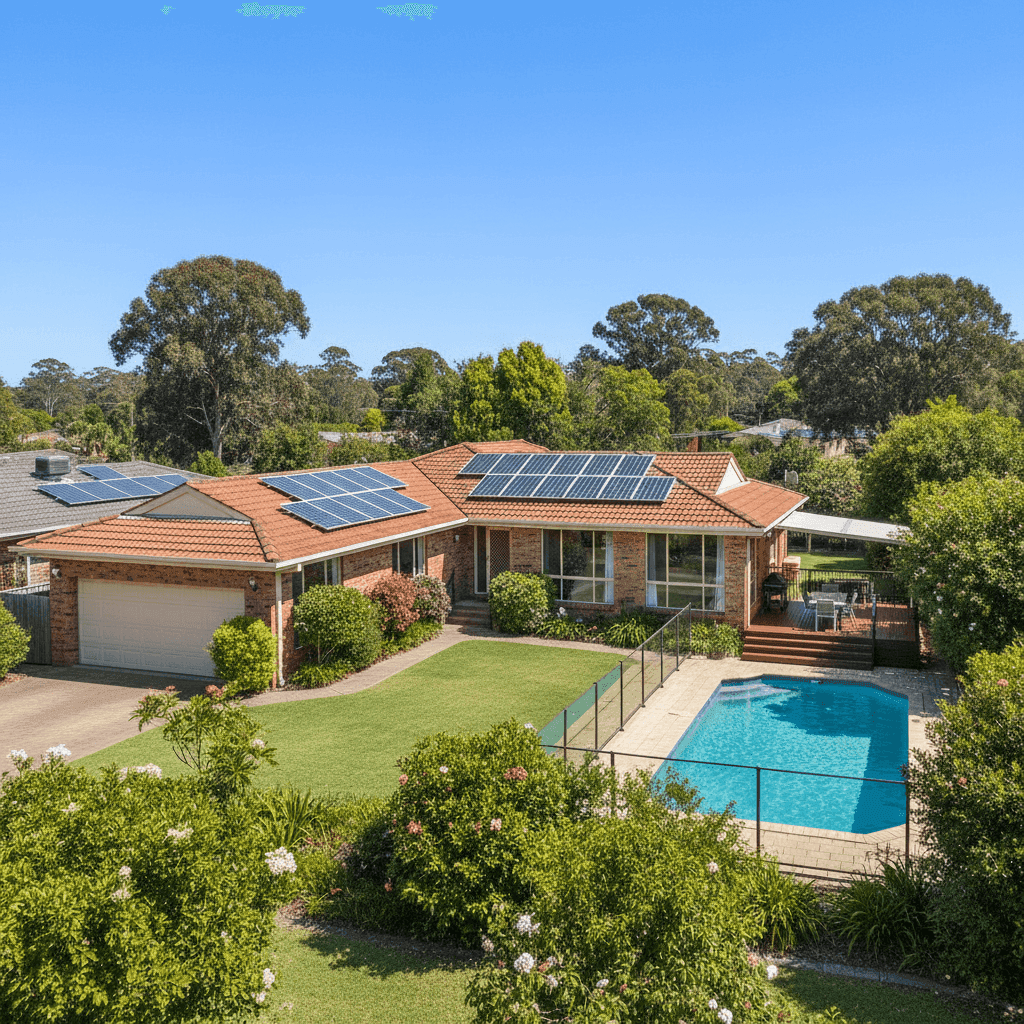
If you own a free standing home in Killarney Vale, NSW 2261, you've probably noticed that home insurance premiums can vary enormously depending on your property's features, the level of cover you choose, and which insurer you approach. This article breaks down a real home and contents insurance quote for a four-bedroom property in Killarney Vale, compares it against suburb, state, and national benchmarks, and offers practical tips to help you make the most of your coverage.
---
Is This Quote Fair?
The quote in question comes to $8,762 per year (or $860 per month) for combined home and contents cover, with a building sum insured of $751,000 and contents valued at $150,000. The building excess is $3,000 and the contents excess is $1,000.
Based on available market data, this premium is rated Expensive — above average for the area. That's a meaningful flag worth exploring, because paying more than you need to is never ideal — but it's also important to understand why a premium lands where it does before assuming it's simply overpriced.
Several factors can push a premium into the expensive bracket: a high sum insured, above-average fittings quality, additional features like a swimming pool and solar panels, and the specific risk profile an insurer assigns to the property. In this case, the building is insured for $751,000 — a substantial figure that reflects the cost of rebuilding a 244 sqm home with above-average finishes in today's construction market. That alone will drive the base premium up considerably compared to a more modestly valued property.
---
How Killarney Vale Compares
To put this quote in context, here's how it stacks up against broader market data:
| Benchmark | Average Premium | Median Premium |
|---|---|---|
| Killarney Vale (suburb) | $2,009/yr | $2,009/yr |
| Central Coast LGA | $8,387/yr | — |
| NSW (state) | $9,528/yr | $3,770/yr |
| National | $5,347/yr | $2,764/yr |
(Based on 61 quotes sampled for postcode 2261. Suburb 25th percentile: $1,437/yr; 75th percentile: $2,372/yr.)
At first glance, the suburb average of $2,009/yr looks dramatically lower than this quote. However, it's critical to account for the fact that the suburb sample likely includes a wide range of properties — many with lower sums insured, standard fittings, and no pool or solar panels. A quote for a 244 sqm home with $751,000 in building cover and $150,000 in contents is inherently going to sit well above the median for any suburb.
More telling is the Central Coast LGA average of $8,387/yr, which this quote exceeds by only around $375 — suggesting the premium is broadly in line with what larger, well-appointed homes on the Central Coast are attracting. The NSW state average of $9,528/yr (mean) also provides useful context; this quote sits comfortably below that figure.
You can explore the full data for this postcode at the Killarney Vale suburb stats page, compare it against NSW state averages, or benchmark against national home insurance data.
---
Property Features That Affect Your Premium
Understanding what drives your premium is the first step to managing it. Here's how the specific characteristics of this property influence the cost of cover:
Brick Veneer Walls & Tiled Roof
Brick veneer construction is generally well-regarded by insurers — it's durable, fire-resistant, and widely used in Australian suburban homes. Combined with a tiled roof, this property sits in a relatively favourable risk category from a construction standpoint. These materials tend to attract standard or slightly reduced rates compared to, say, weatherboard cladding or metal roofing.
Stump Foundation & Timber/Laminate Flooring
The property sits on stumps, which is common for homes built in coastal and semi-rural NSW. While stumps can be a factor in some assessments (particularly around subsidence or pest risk), they're generally well-understood by insurers. The timber and laminate flooring is consistent with above-average fittings quality and adds to the overall rebuild cost.
Above-Average Fittings Quality
This is a meaningful premium driver. Above-average fittings — think stone benchtops, quality cabinetry, premium appliances, and high-end fixtures — significantly increase the cost to rebuild or repair. Insurers factor this into their rebuild estimates, which flows directly into the building sum insured and, in turn, the premium.
Swimming Pool
Pools add both value and liability to a property. From an insurance perspective, they increase the potential cost of a claim (damage to the pool structure, equipment, or surrounds) and can affect liability exposure. Expect a pool to add a modest but noticeable component to your annual premium.
Solar Panels
Solar panels are increasingly common on Australian homes, but they do add to the insured value of the property. Panels, inverters, and associated wiring can be costly to repair or replace after a storm, hail event, or fire. Most home insurance policies cover solar panels as part of the building, but it's worth confirming this with your insurer.
Built in 2000
A home constructed around the year 2000 benefits from relatively modern building standards without the complications of very old wiring, plumbing, or materials. This vintage is generally viewed neutrally to favourably by insurers.
---
Tips for Homeowners in Killarney Vale
1. Review Your Sum Insured Annually
Building costs have risen sharply in recent years, and your sum insured should reflect the current cost to rebuild — not the purchase price or market value of your home. Use an independent building cost calculator or speak to a quantity surveyor to ensure you're neither underinsured nor paying to insure more than necessary.
2. Consider Adjusting Your Excess
This policy carries a $3,000 building excess. Opting for a higher excess is one of the most direct levers you have to reduce your annual premium. If you have the financial buffer to cover a larger out-of-pocket cost in the event of a claim, increasing your excess could deliver meaningful savings.
3. Bundle and Compare
Home and contents policies are often cheaper when purchased together from the same insurer — which this quote already does. However, the bundled price should still be compared against separate policies from competing insurers. The market is competitive, and loyalty doesn't always pay.
4. Check What's Covered for Your Pool and Solar
Given this property has both a pool and solar panels, it's worth reading the fine print on exactly what's covered. Some policies limit payouts on solar equipment or exclude certain types of pool damage. Knowing your policy's boundaries helps you avoid nasty surprises at claim time.
---
Compare Your Options with CoverClub
Whether this quote represents good value depends on your full picture — your risk tolerance, your rebuild cost, and what alternatives the market has to offer. The best way to find out is to compare. At CoverClub, you can get a home insurance quote in minutes and see how different insurers price your specific property. Don't settle for the first number you're given — a few minutes of comparison could save you hundreds of dollars a year.