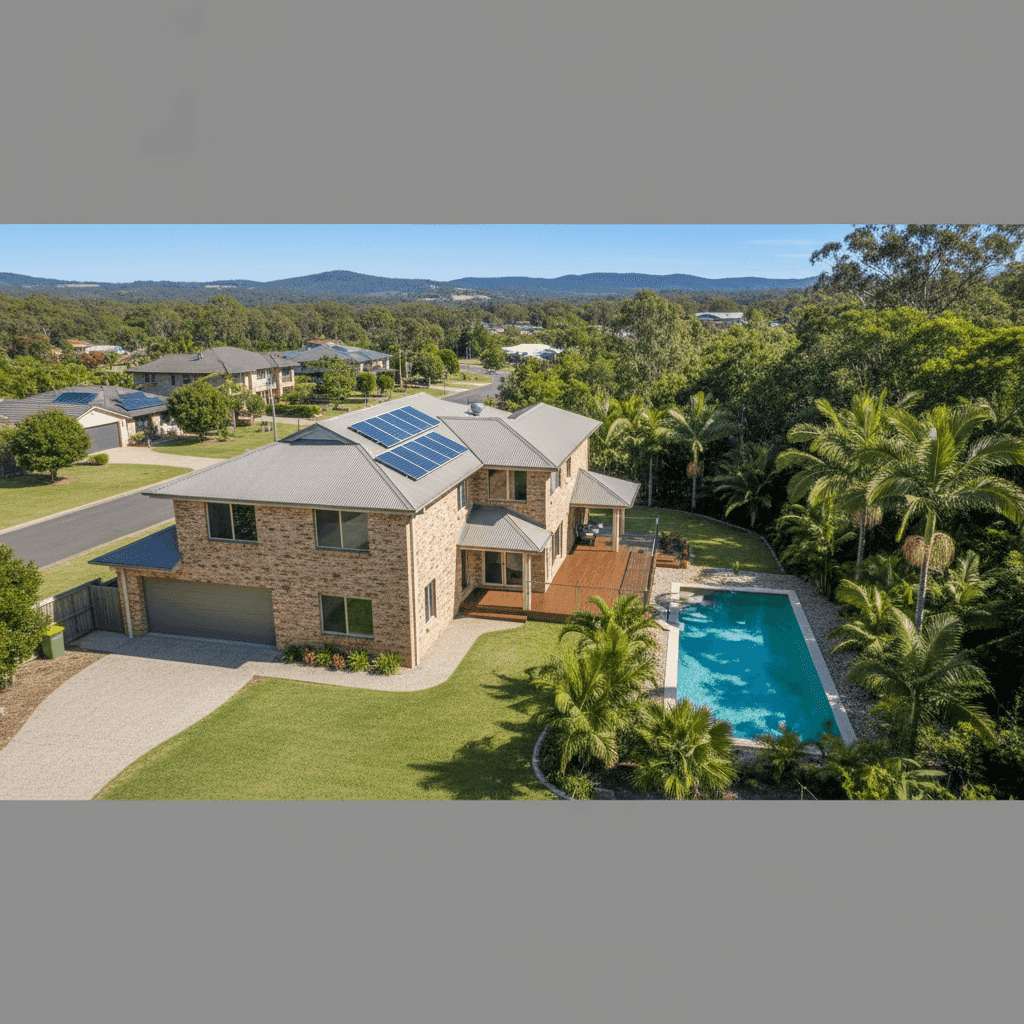
If you own a free standing home in Killcare Heights, NSW 2257, you already know the appeal — a peaceful Central Coast setting, leafy surroundings, and that relaxed semi-rural lifestyle just a couple of hours from Sydney. But coastal and semi-rural properties come with their own insurance considerations, and making sure you're not overpaying (or underinsured) is well worth the effort.
In this article, we break down a real home and contents insurance quote for a 3-bedroom, 3-bathroom free standing home in Killcare Heights, and compare it against suburb, state, and national benchmarks so you can see exactly where it sits.
---
Is This Quote Fair?
The quote in question comes in at $2,293 per year (or $233/month) for combined home and contents cover, with a building sum insured of $200,000 and contents valued at $85,000. The building excess is $3,000 and the contents excess is $1,000.
Our rating? Cheap — below average. That's a genuinely positive result for the homeowner.
To put it in context, the average home insurance premium across Killcare Heights sits at $4,785 per year, with a suburb median of $4,294. This quote lands well below even the 25th percentile for the suburb ($3,509/yr), meaning it's cheaper than at least 75% of quotes we've seen in the area. That's a meaningful saving — potentially over $2,000 per year compared to what many local homeowners are paying.
It's worth noting that excess levels play a role here. A higher building excess of $3,000 will reduce the annual premium, so homeowners should weigh up whether that trade-off suits their risk appetite. If you'd prefer a lower out-of-pocket cost in the event of a claim, adjusting the excess upward is one lever you can pull to bring premiums down — but this quote demonstrates it can work in your favour when the savings are this significant.
---
How Killcare Heights Compares
Zooming out to a broader view, the pricing picture becomes even more interesting. Here's how the numbers stack up across different geographies:
| Benchmark | Average Premium | Median Premium |
|---|---|---|
| Killcare Heights (suburb) | $4,785/yr | $4,294/yr |
| NSW (state) | $9,528/yr | $3,770/yr |
| National | $5,347/yr | $2,764/yr |
| Central Coast LGA | $8,387/yr | — |
A few things stand out here. The NSW state average of $9,528 is extremely high, but this is heavily skewed by expensive properties and high-risk areas across the state — the median of $3,770 is a more representative figure for typical NSW homeowners. Similarly, the Central Coast LGA average of $8,387 reflects the diversity of property types and values across the region.
At $2,293, this quote sits below the national median of $2,764, which is a strong result. For more detailed suburb-level data, visit our Killcare Heights insurance stats page, or explore NSW home insurance benchmarks and national averages for broader context.
---
Property Features That Affect Your Premium
Every home is different, and insurers price risk based on a range of property characteristics. Here's how the features of this particular home are likely influencing the quote:
Brick Veneer Walls Brick veneer is generally viewed favourably by insurers. It offers solid fire resistance and durability, which can contribute to lower premiums compared to lightweight cladding or weatherboard construction.
Steel/Colorbond Roof Colorbond roofing is another tick in the insurer's box. It's highly durable, resistant to fire and harsh weather, and has a long lifespan — all factors that reduce the likelihood of weather-related claims.
Slab Foundation A concrete slab foundation is considered low-risk from an insurance perspective. There's no subfloor space to deteriorate or become a moisture trap, which reduces certain structural risks.
Timber/Laminate Flooring Timber and laminate floors are standard in many Australian homes. They don't significantly increase premiums, though they can be a consideration in flood or water damage scenarios.
Swimming Pool A pool adds liability risk and potential maintenance-related claims, which can nudge premiums upward. It's important to ensure your policy includes adequate liability cover for pool-related incidents.
Solar Panels Solar panels are increasingly common and most insurers now include them under standard building cover, though it's always worth confirming this with your insurer. Panels add value to the property and are worth factoring into your sum insured.
Ducted Climate Control Ducted systems are a significant fixed asset and should be captured in your building sum insured. They can add to replacement costs, so accurate sum insured calculations are essential.
Construction Year: 1990 A home built in 1990 is well-established but not so old as to carry significant heritage or maintenance risk. It's likely to have undergone some updates over the decades, which generally supports competitive pricing.
---
Tips for Homeowners in Killcare Heights
1. Review your sum insured carefully At $200,000, the building sum insured should reflect the full cost to rebuild — not the market value of the property. Given the size (153 sqm), construction type, and inclusions like a pool and ducted system, it's worth using a building cost calculator to confirm this figure is adequate. Underinsurance is one of the most common and costly mistakes Australian homeowners make.
2. Factor in your pool and solar panels Confirm with your insurer that both your swimming pool and solar panels are explicitly covered under your policy. Some policies include these automatically; others may require endorsements. Don't assume — ask.
3. Shop around at renewal time This quote is already competitively priced, but insurance markets shift. Premiums can change significantly at renewal without much notice. Making it a habit to compare quotes annually — especially using a platform like CoverClub — ensures you're not quietly drifting into overpaying territory.
4. Consider your excess strategy The $3,000 building excess on this policy is on the higher side. If you have the financial buffer to absorb a larger out-of-pocket cost after a claim, this is a smart way to keep premiums down. If not, consider whether a lower excess with a slightly higher premium better suits your household budget.
---
Compare Your Own Quote
Whether you're a first-time buyer in Killcare Heights or a long-time local reviewing your renewal, it pays to know where your premium sits relative to the market. CoverClub makes it easy to benchmark your quote and explore your options — get started here and see how your home insurance stacks up in minutes.