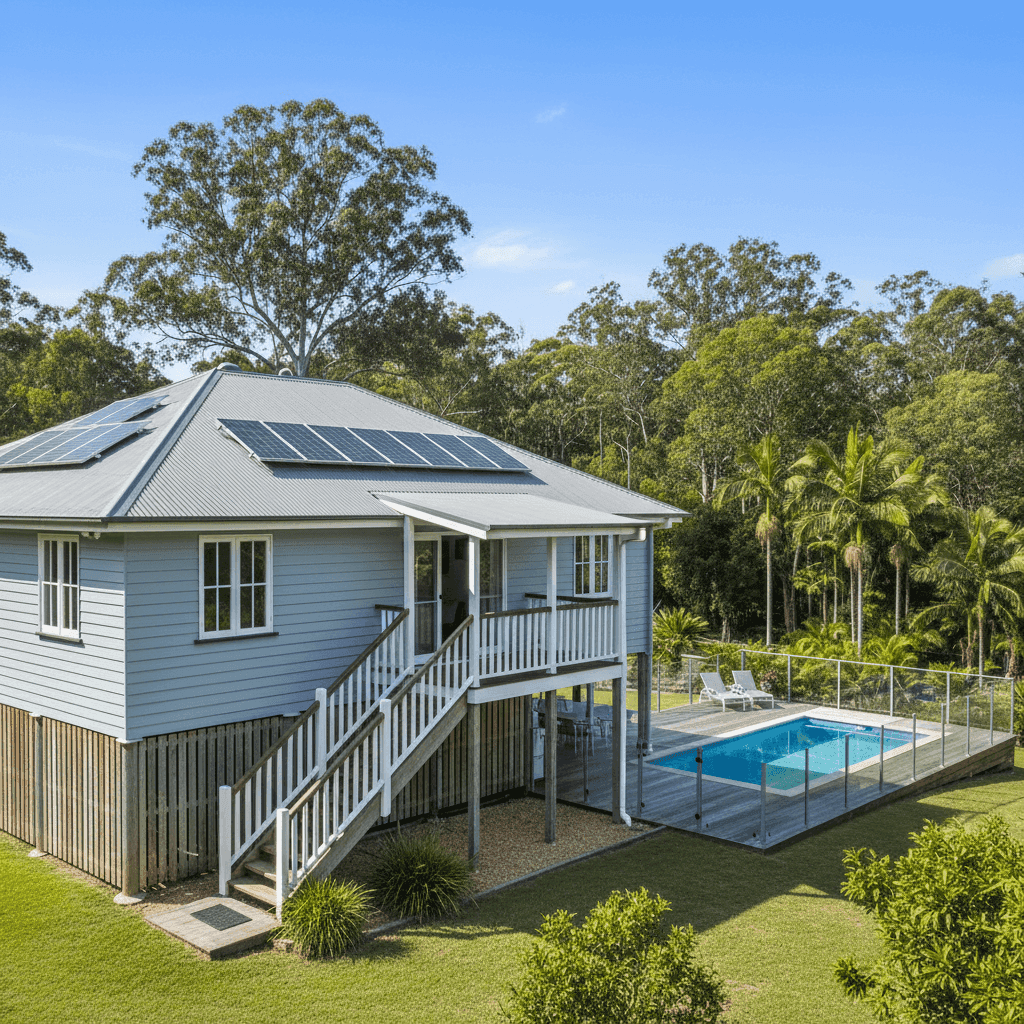
Nestled in the Noosa hinterland, Kin Kin is a quiet rural township in Queensland's Sunshine Coast region that appeals to homeowners seeking a relaxed lifestyle away from the coast. If you own — or are thinking of buying — a free standing home in this postcode, understanding what you should expect to pay for home and contents insurance is an important part of managing your household budget. This article breaks down a real quote for a 3-bedroom, 2-bathroom weatherboard home in Kin Kin (QLD 4571) and puts it in context against local, state, and national benchmarks.
---
Is This Quote Fair?
The quote in question comes in at $2,463 per year (or $242/month) for combined home and contents cover, with a building sum insured of $514,000 and contents valued at $55,000. Both the building and contents excess are set at $1,000.
CoverClub rates this premium as CHEAP — below average for the area. That's genuinely good news for the homeowner. Based on suburb-level data for Kin Kin (QLD 4571), the average annual premium across 21 quotes sits at $3,422, and the median is $3,273. This quote lands well below both figures — and even comes in under the 25th percentile of $2,693, meaning it's cheaper than at least 75% of comparable quotes collected for this suburb.
In plain terms: this is a competitive result. Whether it's driven by the insurer's appetite for this risk profile, the property's construction year (2014 is relatively modern), or the specific combination of features, the homeowner appears to be getting solid value.
---
How Kin Kin Compares
To appreciate how this quote sits within the broader insurance landscape, it helps to zoom out.
| Benchmark | Annual Premium |
|---|---|
| This Quote | $2,463 |
| Kin Kin suburb average | $3,422 |
| Kin Kin suburb median | $3,273 |
| Kin Kin 25th percentile | $2,693 |
| QLD state median | $3,903 |
| National median | $2,764 |
| National average | $5,347 |
| Noosa LGA average | $18,770 |
A few things stand out here. First, the Queensland state average of $9,129/year is dramatically higher than what most Kin Kin residents pay — this is largely because QLD's coastal and cyclone-prone postcodes (think Far North Queensland) pull the average up significantly. The state median of $3,903 is a more representative figure, and this quote still beats it comfortably.
Second, the Noosa LGA average of $18,770/year is eye-catching. This figure is heavily influenced by high-value coastal properties in suburbs like Noosa Heads, Sunshine Beach, and Peregian Beach, where land values — and therefore rebuild costs — are substantially higher. Kin Kin, sitting inland, benefits from a very different risk and valuation profile.
Against the national median of $2,764, this quote is marginally cheaper, which is a solid outcome for a Queensland property given the state's generally elevated premiums.
---
Property Features That Affect Your Premium
Several characteristics of this property are worth discussing in the context of insurance pricing.
Weatherboard timber walls and a steel/Colorbond roof are a common combination in Queensland hinterland homes. Timber weatherboard is generally considered a moderate-risk construction material — it's more susceptible to fire than brick veneer but is well-understood by insurers and widely accepted. Colorbond roofing, on the other hand, is typically viewed favourably: it's durable, low-maintenance, and performs well in high-wind events.
Pole or stump foundations are characteristic of elevated Queenslander-style homes and can actually work in a homeowner's favour in flood-prone areas by allowing water to pass beneath the structure. This property is noted as elevated by less than 1 metre, which provides some protection against minor inundation.
Timber and laminate flooring is worth noting for contents purposes — these floor types can be costly to repair or replace if water damage occurs, so ensuring your contents and building cover adequately accounts for this is sensible.
The 2014 construction year is a positive factor. Modern homes built after Queensland's building code updates following the 2011 floods and Cyclone Yasi tend to incorporate improved structural standards, which can translate to lower risk in insurers' eyes.
Additional features — a swimming pool, solar panels, and ducted climate control — each add some replacement value to the property. Solar panels in particular should be explicitly confirmed as covered under your building policy, as coverage varies between insurers. The pool also introduces some liability considerations worth reviewing in your policy's fine print.
Notably, Kin Kin is not classified as a cyclone risk area, which is a meaningful premium advantage over coastal and far-north Queensland properties where cyclone cover can add hundreds of dollars per year.
---
Tips for Homeowners in Kin Kin
1. Confirm your solar panels are covered Solar panel systems can represent $8,000–$20,000 or more in replacement value. Not all home insurance policies automatically cover rooftop solar as part of the building sum insured. Check your Product Disclosure Statement (PDS) carefully and contact your insurer to confirm.
2. Review your building sum insured regularly Construction costs have risen sharply across Australia in recent years. A building sum insured of $514,000 for a 130 sqm home works out to roughly $3,950/sqm — reasonable for a modern weatherboard build, but worth revisiting annually to ensure you wouldn't be underinsured in the event of a total loss.
3. Don't overlook storm and water damage preparedness While Kin Kin isn't in a cyclone zone, the Noosa hinterland does experience heavy rainfall and storm events. Keep gutters clear, inspect roof flashings annually, and ensure stormwater drainage around your stumps is functioning properly. Some insurers offer premium discounts for documented maintenance.
4. Compare quotes at renewal time Even if your current premium is below average, insurers frequently adjust their pricing. Shopping around at each renewal — rather than auto-renewing — is one of the simplest ways to maintain a competitive rate. A quote that's cheap today may not be the best option next year.
---
Ready to Compare Your Options?
Whether you're reviewing your existing policy or shopping for cover on a new property, CoverClub makes it easy to see what multiple insurers would charge for your specific home. Get a home insurance quote today and find out if you're paying a fair price — or if there's a better deal waiting for you.
For more data on insurance pricing in this area, visit the Kin Kin suburb stats page or explore Queensland-wide home insurance trends.