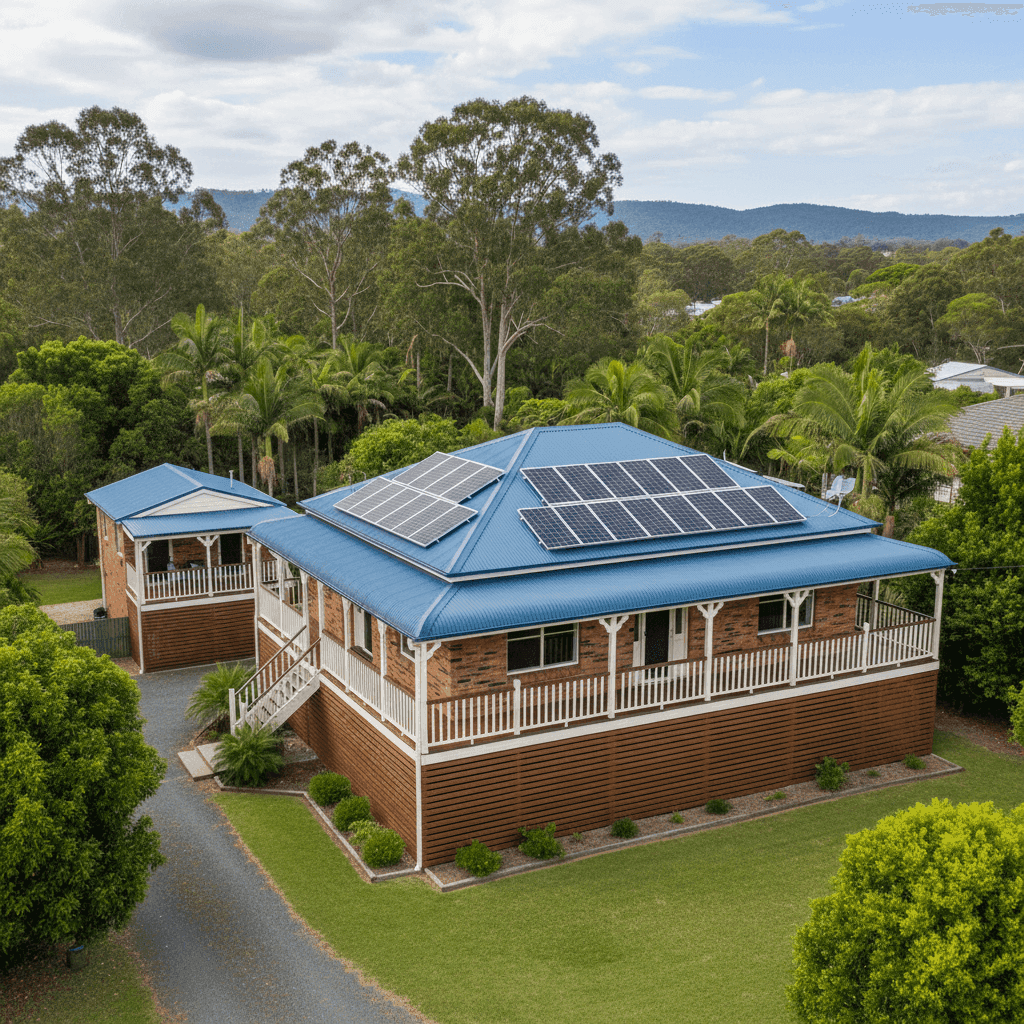
If you own a free standing home in Kinchela, NSW 2440, you're likely aware that home insurance costs can vary enormously depending on your property's characteristics, location risk profile, and the level of cover you choose. This article breaks down a real home and contents insurance quote for a three-bedroom, two-bathroom brick veneer home in Kinchela — and puts the numbers in context so you can judge whether it represents genuine value.
---
Is This Quote Fair?
The quote in question comes in at $3,907 per year (or $368 per month) for combined home and contents cover, with a building sum insured of $499,000 and contents valued at $50,000. Both the building and contents excess are set at $2,000.
Our price rating for this quote is CHEAP — below average — and the data backs that up convincingly. When compared against other quotes for similar properties in the Kinchela area, this premium sits well beneath what most local homeowners are paying. The suburb average sits at $6,808 per year, meaning this quote is roughly 43% cheaper than the local norm. That's a meaningful saving of nearly $2,900 annually.
It's worth noting that the suburb sample size is relatively small (six quotes), so the local averages should be treated as a guide rather than a definitive benchmark. That said, the story is consistent when you zoom out to the state and national level — this quote still holds up as genuinely competitive.
---
How Kinchela Compares
Understanding where Kinchela sits relative to broader benchmarks helps put this quote in sharper perspective.
| Benchmark | Premium |
|---|---|
| This Quote | $3,907/yr |
| Kinchela Suburb Average | $6,808/yr |
| Kinchela Suburb Median | $6,894/yr |
| Port Macquarie-Hastings LGA Average | $7,001/yr |
| NSW State Average | $9,528/yr |
| NSW State Median | $3,770/yr |
| National Average | $5,347/yr |
| National Median | $2,764/yr |
You can explore the full local data on the Kinchela suburb stats page, or compare it against NSW-wide insurance trends and national home insurance statistics.
One interesting observation: while the NSW state average is a lofty $9,528/yr, the state median is just $3,770/yr. This gap suggests a small number of very high-risk or high-value properties are pulling the average upward. This quote of $3,907 sits just above the NSW median — which is broadly in line with what a typical NSW homeowner pays when you strip out the outliers.
At the LGA level, the Port Macquarie-Hastings council area averages $7,001/yr, reinforcing that this quote is well below what many comparable properties in the region attract.
---
Property Features That Affect Your Premium
Several characteristics of this property play a role in shaping the premium — some favourably, others less so.
Brick Veneer Walls & Colorbond Roof
Brick veneer construction is generally well-regarded by insurers. It offers solid fire resistance and structural durability, which tends to keep premiums lower than lightweight or timber-clad alternatives. The steel/Colorbond roof is similarly viewed positively — it's durable, low-maintenance, and performs well in storms compared to older tile or fibrous cement roofing.
Slab Foundation
A concrete slab foundation is a neutral-to-positive factor in most insurer assessments. It's structurally sound and doesn't carry the subfloor risks associated with older stumped or timber-framed foundations.
Elevated by At Least 1 Metre
This is a notable feature. The property being elevated by at least one metre can be a double-edged sword. On one hand, elevation often reduces flood risk — water is less likely to enter the living areas during a flood or heavy rain event. On the other hand, some insurers may factor in the structural complexity or potential for underfloor damage. In flood-prone regions of NSW, elevation is generally a positive from a risk-mitigation standpoint.
Solar Panels
The presence of solar panels adds value to the property and is reflected in the building sum insured. Insurers treat solar systems as fixtures, meaning they're typically covered under building insurance. It's worth confirming with your insurer that your panels and inverter are explicitly included in your policy wording.
Ducted Climate Control
Ducted air conditioning systems are a fixed building feature and can add to the replacement cost of the home. Ensuring your $499,000 sum insured accounts for this (and other fixed inclusions) is important to avoid underinsurance.
Granny Flat
The presence of a granny flat on the property adds a layer of complexity to your cover. Most standard home insurance policies will cover a granny flat as a secondary structure, but the extent of that cover — particularly for contents within the flat or liability arising from a tenant — varies between insurers. It's worth reviewing your policy schedule carefully.
Timber/Laminate Flooring
Timber and laminate floors are more susceptible to water damage than tiles, which can influence claims costs. This is worth keeping in mind if the property ever experiences a burst pipe or internal flooding event.
Construction Year: 1970
A home built in 1970 is over 50 years old. Older homes can carry higher risk of electrical or plumbing issues, and some insurers apply age-related loadings. The brick veneer and Colorbond roof suggest the property has likely been updated over the decades, which helps.
---
Tips for Homeowners in Kinchela
1. Review Your Sum Insured Annually
With building costs rising across regional NSW, the cost to rebuild a 139 sqm home has increased significantly in recent years. Make sure your $499,000 sum insured reflects current construction costs — including the granny flat, solar system, and ducted air conditioning. Underinsurance is one of the most common and costly mistakes homeowners make.
2. Clarify Granny Flat Coverage
If the granny flat is rented out or used by a family member, confirm with your insurer exactly what is and isn't covered. Some policies limit cover for secondary dwellings, and landlord liability may require a separate or endorsed policy.
3. Check Your Flood Cover
Kinchela is located in the Macleay Valley region, an area with a history of significant flooding. Confirm that your policy includes flood cover (as distinct from storm or rainwater damage) and understand the specific terms. The elevated foundation helps, but it doesn't eliminate flood risk entirely.
4. Consider Your Excess Carefully
Both the building and contents excess on this policy are set at $2,000. A higher excess typically reduces your premium, but you need to be comfortable covering that amount out of pocket in the event of a claim. If $2,000 feels steep, it may be worth comparing quotes with a lower excess to see how it affects the annual cost.
---
Compare Quotes and Find Your Best Rate
Whether this quote is the right fit depends on your full circumstances — but it's clearly priced well below the local and regional average. The best way to know if you're getting a competitive deal is to compare multiple quotes side by side.
Run your own quote at CoverClub to see how different insurers price your specific property in Kinchela. It takes just a few minutes and could save you thousands.