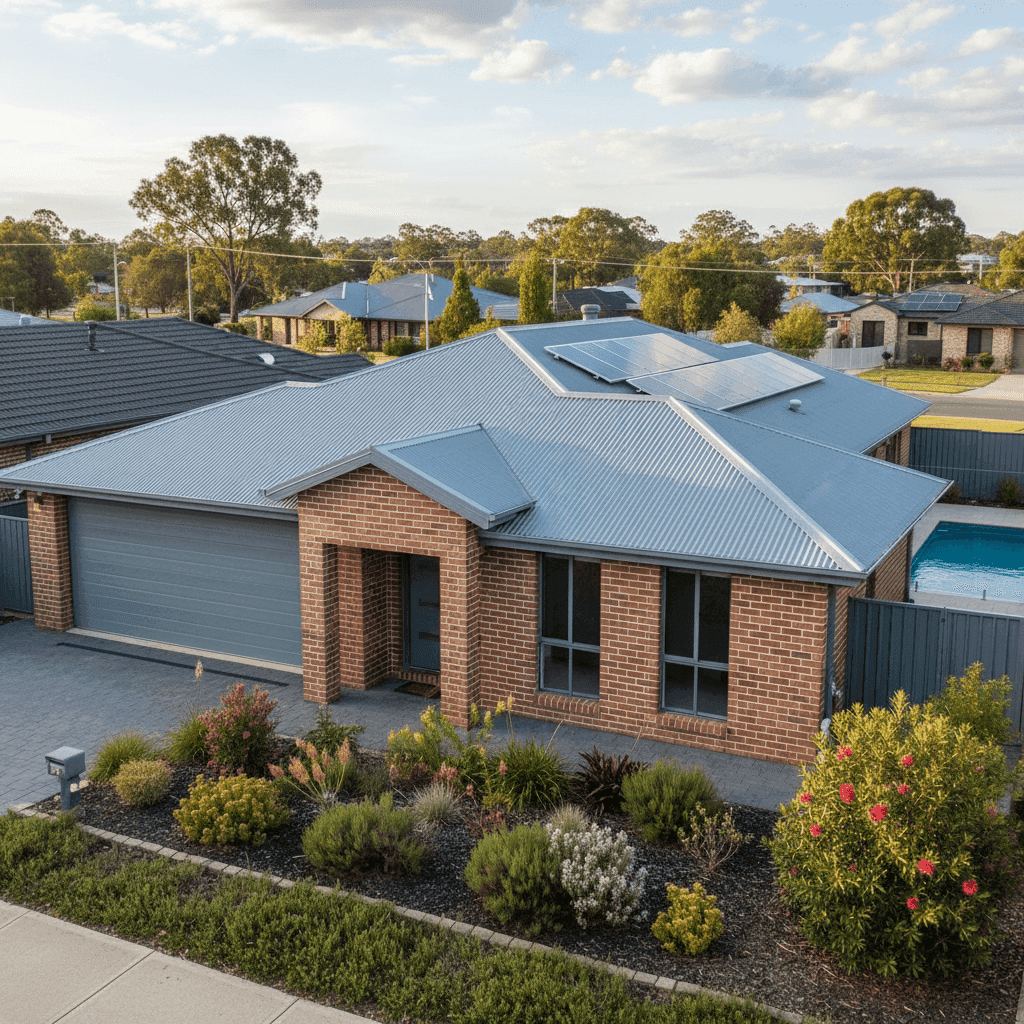
Kincumber is a well-established suburb on the Central Coast of New South Wales, known for its leafy streets, proximity to Kincumber Broadwater, and a strong mix of family homes. For owners of a free standing home in this area, understanding what you should be paying for home and contents insurance — and why — can make a real difference to your household budget.
This article breaks down a real insurance quote for a 4-bedroom, 3-bathroom free standing home in Kincumber (postcode 2251), built in 1990, with a building sum insured of $759,000 and contents covered to $250,000. The annual premium came in at $4,606 (or $435/month), with a $1,000 excess on both building and contents. Here's what that figure actually means in context.
---
Is This Quote Fair?
The short answer: this quote is rated Expensive — above average for the suburb.
Based on data from 101 quotes collected for Kincumber (NSW 2251), the suburb average premium sits at $3,036 per year, with a median of $2,691. At $4,606, this quote lands well above both benchmarks — and even above the suburb's 75th percentile of $3,659. That means roughly three-quarters of comparable quotes in Kincumber come in cheaper than this one.
That said, context matters. The sum insured here is substantial — $759,000 for the building alone — and contents cover of $250,000 is on the higher side. A larger insured value naturally pushes the premium up, so the "expensive" rating should be weighed against the level of protection being purchased. Still, there may be room to shop around.
---
How Kincumber Compares
To understand where this quote sits in the broader landscape, it helps to look at NSW state-wide data and national benchmarks.
| Benchmark | Average Premium | Median Premium |
|---|---|---|
| Kincumber (2251) | $3,036/yr | $2,691/yr |
| NSW State | $9,528/yr | $3,770/yr |
| National | $5,347/yr | $2,764/yr |
| Central Coast LGA | $8,387/yr | — |
A few things stand out here. The NSW state average of $9,528 looks alarming, but averages can be heavily skewed by high-risk or high-value properties — the NSW median of $3,770 is a far more representative figure. Similarly, the Central Coast LGA average of $8,387 is elevated, likely pulled upward by a wide range of property types and risk profiles across the region.
Nationally, the median sits at $2,764 — remarkably close to Kincumber's own median of $2,691, which suggests the suburb is broadly in line with typical Australian conditions. The quote in question, at $4,606, sits above the national average of $5,347 only when that average is skewed — against the national median, this quote is noticeably higher.
The takeaway: Kincumber is not a particularly expensive suburb to insure relative to NSW norms, which makes it worth questioning whether this specific quote is as competitive as it could be.
---
Property Features That Affect Your Premium
Several characteristics of this property are worth examining through an insurance lens.
Brick veneer construction with a Colorbond roof Brick veneer walls are generally well-regarded by insurers — they're durable, fire-resistant, and hold up well in storms. A steel Colorbond roof is similarly low-maintenance and resilient, particularly in coastal environments where salt air can degrade other roofing materials. Together, these features typically attract more favourable premiums compared to, say, weatherboard cladding or terracotta tiles.
Slab foundation A concrete slab foundation is standard for homes built in this era and region. It's generally considered lower risk than raised stumped foundations, which can be more susceptible to moisture and pest damage. This is a neutral-to-positive factor for insurers.
Timber and laminate flooring Flooring type can influence contents and building claims, particularly in water damage scenarios. Timber and laminate floors can be costly to repair or replace after flooding or burst pipes, which may be factored into the premium.
Swimming pool A pool introduces additional liability considerations. Most insurers will account for the risk of accidental injury on the property, which can nudge premiums upward. Pool maintenance and fencing compliance are also relevant factors.
Solar panels Solar panels add to the rebuild cost of the home, as they'd need to be replaced or reinstalled following significant damage. Insurers factor this into the building sum insured calculation. It's worth confirming with your insurer that your solar system is explicitly covered under your policy.
Ducted climate control Ducted air conditioning systems are expensive to repair or replace and are typically included in the building sum insured. This is another feature that justifies a higher building coverage figure.
No cyclone risk Kincumber is not classified as a cyclone risk area, which is a meaningful premium advantage compared to properties in northern Queensland or parts of Western Australia.
---
Tips for Homeowners in Kincumber
1. Review your sum insured carefully A building sum insured of $759,000 is significant. Make sure this figure reflects the actual cost to rebuild your home — not its market value. Overcovering can inflate your premium unnecessarily, while undercovering leaves you exposed. Use a building cost calculator or speak with a quantity surveyor to validate the figure.
2. Compare multiple quotes before renewing Given that this quote sits above the 75th percentile for the suburb, it's well worth comparing alternatives. Use CoverClub to get a quote and see how other insurers price the same property — the savings could be meaningful.
3. Check your pool and solar panel coverage explicitly Don't assume these features are automatically covered. Ask your insurer directly whether your solar panels, inverter, and pool equipment are included in the policy — and under what circumstances claims would be paid.
4. Consider your excess strategically Both the building and contents excess on this policy are set at $1,000. Opting for a higher voluntary excess (say, $2,000) can reduce your annual premium, which may make sense if you have a solid emergency fund and are unlikely to make small claims.
---
Compare Your Options with CoverClub
Whether you're renewing an existing policy or insuring a new home in Kincumber, it pays to shop around. CoverClub makes it easy to compare home and contents insurance quotes from a range of Australian insurers — all in one place. Get a quote today and find out if you could be paying less for the same level of cover.
For more suburb-level data and pricing insights, visit the Kincumber insurance stats page or explore NSW-wide benchmarks and national comparisons.