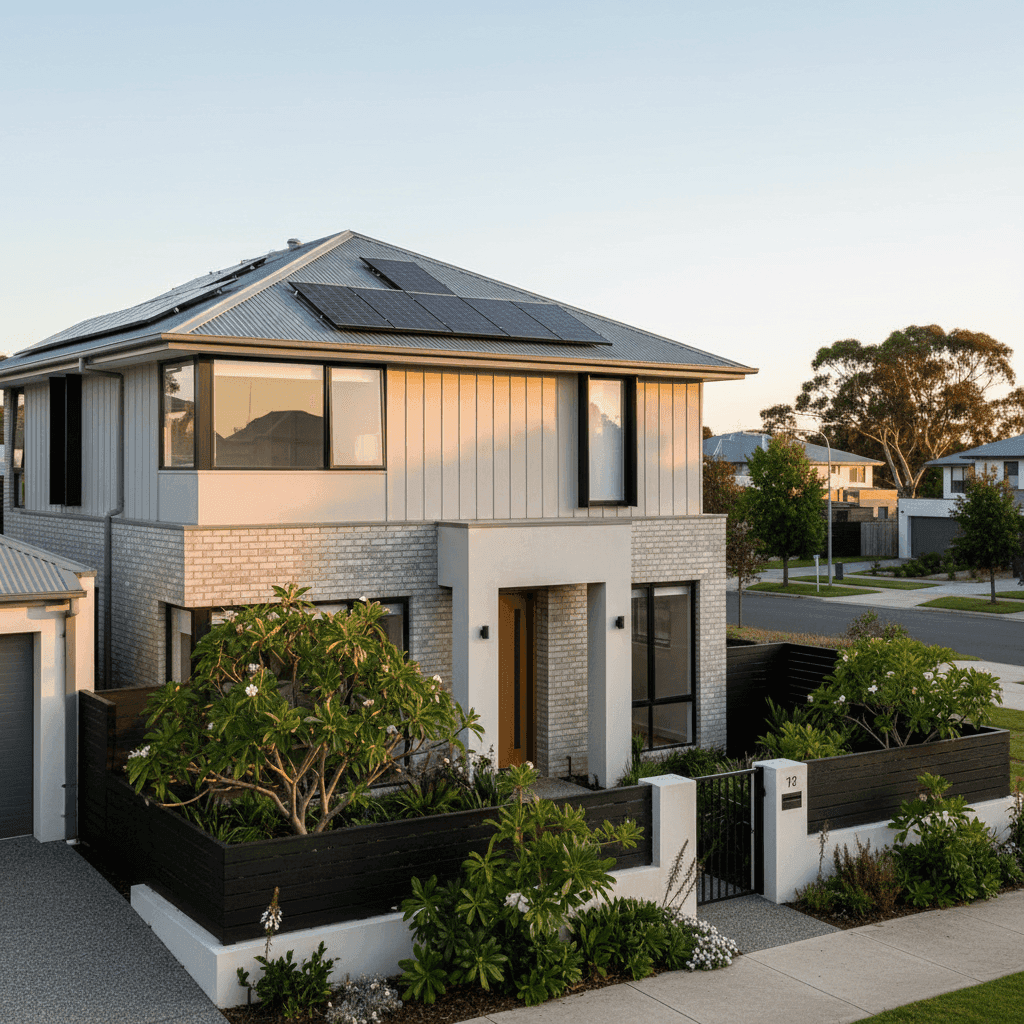
Kingscliff is one of the Northern Rivers' most sought-after coastal addresses — and with that desirability comes the very real question of what it costs to properly protect your home. This article breaks down a real home and contents insurance quote for a three-bedroom, two-bathroom townhouse in Kingscliff (NSW 2487), and puts it in context against suburb, state, and national benchmarks so you can judge whether you're getting a fair deal.
---
Is This Quote Fair?
The quote in question comes in at $2,365 per year (or $227 per month) for combined home and contents cover, with a building sum insured of $459,000 and contents valued at $50,000. Both the building and contents excess are set at $1,000.
Our price rating for this quote is FAIR — Around Average, and the data backs that up. Within the Kingscliff suburb, the average annual premium sits at $3,070 and the median at $2,854. At $2,365, this quote lands comfortably below both of those figures — in fact, it falls between the 25th percentile ($1,959) and the median, meaning it's better than roughly half of all quotes we've seen in the area, without being an outlier on the low end.
That's a reasonable result. It's not the cheapest quote possible, but it's well within the range of what a well-built, modern townhouse in this suburb should attract — and it's meaningfully below the suburb average.
---
How Kingscliff Compares
To really appreciate where this quote sits, it helps to zoom out and look at the broader picture. You can explore the full Kingscliff suburb insurance stats, NSW state averages, and national benchmarks on CoverClub.
| Benchmark | Average Premium | Median Premium |
|---|---|---|
| Kingscliff (2487) | $3,070/yr | $2,854/yr |
| NSW (State) | $9,528/yr | $3,770/yr |
| National | $5,347/yr | $2,764/yr |
| Tweed LGA | $26,089/yr | — |
A few things stand out here. The NSW state average of $9,528 is extraordinarily high — this is heavily skewed by flood-prone and high-risk areas across the state, particularly in regional and coastal zones. The median of $3,770 is a much more representative figure for typical NSW homeowners, and our quote at $2,365 sits well below even that.
The Tweed LGA average of $26,089 deserves special mention. This figure is dramatically elevated, almost certainly driven by properties in high-flood-risk areas within the broader Tweed region. Kingscliff itself, while coastal, is not classified as a cyclone risk area, and this particular property's characteristics help keep premiums more manageable.
At the national level, the median of $2,764 is actually very close to this quote — suggesting the pricing here is broadly in line with what a typical Australian homeowner might expect to pay, even accounting for the coastal location.
---
Property Features That Affect Your Premium
Several characteristics of this property work in its favour from an insurance pricing perspective.
Construction year (2021): A relatively new build is a significant advantage. Homes constructed to modern Australian building codes are better engineered for resilience, with updated electrical systems, plumbing, and structural standards. Insurers generally view newer properties as lower risk, which flows through to more competitive premiums.
Brick veneer walls and Colorbond roof: This combination is well-regarded by insurers. Brick veneer offers solid fire resistance and structural durability, while steel Colorbond roofing is lightweight, corrosion-resistant, and performs well in coastal environments where salt air can degrade other materials over time.
Slab foundation: A concrete slab is a stable and widely accepted foundation type that carries minimal additional risk in insurers' eyes — particularly in a non-flood-prone setting.
Solar panels: The property includes solar panels, which is worth flagging. Solar systems are typically covered under home and contents policies, but it's important to confirm with your insurer exactly what's included. Some policies cover panels as part of the building sum insured; others may treat them separately or require specific mention. Always check your Product Disclosure Statement (PDS).
No pool, no ducted climate control: The absence of a pool removes a common source of liability and maintenance-related claims. Similarly, no ducted climate control system means fewer mechanical components that could fail and trigger a claim.
Vinyl flooring: A practical and increasingly popular choice, vinyl is durable and water-resistant — a sensible option for a coastal property where humidity can be a factor.
---
Tips for Homeowners in Kingscliff
1. Review your building sum insured regularly. Construction costs have risen sharply in recent years across Australia, and Northern NSW is no exception. The cost to rebuild your home may be higher today than when you first took out your policy. Make sure your sum insured reflects current rebuild costs — not the market value of the property — to avoid being underinsured in the event of a total loss.
2. Confirm your solar panel coverage. As noted above, solar panels can sometimes fall into a grey area in home insurance policies. Before your next renewal, contact your insurer and ask specifically how your panels are covered, what the claim limit is, and whether the inverter is included. If coverage is inadequate, consider a policy that explicitly includes solar.
3. Understand your flood and storm exposure. While Kingscliff is not classified as a cyclone risk area, the Northern Rivers region has experienced significant weather events in recent years. Check whether your policy includes flood cover (not just storm damage), and review the definitions carefully — "storm," "rainwater runoff," and "flood" are often treated differently under Australian policies.
4. Compare quotes at renewal — every year. The insurance market shifts constantly, and loyalty doesn't always pay. Even if your current quote is fair, it's worth running a comparison at each renewal to ensure you're not drifting into the more expensive end of the market. A few minutes of comparison could save you hundreds of dollars annually.
---
Ready to Compare?
Whether you're a first-time buyer in Kingscliff or a long-time local reassessing your cover, CoverClub makes it straightforward to see what the market looks like for your specific property. Get a home insurance quote today and find out where your premium really sits — no obligation, no pressure, just clarity.