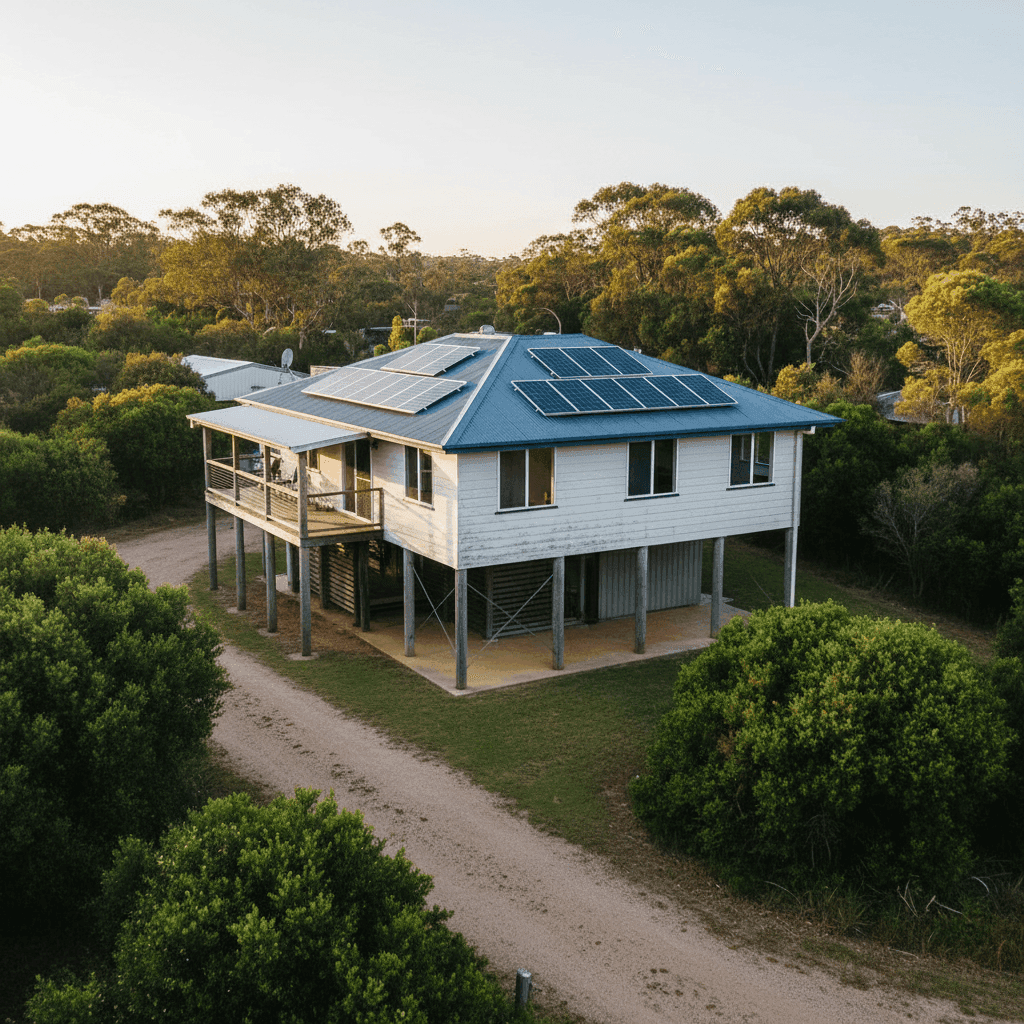
If you own a free standing home in Kioloa, NSW 2539, you already know the appeal — a quiet coastal community on the NSW South Coast, surrounded by Murramarang National Park and just minutes from some of the state's most pristine beaches. But that idyllic setting comes with its own set of insurance considerations, and understanding what drives your premium is the first step to making sure you're getting fair value.
This article breaks down a recent home and contents insurance quote for a 3-bedroom, 1-bathroom free standing home in Kioloa, comparing it against suburb, state, and national benchmarks to help you understand where your premium sits — and what you can do about it.
---
Is This Quote Fair?
The quote in question comes in at $8,189 per year (or $785/month) for combined home and contents cover, with a building sum insured of $745,000 and contents valued at $50,000. Both the building and contents excess are set at $1,000.
Our price rating for this quote is Expensive — Above Average.
To put that in context: the suburb average for Kioloa sits at just $1,998/year, with a median of $1,864/year. At $8,189, this quote is more than four times the local suburb average. That's a significant gap, and it warrants a closer look.
However, it's worth noting that the suburb sample size is relatively small — just 15 quotes — which means the local averages may not fully capture the range of property types and risk profiles in the area. A property with a higher sum insured, older construction, and specific building materials (more on those shortly) will naturally attract a higher premium than a newer, standard-construction home.
---
How Kioloa Compares
Here's how this quote stacks up across different benchmarks:
| Benchmark | Average Premium | Median Premium |
|---|---|---|
| Kioloa (suburb) | $1,998/yr | $1,864/yr |
| NSW (state) | $9,528/yr | $3,770/yr |
| National | $5,347/yr | $2,764/yr |
| Shoalhaven LGA | $11,272/yr | — |
Viewed through a state and LGA lens, this quote actually looks more reasonable. The NSW state average is $9,528/year, and the Shoalhaven LGA average is a notable $11,272/year — both higher than this quote. Nationally, the average premium sits at $5,347/year, with a median of $2,764/year.
The wide gap between suburb averages and LGA/state averages is likely driven by the mix of high-value coastal properties, older building stock, and elevated risk profiles that are common throughout the Shoalhaven region. A $745,000 building sum insured is substantial, and that alone will push a premium well above the suburb median.
The key takeaway: while this quote is above the local suburb average, it is actually below both the NSW state average and the Shoalhaven LGA average, which suggests it may not be as uncompetitive as it first appears.
---
Property Features That Affect Your Premium
Several characteristics of this property have a meaningful impact on the quoted premium. Understanding these can help you have more informed conversations with insurers.
Fibro Asbestos Walls
This is one of the most significant premium drivers. Homes constructed with fibro asbestos (a common material in Australian homes built before the 1980s) are more expensive to insure because of the specialised handling, removal, and disposal requirements involved in any repair or rebuild. Insurers factor in these elevated reinstatement costs, and some may even apply exclusions or sub-limits depending on the policy.
Elevated on Poles (At Least 1 Metre)
The home sits elevated on poles by at least one metre — a style common in coastal and bushland areas of NSW. While elevation can offer some protection against flooding and moisture, it also introduces structural complexity. Repairs to subfloor structures, bearers, and stumps can be costly, and the elevated design may increase exposure to wind damage.
1970 Construction
A home built in 1970 is over 50 years old. Older homes often have ageing electrical systems, plumbing, and roofing that increase the likelihood of a claim. Insurers price this risk accordingly.
Steel/Colorbond Roof
On the positive side, a Colorbond steel roof is generally viewed favourably by insurers. It's durable, fire-resistant, and performs well in high-wind conditions — all of which can help moderate your premium compared to, say, a tiled or older iron roof.
Solar Panels
The property has solar panels, which add value to the building and need to be factored into the sum insured. Some policies cover solar panels as part of the building; others may treat them separately. It's worth confirming your coverage extends to these.
Ducted Climate Control
Ducted air conditioning systems are a fixed building fixture and should be included in your building sum insured. Given the coastal environment, these systems can be susceptible to salt air corrosion over time.
---
Tips for Homeowners in Kioloa
1. Review your sum insured carefully A $745,000 building sum insured is significant. Make sure this figure reflects the actual cost to rebuild — not the market value of the property. Use a building cost estimator or engage a quantity surveyor to validate this figure. Being over-insured costs you more in premiums; being under-insured can leave you exposed after a claim.
2. Ask specifically about asbestos cover Not all policies treat asbestos-containing materials the same way. Ask your insurer directly: does your policy cover the full cost of asbestos removal and disposal as part of a building claim? Some policies have sub-limits or exclusions that could leave you significantly out of pocket.
3. Consider increasing your excess to reduce your premium With a $1,000 excess on both building and contents, there may be room to increase this in exchange for a lower annual premium. If you're financially comfortable absorbing a larger out-of-pocket cost in the event of a minor claim, a higher excess could offer meaningful savings.
4. Compare quotes annually Insurance premiums in coastal NSW have been rising steadily, but the market is competitive. Don't assume your renewal price is the best available. Comparing quotes each year — especially for a property with unique characteristics like this one — can uncover significant savings.
---
Ready to Compare?
Whether you're reviewing your current policy or shopping for cover for the first time, comparing quotes is the smartest way to make sure you're not overpaying. Get a home insurance quote at CoverClub and see how your premium stacks up against real data from properties just like yours in Kioloa and across NSW.