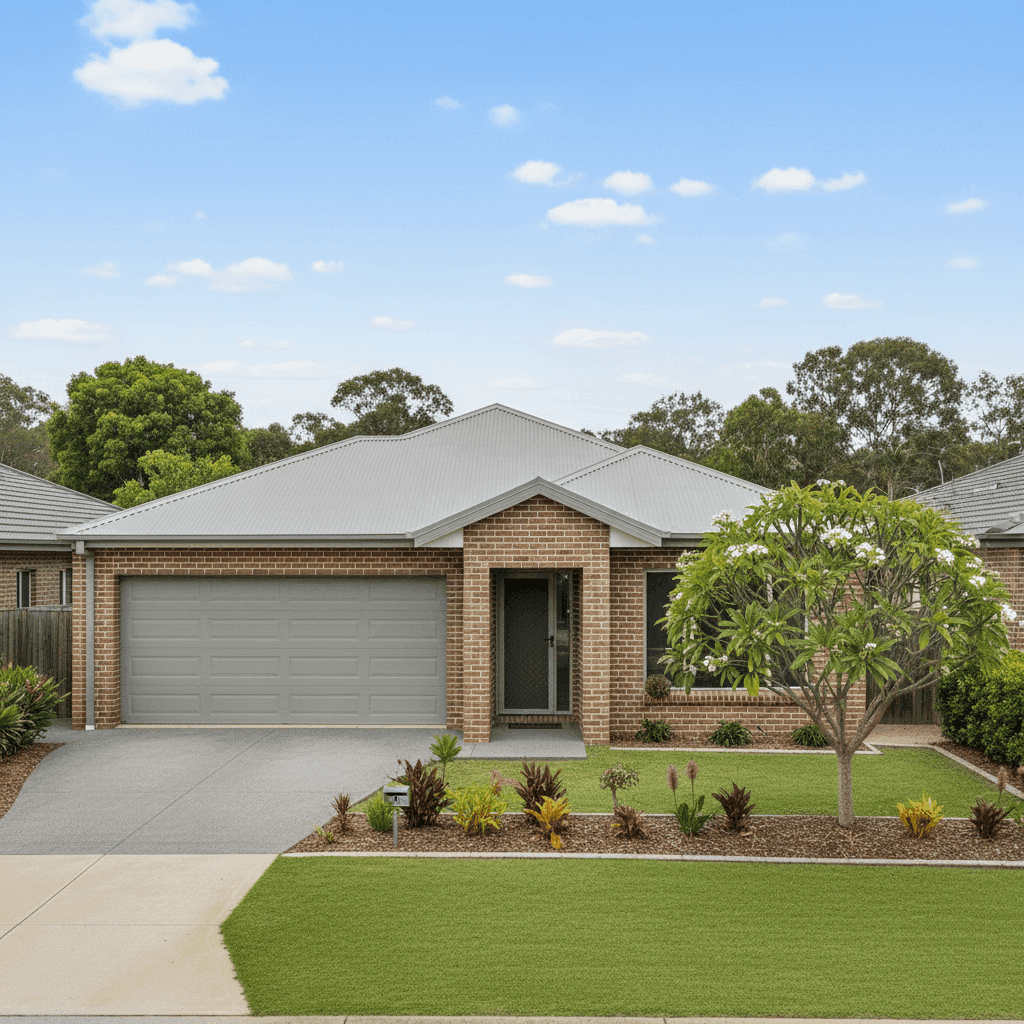
Kippa-Ring is a well-established suburb on the Redcliffe Peninsula in Queensland's Moreton Bay region — a popular choice for families and owner-occupiers drawn to its coastal proximity and relatively affordable housing. But how much should you expect to pay to insure a free standing home here? This article breaks down a real building insurance quote for a 3-bedroom, 2-bathroom brick veneer home in Kippa-Ring (QLD 4021), and puts it in context against local, state, and national benchmarks.
---
Is This Quote Fair?
The quote in question comes in at $1,463 per year (or around $140 per month) for building-only cover on a free standing home with a sum insured of $350,000 and a building excess of $5,000.
Our price rating for this quote is CHEAP — below average for the area. That's a meaningful finding. Based on 22 quotes sampled for Kippa-Ring (postcode 4021), the suburb average sits at $2,753 per year and the median at $2,371 per year. This quote lands well below even the 25th percentile of $1,865 per year — meaning it's cheaper than at least 75% of quotes collected in this suburb.
In practical terms, a homeowner securing cover at this price is saving over $900 per year compared to the suburb average. Over a five-year period, that's more than $4,500 in savings — a significant sum that could go toward home improvements, an emergency fund, or simply back into the household budget.
That said, it's worth noting the higher-than-typical building excess of $5,000. A larger excess generally reduces your premium, so part of the reason this quote is so competitive may be that the policyholder has accepted more out-of-pocket cost in the event of a claim. It's a trade-off worth considering carefully.
---
How Kippa-Ring Compares
To truly appreciate this quote, it helps to zoom out and look at the broader picture.
| Benchmark | Annual Premium |
|---|---|
| This Quote | $1,463 |
| Kippa-Ring Suburb Average | $2,753 |
| Kippa-Ring Suburb Median | $2,371 |
| Kippa-Ring 25th Percentile | $1,865 |
| Moreton Bay LGA Average | $3,435 |
| QLD State Average | $9,129 |
| QLD State Median | $3,903 |
| National Average | $5,347 |
| National Median | $2,764 |
The numbers tell a striking story. Queensland's state average premium of $9,129 per year is heavily skewed by high-risk postcodes in Far North Queensland — cyclone-prone areas like Cairns and Townsville where premiums can be extraordinarily high. The state median of $3,903 is a more representative figure for most Queenslanders, and even that is more than double this quote.
Compared to the national average of $5,347 and national median of $2,764, this quote remains highly competitive. Kippa-Ring itself sits in a relatively favourable risk position — it's not in a designated cyclone risk zone, it's not prone to the severe flooding that affects parts of inland and western Queensland, and its suburban infrastructure is well-established.
The Moreton Bay LGA average of $3,435 further underscores just how well-priced this particular quote is within its own local government area.
---
Property Features That Affect Your Premium
Several characteristics of this property work in the homeowner's favour when it comes to insurance pricing.
Brick veneer construction is generally well-regarded by insurers. While not as robust as full-brick, brick veneer walls offer solid weather resistance and fire performance compared to timber-framed cladding. This typically translates to more competitive premiums.
Steel/Colorbond roofing is another positive. Colorbond is a popular and durable roofing material across Queensland, known for its resistance to corrosion, high winds, and fire. Insurers tend to view it favourably, particularly compared to older tile roofs that can crack or dislodge in storms.
Concrete slab foundation provides stability and is less susceptible to moisture-related damage than some other foundation types. Combined with the 2000 construction year, the home sits in a relatively modern era of building standards — post the significant updates to the Building Code of Australia that improved structural requirements throughout the 1990s.
Timber and laminate flooring can be a mild risk factor in the event of water ingress or flooding, as these materials can warp or require full replacement. However, for building-only cover (which doesn't extend to contents), this is less of a pricing concern.
The ducted climate control system is worth noting — these systems add to the overall replacement value of a home and are factored into the sum insured. At $350,000, the building sum insured appears reasonable for a 139 sqm home of this construction type in the current market, though homeowners should periodically review this figure to ensure it reflects current rebuilding costs.
The absence of a pool and solar panels simplifies the risk profile slightly, removing two common sources of additional liability or electrical risk that can nudge premiums upward.
---
Tips for Homeowners in Kippa-Ring
1. Review your sum insured annually. Building costs in South East Queensland have risen significantly in recent years due to labour shortages and material price increases. A sum insured set a few years ago may no longer reflect what it would actually cost to rebuild your home today. Underinsurance is one of the most common — and costly — mistakes homeowners make.
2. Consider whether your excess is set at the right level. This quote carries a $5,000 building excess, which is on the higher end. While it helps reduce your premium, it means you'll need to cover the first $5,000 of any claim yourself. If your savings buffer is comfortable, this can be a smart trade-off. If not, it may be worth comparing quotes with a lower excess to find the right balance.
3. Don't assume loyalty pays off. Many insurers offer their best rates to new customers, meaning long-term policyholders can end up paying a "loyalty tax" over time. It's worth comparing your renewal quote against the market every year — even if you're happy with your current insurer.
4. Check what's included in your building cover. Building-only policies vary in what they cover beyond the physical structure. Some policies include permanent fixtures, in-ground services, and fencing; others don't. Make sure you understand exactly what your policy covers — and what it doesn't — before a claim arises.
---
Compare Your Own Quote
Whether you're a first-time buyer in Kippa-Ring or a long-term homeowner reviewing your coverage, it pays to know where your premium stands relative to the market. CoverClub makes it easy to see how your quote compares — with real data from real quotes across Australia.
Get a home insurance quote today at CoverClub and find out if you're paying a fair price — or if there's a better deal waiting for you.