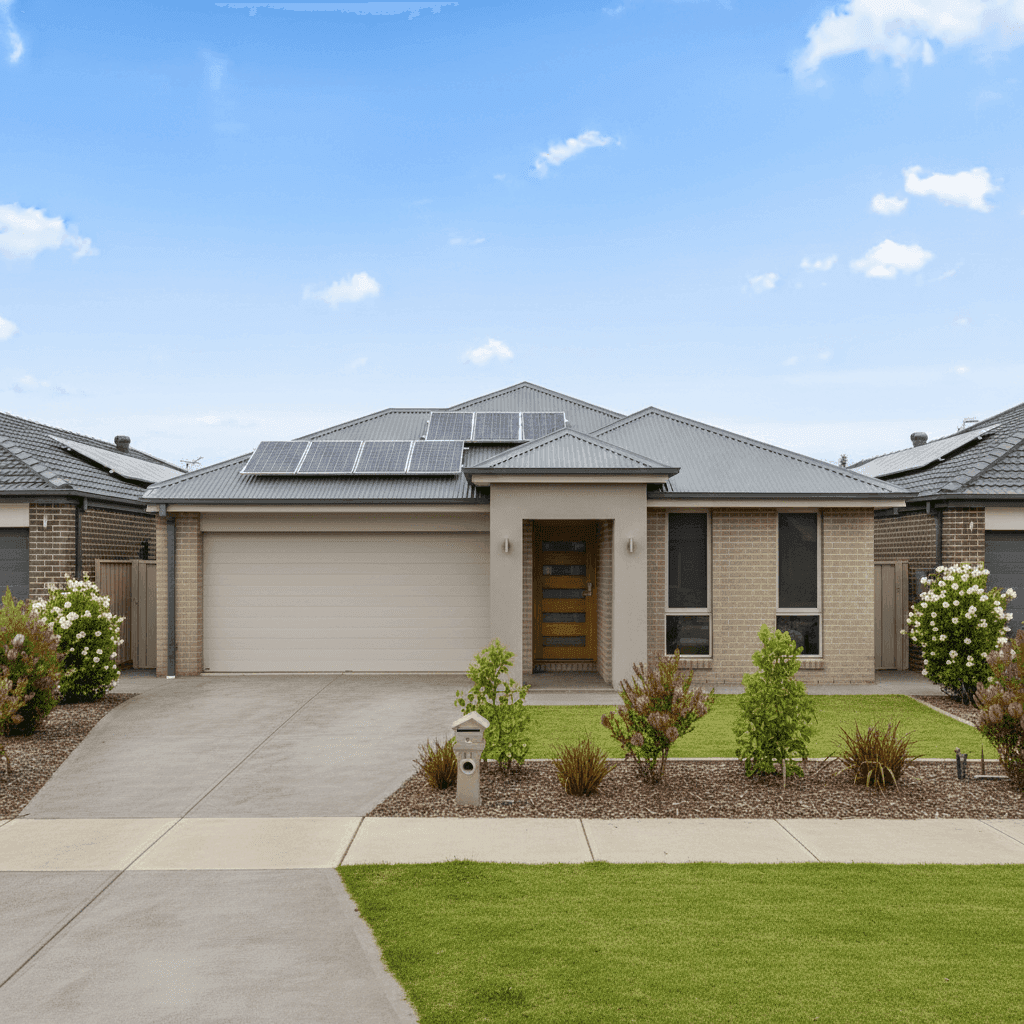
If you own a free standing home in Kirkham, NSW 2570, you've probably wondered whether you're paying a fair price for home insurance — or quietly overpaying without realising it. In this article, we break down a real home and contents insurance quote for a five-bedroom brick veneer property in Kirkham, comparing it against suburb, state, and national benchmarks to help you understand what's driving the cost and whether there's room to save.
---
Is This Quote Fair?
The annual premium for this quote comes in at $3,076 per year (or $288/month), covering both building and contents. The building is insured for $1,068,000 and contents for $138,000, with a $2,000 excess applied to both.
Our independent price rating for this quote is FAIR — Around Average.
That assessment holds up well when you look at the numbers. The quote sits comfortably within the typical range for Kirkham properties, coming in slightly below the suburb average and median. It's not the cheapest quote you could find, but it's not inflated either — a reasonable outcome for a well-built, mid-2000s home with a solid combination of features.
One factor worth noting: the sum insured of just over $1 million for a 277 sqm home is on the higher side, which naturally pushes the premium up. If the building replacement value has been estimated conservatively or generously, that figure alone can have a meaningful impact on what you pay.
---
How Kirkham Compares
Understanding where your premium sits relative to others is one of the most useful tools a homeowner has. Here's how this quote stacks up:
| Benchmark | Premium |
|---|---|
| This quote | $3,076/yr |
| Kirkham suburb average | $3,583/yr |
| Kirkham suburb median | $3,417/yr |
| Kirkham 25th percentile | $3,028/yr |
| Kirkham 75th percentile | $3,577/yr |
| NSW average | $9,528/yr |
| NSW median | $3,770/yr |
| National average | $5,347/yr |
| National median | $2,764/yr |
| Wollondilly LGA average | $2,297/yr |
A few things stand out here. First, the NSW average of $9,528 looks alarming at first glance, but it's heavily skewed by high-risk coastal and flood-prone postcodes across the state — the median of $3,770 is a far more representative figure for typical NSW homeowners. This quote sits below that NSW median, which is a positive sign.
Against the national average of $5,347, this quote looks very competitive. However, the national median of $2,764 tells a different story — it suggests that roughly half of Australian homeowners with comparable cover are paying less. That gap is worth investigating, particularly if your policy is up for renewal.
Closer to home, the Wollondilly LGA average of $2,297 is notably lower than this quote. That figure may reflect a broader mix of property types and cover levels across the LGA, but it's a useful reference point when shopping around.
You can explore more local data on the Kirkham suburb stats page, or zoom out to review NSW-wide insurance trends and national benchmarks.
---
Property Features That Affect Your Premium
Every home is different, and insurers price risk based on a detailed combination of construction, location, and features. Here's how the specifics of this property likely influence the premium:
Brick Veneer Walls Brick veneer is generally viewed favourably by insurers. It offers solid fire resistance and structural durability, which can contribute to lower premiums compared to weatherboard or fibre cement cladding.
Steel/Colorbond Roof Colorbond roofing is one of the more insurer-friendly choices in Australia. It's lightweight, resistant to fire and corrosion, and performs well in storms — all of which reduce the likelihood of a major claim.
Concrete Slab Foundation A slab foundation is typically considered low-risk. It eliminates the underfloor moisture and pest concerns associated with raised stumped foundations, and it's structurally stable in most soil conditions.
Timber and Laminate Flooring While aesthetically appealing, timber and laminate flooring can be more costly to replace than tiles if water damage occurs. This may contribute modestly to the contents or building replacement estimate.
Solar Panels This property has solar panels installed, which adds value to the building sum insured. Solar systems can be expensive to repair or replace after storm or hail damage, so it's worth confirming your policy explicitly covers them as part of the building.
Ducted Climate Control Ducted air conditioning systems are a significant fixed asset and are generally covered under building insurance. However, they can be expensive to repair, and some policies have sub-limits — worth checking your Product Disclosure Statement (PDS).
2005 Construction At roughly 20 years old, this home is modern enough to benefit from contemporary building standards, but old enough that some components (roof, plumbing, electrical) may be approaching the age where maintenance becomes important. Insurers may factor this in when assessing risk.
No Pool The absence of a pool removes a common liability risk from the equation, which can positively influence premiums — particularly for contents and liability cover.
---
Tips for Homeowners in Kirkham
1. Review your sum insured annually Building costs in New South Wales have risen significantly in recent years. If your sum insured hasn't been updated to reflect current construction costs per square metre, you could be underinsured — or paying for more than you need. Use a building cost calculator or speak to a quantity surveyor to get an accurate figure.
2. Confirm solar panel coverage Solar panels are now a standard feature on many Australian homes, but not all policies cover them automatically as part of the building. Check your PDS carefully and ask your insurer whether storm, hail, and accidental damage to your solar system is included.
3. Compare at renewal, not just once Insurance premiums can shift significantly from year to year, and loyalty doesn't always pay. Making a habit of comparing quotes at renewal — even if you're happy with your current insurer — ensures you're not gradually drifting above market rate.
4. Consider your excess strategically This policy carries a $2,000 excess on both building and contents. A higher excess typically lowers your annual premium, which makes sense if you're financially comfortable absorbing a larger out-of-pocket cost in the event of a claim. Conversely, if cash flow is a concern, a lower excess with a slightly higher premium may offer better peace of mind.
---
Ready to Compare?
Whether you're renewing your current policy or shopping for the first time, comparing quotes is the single most effective way to make sure you're getting value. CoverClub makes it easy to see multiple home and contents insurance options side by side, tailored to your property and location.