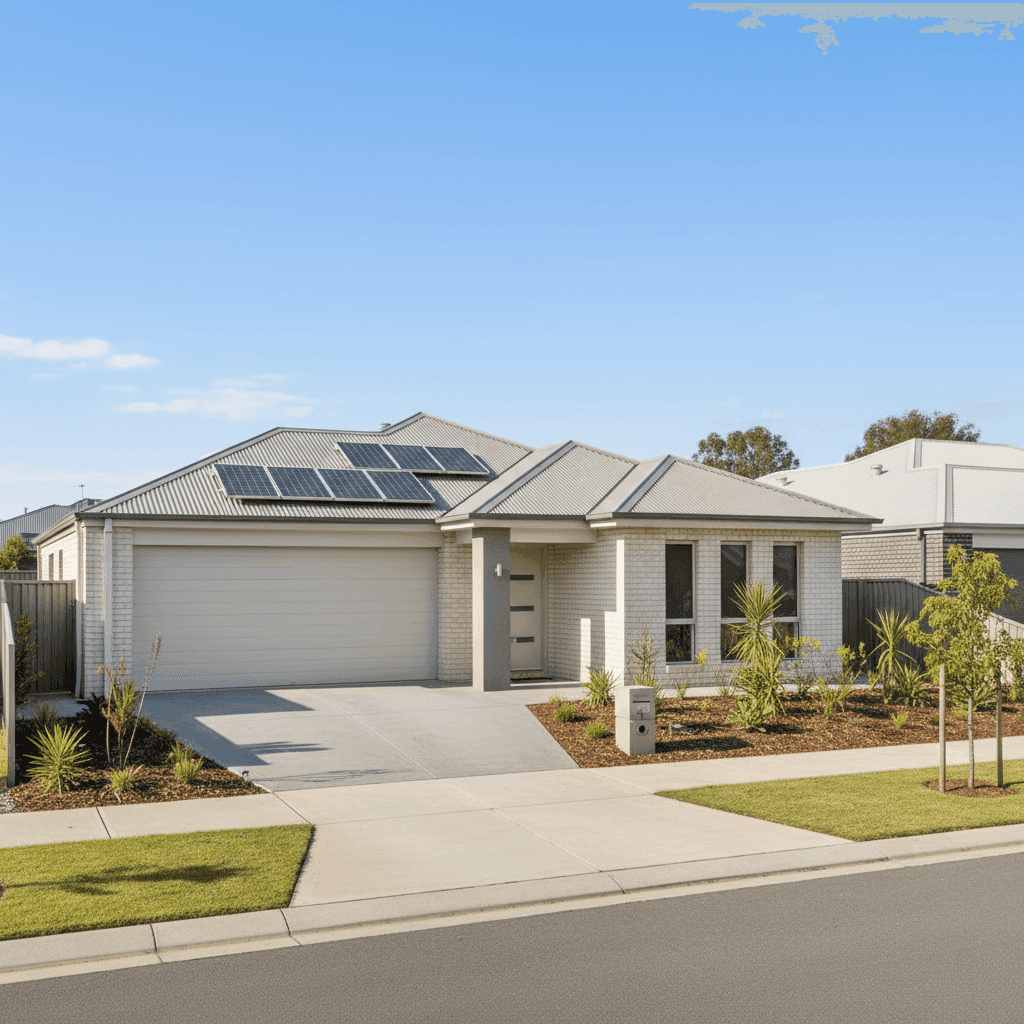
If you own a free standing home in Kirkwood, QLD 4680, you're probably well aware that home insurance costs in Queensland can vary enormously from one postcode to the next. Kirkwood is a residential suburb in the Gladstone Region, sitting inland from the coast and generally outside the most severe cyclone-risk zones — a factor that can meaningfully influence what you pay for cover. This article breaks down a real home and contents insurance quote for a four-bedroom property in the area, compares it against Queensland and national benchmarks, and offers practical guidance for homeowners looking to get the best value from their policy.
---
Is This Quote Fair?
The quote in question comes in at $3,910 per year (or $371 per month) for combined home and contents cover, with a building sum insured of $1,210,000 and contents valued at $130,000. Both the building and contents excess are set at $1,000.
Based on CoverClub's pricing data, this premium is rated CHEAP — sitting below the average for comparable policies. That's genuinely good news for the homeowner. To put it in perspective:
- The QLD state average premium is $9,129/yr, with a state median of $3,903/yr
- The national average is $5,347/yr, with a national median of $2,764/yr
At $3,910, this quote sits almost exactly on the Queensland median — but well below the QLD average, which is heavily skewed upward by high-risk coastal and far-north Queensland postcodes. Compared to the national average, this quote is 27% cheaper, which is a solid outcome for a Queensland property. You can explore broader Queensland pricing trends at the QLD insurance stats page or dig into national home insurance benchmarks.
---
How Kirkwood Compares
While suburb-level data isn't currently available for Kirkwood specifically, the state and national context tells a useful story. Queensland as a whole carries some of the highest home insurance premiums in the country, largely driven by extreme weather exposure — cyclones, flooding, and storm surge risk push averages up significantly in coastal and northern areas.
Kirkwood, located in the Gladstone Region, benefits from a more moderate risk profile compared to coastal Queensland towns. It is not classified as a cyclone risk area, which removes one of the most significant premium loading factors seen elsewhere in the state. This helps explain why the quote here tracks closer to the state median than the inflated state average.
Nationally, the median premium of $2,764 reflects the fact that many Australian homeowners — particularly in southern states — enjoy relatively low-risk environments. A Queensland property at $3,910 is paying a modest premium above the national median, which is reasonable given the state's broader weather exposure.
For the latest suburb-level data as it becomes available, bookmark the Kirkwood insurance stats page.
---
Property Features That Affect Your Premium
Several characteristics of this particular property play a meaningful role in determining its insurance cost — for better and for worse.
Brick Veneer Walls & Colorbond Roof
Brick veneer construction is generally viewed favourably by insurers. It offers solid fire resistance and structural durability, which can contribute to lower premiums compared to lightweight cladding or weatherboard. The steel Colorbond roof is similarly well-regarded — it's durable, low-maintenance, and performs well in high-wind events, making it a sensible choice for Queensland conditions.
Slab Foundation & Tiled Flooring
A concrete slab foundation is the standard for Queensland homes of this era and is considered a stable, low-risk base by insurers. Tiled flooring throughout adds to the property's resilience — tiles are not susceptible to water damage in the same way that timber or carpet can be, which is a practical advantage in a subtropical climate.
Solar Panels
The presence of solar panels on the roof adds a layer of complexity to the building sum insured. Solar systems can be costly to repair or replace following storm or hail damage, and it's important to confirm with your insurer that the panels are explicitly covered under your building policy. Some policies include them automatically; others may require an endorsement.
Ducted Climate Control
Ducted air conditioning is a significant fixed asset and contributes to the overall replacement cost of the home. At above-average fittings quality, the building sum insured of $1,210,000 for a 244 sqm home reflects the higher cost of quality fixtures, finishes, and integrated systems like ducted climate control.
Above-Average Fittings & 244 sqm Floor Area
The combination of a generous floor area and above-average fittings quality is the primary driver of the $1,210,000 building sum insured. Underinsurance is a serious risk in Australia — many homeowners set their sum insured based on market value rather than the true cost to rebuild, which can leave them significantly out of pocket after a total loss. The figure here appears appropriately calibrated for the property's size and quality.
---
Tips for Homeowners in Kirkwood
1. Review your building sum insured annually Construction costs have risen sharply in recent years. A sum insured that was accurate two years ago may no longer reflect the true cost to rebuild your home. Use a building cost calculator or speak with a quantity surveyor to sense-check your figure each year at renewal.
2. Confirm solar panel coverage explicitly Don't assume your solar panels are covered. Check your Product Disclosure Statement (PDS) to confirm whether panels are included in the building definition, and if so, whether storm, hail, and accidental damage are covered events. If you've recently upgraded your system, notify your insurer to ensure the updated value is reflected.
3. Take advantage of your lower-risk location Because Kirkwood is not in a designated cyclone risk area, you may have more negotiating power than homeowners in higher-risk postcodes. Use comparison tools to shop around at each renewal — loyalty doesn't always pay in insurance, and switching or negotiating can yield meaningful savings.
4. Consider your excess strategy Both the building and contents excess on this policy are set at $1,000. Opting for a higher voluntary excess can reduce your annual premium, but make sure you're comfortable covering that amount out of pocket in the event of a claim. For a property of this value, a $1,000 excess is fairly standard and strikes a reasonable balance.
---
Compare Your Quote with CoverClub
Whether you're renewing your existing policy or shopping for cover for the first time, it pays to compare. CoverClub makes it easy to benchmark your premium against real data from properties like yours across Queensland and Australia. Get a home insurance quote today and see how much you could save — or simply confirm that the cover you have is already working hard for you.