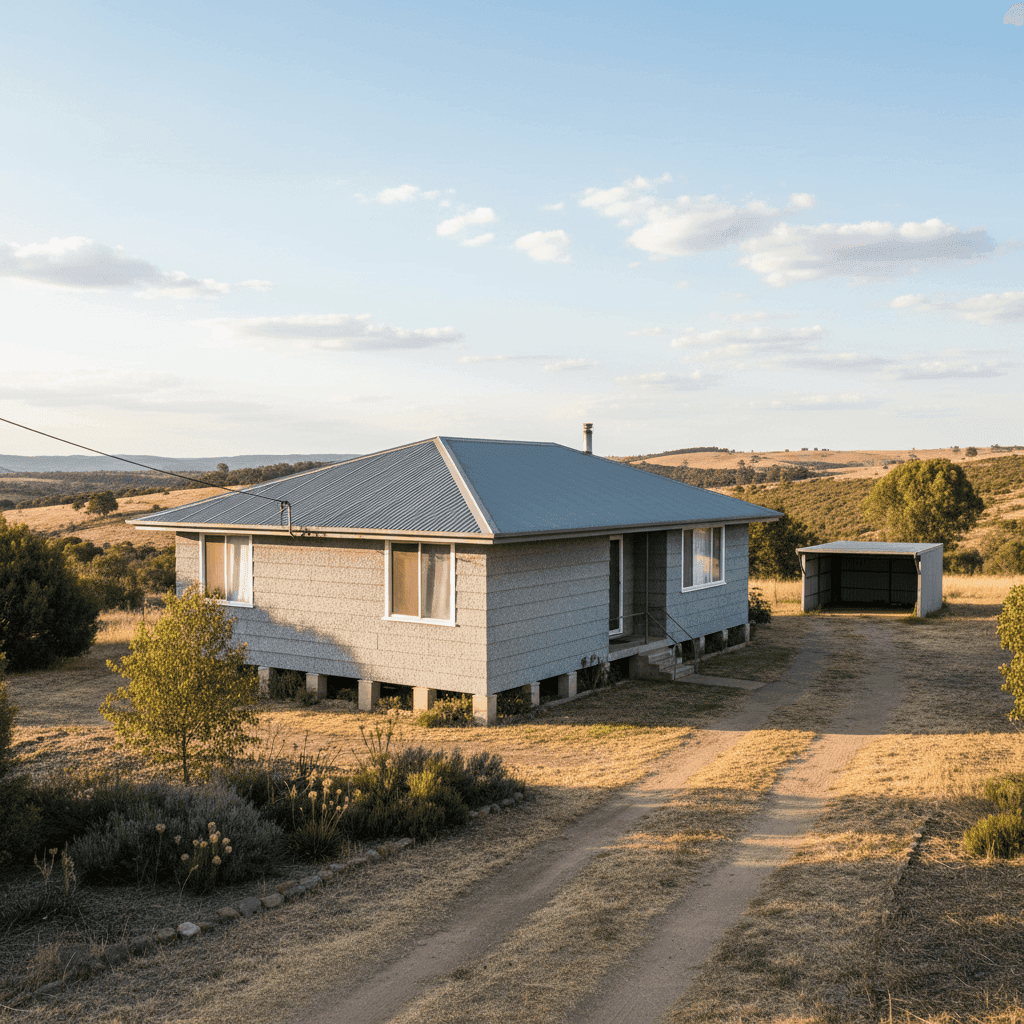
If you own a free standing home in Kojonup, WA 6395, you're likely aware that finding competitive building insurance in regional Western Australia can be a mixed bag. This article breaks down a real building-only insurance quote for a three-bedroom, one-bathroom home in Kojonup — examining how it stacks up against local, state, and national benchmarks, and what property features are likely driving the price.
---
Is This Quote Fair?
The quote in question sits at $731 per year (or roughly $69 per month) for building-only cover with a $2,000 building excess and a sum insured of $524,000. Our price rating for this quote? Cheap — well below average.
To put that in perspective, the average home insurance premium across Kojonup sits at $1,588 per year, with a suburb median of $1,546. Even the cheapest quarter of quotes in the area (the 25th percentile) comes in at $1,302 — still nearly double this quote. At $731, this policy is priced at less than half the suburb average, which is a genuinely strong result for the homeowner.
It's worth noting that a higher excess can contribute to a lower premium. The $2,000 building excess on this policy is on the steeper side, meaning the insurer carries less risk on smaller claims — and passes some of those savings on in the form of a reduced premium. That's a reasonable trade-off for many homeowners who are financially comfortable absorbing minor repair costs out of pocket.
---
How Kojonup Compares
Zooming out beyond the suburb level paints an even clearer picture of just how competitive this quote is. Based on data from CoverClub's national home insurance statistics:
| Benchmark | Annual Premium |
|---|---|
| This Quote | $731 |
| Kojonup Suburb Average | $1,588 |
| Kojonup Suburb Median | $1,546 |
| LGA (Kojonup) Average | $1,539 |
| WA State Average | $2,144 |
| WA State Median | $1,944 |
| National Average | $2,965 |
| National Median | $2,716 |
Kojonup itself is already a relatively affordable place to insure a home compared to the broader Western Australian average of $2,144 — which in turn is well below the national average of $2,965. Much of that national figure is inflated by high-risk coastal and cyclone-prone regions in Queensland and northern WA. Kojonup, sitting in the Great Southern region, benefits from a lower natural disaster risk profile, which helps keep premiums down across the board.
You can explore detailed premium data for the area at the Kojonup suburb stats page, which is based on a sample of 30 quotes — a solid dataset for a town of this size.
---
Property Features That Affect Your Premium
Several characteristics of this particular home are worth examining, as they each play a role in how insurers price the risk.
Fibro Asbestos Walls
This is arguably the most significant factor. Homes constructed with fibro asbestos cladding — common in Australian homes built before the mid-1980s — present a unique challenge for insurers. In the event of damage, asbestos-containing materials require specialist licensed contractors for removal and disposal, which substantially increases repair costs. Many insurers either apply a loading to premiums for these properties or are reluctant to cover them at all. The fact that this quote came in so competitively despite fibro asbestos walls is noteworthy.
Construction Year: 1963
At over 60 years old, this home predates modern building codes by several decades. Older homes can carry higher risk profiles due to ageing electrical wiring, plumbing, and structural components. However, a well-maintained older home in a low-risk area like Kojonup can still attract reasonable premiums.
Steel/Colorbond Roof
This is a positive from an insurance perspective. Colorbond steel roofing is durable, fire-resistant, and performs well in high-wind events. Insurers generally view it more favourably than older materials like terracotta tiles or corrugated iron, which can be more prone to storm damage or leakage.
Stump Foundation
Homes on stumps (also called pier or post foundations) are common in regional WA. While they can be susceptible to subsidence or termite activity over time, they also allow for good underfloor ventilation and are generally well-understood by local insurers.
Other Features
The absence of a pool, solar panels, and ducted climate control keeps the risk profile simple and the sum insured requirements straightforward. The 130 sqm building size is modest, which aligns with the $524,000 sum insured — though homeowners should periodically review this figure to ensure it reflects current rebuild costs, particularly given recent construction cost inflation across Australia.
---
Tips for Homeowners in Kojonup
Whether you're happy with your current policy or shopping around, here are a few practical steps to make sure you're getting the best value on your home insurance.
- Review your sum insured annually. Building costs have risen significantly in recent years. Underinsurance is a real risk — if your rebuild cost exceeds your sum insured, you'll be left covering the gap yourself. Use a building cost calculator or speak to a local builder to get a rough estimate.
- Understand the implications of your excess. A $2,000 building excess reduces your premium but means you'll pay more out of pocket for smaller claims. Consider whether you'd be comfortable covering a $1,500 fence repair or minor roof damage yourself before opting for a high-excess policy.
- Get an asbestos management plan. If your home has fibro asbestos cladding, having documentation of its condition and a management plan in place can be useful when dealing with insurers. Some may ask for evidence that the material is in good condition and not friable (crumbling), which affects the risk level significantly.
- Compare quotes every year. The insurance market shifts constantly, and loyalty doesn't always pay. Even if your current premium is competitive, it's worth running a comparison at renewal time to ensure you're still getting a fair deal.
---
Compare Home Insurance Quotes for Your Kojonup Property
Whether this quote reflects your own situation or you're simply curious about what's available, the best way to know if you're paying a fair price is to compare. At CoverClub, we make it easy to see how your premium stacks up — and find a better deal if one exists.