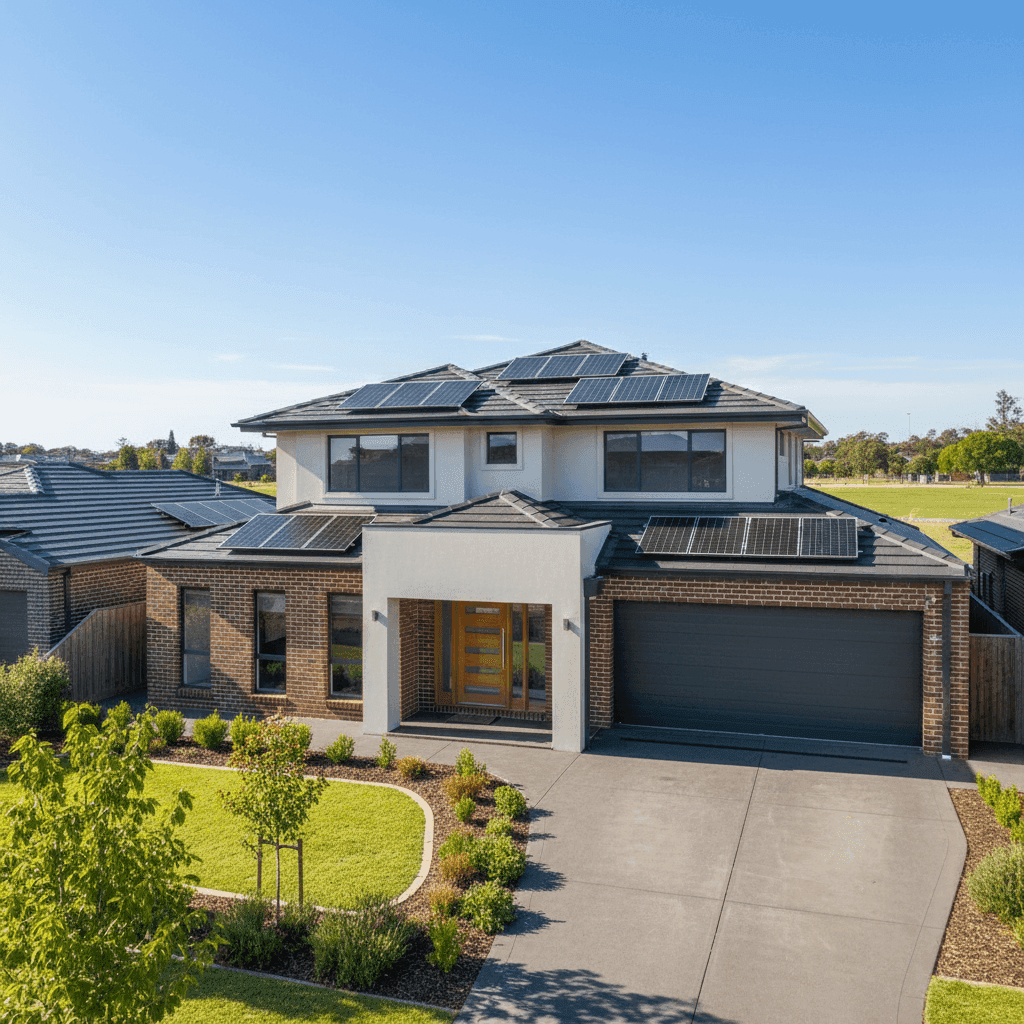
Koo Wee Rup is a growing township in Victoria's South Gippsland corridor, sitting roughly 65 kilometres south-east of Melbourne's CBD. Known for its agricultural roots and increasingly popular with families seeking larger blocks at accessible price points, the area has seen a steady uptick in newer residential construction. This article breaks down a real home insurance quote for a five-bedroom, free-standing home in postcode 3981 — and helps you understand whether that price stacks up.
---
Is This Quote Fair?
The quote in question comes in at $2,766 per year (or $271 per month) for combined home and contents cover. The building is insured for $758,000 and contents for $202,000, with a $1,000 excess applying to both building and contents claims.
Our price rating for this quote is FAIR — Around Average. That's a reasonable outcome for a property of this size and specification, and here's why that verdict holds up under scrutiny.
The suburb average for Koo Wee Rup sits at $2,925 per year, meaning this quote comes in roughly $159 below the local average — a modest but meaningful saving. Compared to the suburb median of $2,340, the quote is higher, which is expected given the property's size (277 sqm, five bedrooms) and the relatively high sum insured. Larger homes with greater rebuild values naturally attract higher premiums, so sitting above the median while still landing below the suburb average is a solid position.
Across Victoria, the average home and contents premium is $2,921 per year, and nationally the figure is $2,965 per year. This quote beats both benchmarks, which is encouraging for a property of this scale.
---
How Koo Wee Rup Compares
To put the numbers in full context, here's how this quote sits against the broader market — based on data from 101 quotes in the Koo Wee Rup area:
| Benchmark | Annual Premium |
|---|---|
| This Quote | $2,766 |
| Suburb 25th Percentile | $2,010 |
| Suburb Median | $2,340 |
| Suburb Average | $2,925 |
| Suburb 75th Percentile | $3,879 |
| LGA (Baw Baw) Average | $2,611 |
| VIC State Average | $2,921 |
| VIC State Median | $2,694 |
| National Average | $2,965 |
| National Median | $2,716 |
A few things stand out here. First, the spread within the Koo Wee Rup suburb is quite wide — from $2,010 at the 25th percentile to $3,879 at the 75th. This tells us that property characteristics, insurer choice, and cover levels vary significantly across the postcode. Second, the LGA average for Baw Baw Shire is $2,611 — noticeably lower than the suburb average — suggesting that Koo Wee Rup itself may carry slightly elevated risk factors compared to other parts of the shire.
At $2,766, this quote sits comfortably in the middle of the pack: above the cheaper end of the market but well clear of the more expensive policies being written locally.
---
Property Features That Affect Your Premium
Several characteristics of this property will be influencing the premium, some favourably and some less so.
Brick veneer construction with a tiled roof is generally viewed positively by insurers. Brick veneer offers solid fire resistance and structural durability, while tiled roofs are considered more resilient than corrugated iron or metal sheeting in many risk scenarios. Together, these materials typically attract lower premiums compared to timber-clad or Colorbond-roofed homes.
Slab foundation is another premium-friendly feature. Concrete slab homes tend to be more resistant to certain types of subsidence and are straightforward to assess for rebuild costing. However, it's worth noting that areas in the broader South Gippsland and West Gippsland region can experience soil movement — particularly reactive clay soils — so insurers do factor in local ground conditions.
Solar panels are increasingly common on Australian homes, but they do add complexity to a building's insured value. The $758,000 sum insured should account for the cost of replacing the solar system as part of the building's rebuild value. If your panels were installed after you last reviewed your sum insured, it's worth checking that figure is still accurate.
Ducted climate control is another fixed asset that adds to rebuild cost. Like solar, it's easy to overlook when updating your building sum insured, but ducted systems can run into tens of thousands of dollars to replace.
Construction year of 2018 works in the property's favour. Newer homes are built to more recent Australian Standards, including updated bushfire and wind-load requirements. Insurers generally price newer builds more competitively, as there's less likelihood of ageing infrastructure issues such as old wiring or deteriorating plumbing.
Standard fittings keep the premium grounded. High-end or luxury fittings — think stone benchtops throughout, imported tiles, or custom joinery — push rebuild costs up and can inflate premiums. A standard fittings rating keeps costs predictable for both the insurer and the homeowner.
---
Tips for Homeowners in Koo Wee Rup
1. Review your sum insured annually — especially with solar and ducted systems Building costs have risen significantly across Victoria in recent years. With solar panels and ducted climate control already factored into this property, make sure your $758,000 sum insured reflects current replacement costs. Underinsurance is one of the most common and costly mistakes Australian homeowners make.
2. Check for flood and storm water risk in your area Koo Wee Rup sits on the edge of the Western Port floodplain, and parts of the broader postcode have historically experienced drainage and surface water issues during heavy rainfall events. Review your policy carefully to confirm what flood cover is included — and whether it applies to your specific location.
3. Don't set and forget your contents cover At $202,000, the contents value here is substantial. It's worth doing a room-by-room audit every couple of years to ensure your electronics, furniture, appliances, and valuables are accurately reflected. Many Australians are underinsured on contents without realising it.
4. Compare before you renew Insurance premiums in Koo Wee Rup span a wide range — from around $2,010 to nearly $3,879 for comparable properties. Loyalty doesn't always pay with insurance, and a quick comparison at renewal time could save you hundreds of dollars without sacrificing cover quality.
---
Compare Home Insurance Quotes in Koo Wee Rup
Whether you're reviewing an existing policy or shopping for cover on a new property, comparing quotes is the fastest way to know if you're getting a fair deal. CoverClub makes it easy to see how your premium stacks up against real data from your suburb, your state, and across Australia. Get a quote today and find out where you stand in seconds.