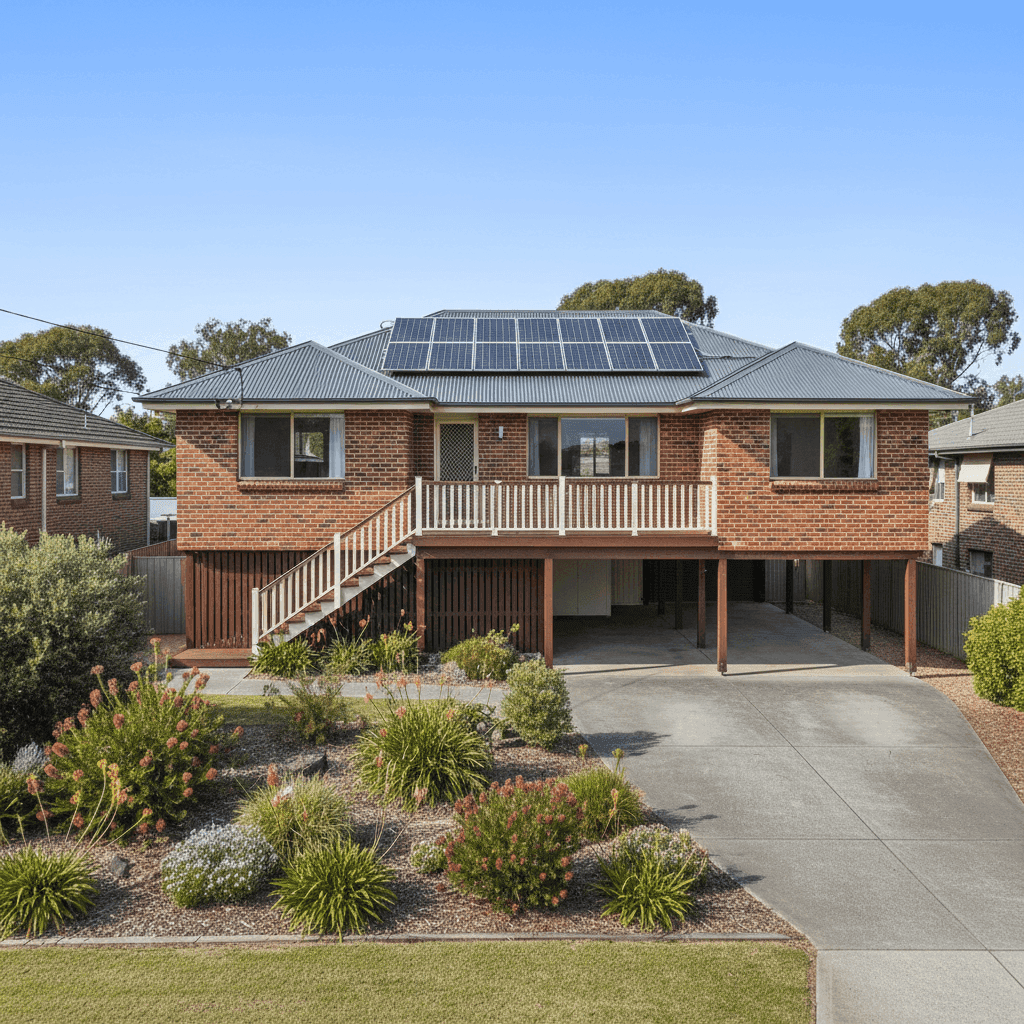
Nestled in the South East corner of Victoria, Koo Wee Rup is a semi-rural township known for its flat agricultural landscape, tight-knit community, and growing residential appeal. For owners of a free standing home in this area, understanding what you should be paying for home and contents insurance — and why — can make a real difference to your household budget.
This article breaks down a real insurance quote for a 3-bedroom, 2-bathroom brick veneer home in Koo Wee Rup (postcode 3981), built in 1993 and sitting on stumps at least a metre above ground level. The annual premium quoted was $2,395 for combined home and contents cover, with a building sum insured of $453,000 and contents valued at $50,000.
---
Is This Quote Fair?
The short answer: yes, broadly speaking — but there's nuance worth unpacking.
CoverClub's pricing analysis rates this quote as Fair (Around Average), meaning it sits comfortably within the normal range for this suburb without being a standout bargain or an obvious overpay. Based on 73 quotes collected for Koo Wee Rup, the suburb average premium sits at $2,542 per year, which means this quote comes in roughly $147 below the local average — a modest but meaningful saving.
The suburb median is $2,188/yr, so this quote is above the midpoint of the local market. That said, medians can be skewed by properties with lower rebuild values or minimal contents cover, so the comparison isn't always apples-to-apples. With a $453,000 building sum insured and $50,000 in contents, this is a reasonably comprehensive policy, which helps contextualise a premium sitting above the median.
The 25th–75th percentile range for Koo Wee Rup runs from $1,696 to $3,151 per year, and at $2,395 this quote falls squarely in the middle band — not the cheapest available, but well clear of the upper tier.
---
How Koo Wee Rup Compares
Zooming out beyond the suburb reveals just how favourably Koo Wee Rup stacks up against broader benchmarks.
| Benchmark | Average Premium | Median Premium |
|---|---|---|
| Koo Wee Rup (3981) | $2,542/yr | $2,188/yr |
| Victoria (VIC) | $3,000/yr | $2,718/yr |
| Australia (National) | $5,347/yr | $2,764/yr |
Compared to the Victorian state average of $3,000/yr, this quote is $605 cheaper — a significant difference that reflects Koo Wee Rup's relatively lower risk profile compared to many other parts of the state. Areas closer to Melbourne's urban fringe or coastal zones often attract higher premiums due to theft exposure, storm surge risk, or higher rebuild costs.
When measured against the national average of $5,347/yr, the gap is even more striking. The national figure is heavily influenced by high-risk regions in Queensland, Western Australia, and parts of the Northern Territory — particularly cyclone-prone and flood-affected zones — which push the average up considerably. The national median of $2,764/yr is a more useful comparison for most mainland homeowners, and this quote sits just below that figure.
The Local Government Area (LGA) benchmark for Baw Baw — which encompasses Koo Wee Rup and surrounds — shows an average of $2,647/yr, again above this quote, reinforcing that the quoted premium is competitive within its immediate geographic context.
---
Property Features That Affect Your Premium
Several characteristics of this particular property have a direct bearing on what insurers charge. Understanding them helps you anticipate how your own quote might shift if circumstances change.
Brick veneer construction is generally viewed favourably by insurers. It offers solid fire resistance and structural durability compared to weatherboard or clad exteriors, which can translate to lower premiums or higher confidence in rebuild cost estimates.
Steel/Colorbond roofing is another positive signal. Colorbond is highly regarded for its longevity, resistance to corrosion, and performance in high-wind conditions — all factors that reduce the likelihood of weather-related claims.
Stump foundations with at least 1 metre of elevation are particularly relevant in a region like Koo Wee Rup, which has historically experienced flooding and waterlogging due to its low-lying terrain and proximity to the Koo Wee Rup Swamp. Elevated homes are significantly less vulnerable to inundation damage, and insurers typically reflect this in their pricing. This feature likely plays a meaningful role in keeping the premium competitive.
Solar panels add modest complexity to a policy — they represent an additional asset to insure and can affect roof repair costs — but are increasingly common and well-understood by underwriters. It's worth confirming with your insurer exactly how your panels are covered, particularly for damage caused by storms or falling debris.
Ducted climate control is a higher-value fixture that can increase the contents or building sum insured slightly, but it's a standard inclusion in most modern policies and unlikely to significantly move the needle on premium.
The 1993 construction year places this home in a generation of builds that are generally well-understood by insurers — old enough to have a proven track record, but not so old as to attract the surcharges sometimes applied to pre-1970s homes with outdated plumbing or wiring.
---
Tips for Homeowners in Koo Wee Rup
1. Check your flood cover explicitly. Koo Wee Rup's history with inundation means flood cover is not something to leave to chance. Many standard policies either exclude flood or include it as an optional add-on. Read your Product Disclosure Statement (PDS) carefully and confirm whether your policy covers riverine flooding, flash flooding, or both.
2. Review your building sum insured annually. Construction costs in regional Victoria have risen sharply in recent years. A sum insured of $453,000 for 139 sqm may be appropriate today, but it's worth recalculating your estimated rebuild cost each year — especially if you've made renovations or if local builder rates have increased.
3. Don't over-insure your contents. A $50,000 contents value is reasonable for a standard 3-bedroom home, but it's worth doing a room-by-room audit to make sure you're neither underinsured (leaving yourself exposed) nor overinsured (paying for cover you don't need). Many insurers offer online calculators to help with this.
4. Compare quotes before renewing. Insurers rarely reward loyalty with their best pricing. When your renewal notice arrives, use it as a prompt to compare at least two or three competing quotes. Even a $200–$300 annual saving compounds meaningfully over time.
---
Ready to Compare?
Whether you're reviewing an existing policy or shopping for the first time, comparing quotes is the single most effective way to ensure you're not overpaying. CoverClub makes it straightforward to see what the market looks like for your specific property and location.
Get a home insurance quote for your Koo Wee Rup property →
You can also explore detailed pricing data for Koo Wee Rup (3981), Victoria, and Australia nationally to see how premiums in your area stack up.