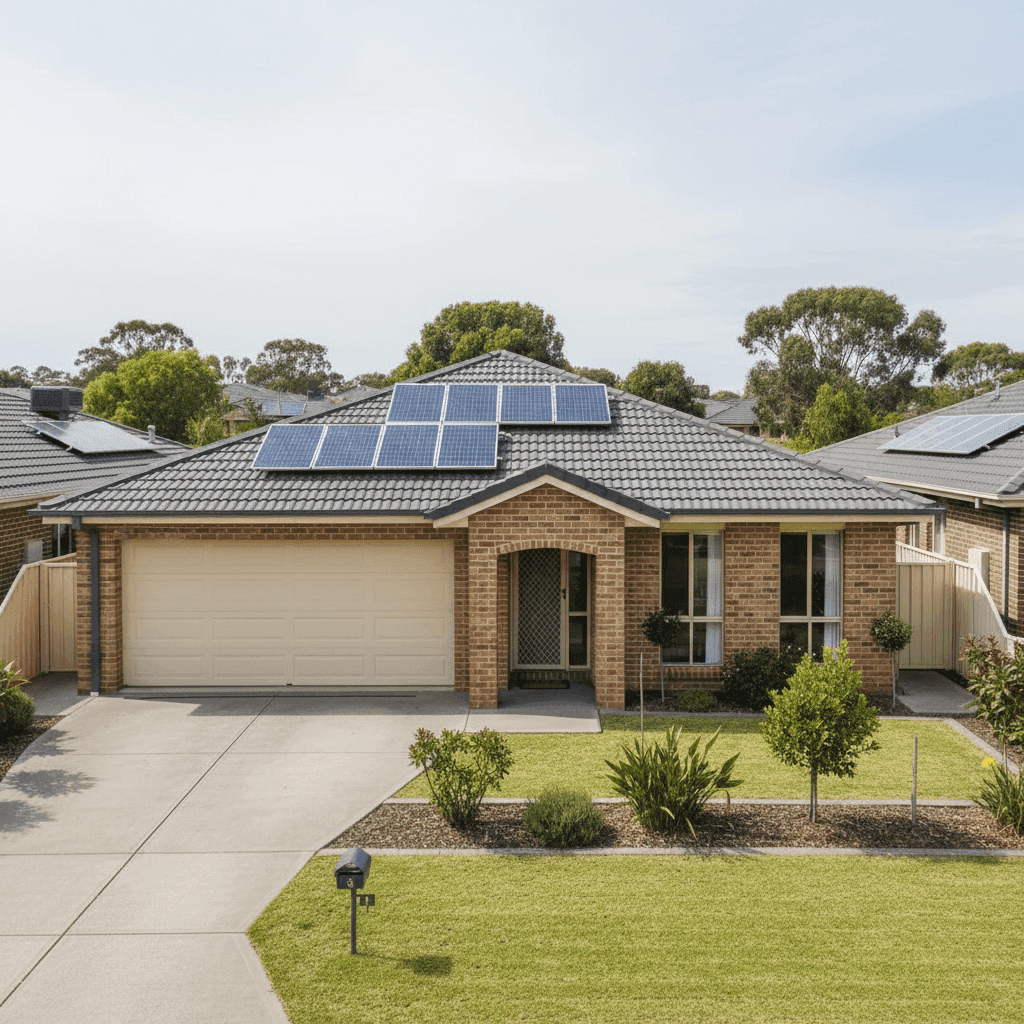
Koo Wee Rup is a quiet market town in Victoria's South Gippsland corridor, sitting roughly 65 kilometres south-east of Melbourne's CBD. Known for its flat agricultural landscape and relaxed lifestyle, it attracts families and owner-occupiers looking for space without the city price tag. If you own a free-standing home here, understanding what drives your insurance premium — and whether you're paying a fair price — is one of the smartest financial checks you can make.
This article breaks down a real home and contents insurance quote for a 3-bedroom, 2-bathroom brick veneer home in Koo Wee Rup, compares it against local, state, and national benchmarks, and offers practical tips to help you get the best possible cover.
---
Is This Quote Fair?
The quote in question comes in at $1,575 per year (or $154 per month) for combined home and contents cover, with a $374,000 building sum insured and $50,000 in contents cover. Both the building and contents excess are set at $1,000.
Based on data from over 100 quotes collected for the Koo Wee Rup area, this premium sits firmly in "Cheap" territory — well below average. To put it in perspective:
- The suburb average is $2,925/yr — this quote is 46% cheaper
- The suburb median is $2,340/yr — still 33% above this quote
- Even the 25th percentile (the cheapest quarter of quotes) sits at $2,010/yr, meaning this quote undercuts even the budget end of the market
That's a meaningful saving. On an annualised basis, this homeowner is potentially pocketing over $1,350 compared to what their neighbours are paying on average. Whether that's the result of a competitive insurer, favourable property characteristics, or simply good timing in the market, it represents genuine value.
Of course, price alone doesn't tell the whole story — it's critical to ensure the level of cover is appropriate for the property's rebuild cost and the value of its contents. But from a pure pricing standpoint, this is an excellent result.
---
How Koo Wee Rup Compares
Zooming out to a broader geographic lens gives useful context for just how competitive this quote is. You can explore the full data on the Koo Wee Rup insurance stats page.
| Benchmark | Average Premium | Median Premium |
|---|---|---|
| Koo Wee Rup (3981) | $2,925/yr | $2,340/yr |
| Baw Baw LGA | $2,498/yr | — |
| Victoria | $2,921/yr | $2,694/yr |
| National | $2,965/yr | $2,716/yr |
A few things stand out here. First, Koo Wee Rup's average premium of $2,925 is closely aligned with the Victorian state average of $2,921 — suggesting the suburb carries broadly similar risk to the rest of the state. Interestingly, the Baw Baw LGA average of $2,498 is noticeably lower, which may reflect a mix of lower-risk rural properties across the broader local government area pulling the average down.
Nationally, the picture is remarkably consistent — the national average of $2,965 is only marginally higher than both the Victorian and Koo Wee Rup figures, suggesting home insurance pricing in this part of Victoria is broadly in line with the rest of the country. For a deeper dive into how Victoria stacks up, visit the VIC insurance stats page.
The wide spread between Koo Wee Rup's 25th percentile ($2,010) and 75th percentile ($3,879) — a gap of nearly $1,870 — highlights just how much premiums can vary based on property specifics and insurer choice. Shopping around clearly pays off.
---
Property Features That Affect Your Premium
Several characteristics of this particular property likely contribute to its favourable premium. Here's how each feature plays a role:
Brick Veneer Walls Brick veneer is one of the most common — and insurer-friendly — external wall types in Australia. It offers solid fire resistance and durability, which generally translates to lower premiums compared to timber weatherboard or other combustible cladding materials.
Tiled Roof Concrete or terracotta tiles are viewed positively by insurers. They're resistant to ember attack (an important consideration even in lower-risk areas), have a long lifespan, and hold up well in storms and hail events compared to older corrugated iron.
Slab Foundation A concrete slab foundation is structurally sound and eliminates the risk of subfloor moisture issues or pest damage that can affect homes on stumps or piers. Insurers generally regard slab homes as lower-risk.
Construction Year: 2008 Homes built after 2000 benefit from modern building codes that mandate improved structural standards, energy efficiency, and fire safety measures. A 2008 build is relatively modern, meaning the property is less likely to have aged electrical wiring, deteriorating plumbing, or other maintenance-related risks that can inflate premiums.
Solar Panels The property has rooftop solar panels. While solar panels themselves are generally insurable under a standard home policy, homeowners should confirm with their insurer that panels are explicitly included in the building sum insured. Panels can be costly to replace, and not all policies cover them by default.
Above-Average Fittings Quality Above-average fittings — think stone benchtops, quality appliances, and premium fixtures — are factored into the building sum insured. At $374,000, the sum insured reflects a higher rebuild cost than a comparable home with standard fittings, which is appropriate. Under-insuring a well-appointed home is a common and costly mistake.
No Pool, No Cyclone Risk The absence of a swimming pool removes a liability and maintenance risk that can add to premiums. Koo Wee Rup is also outside any designated cyclone risk zone, which keeps the risk profile lower than properties in northern Queensland or coastal WA.
---
Tips for Homeowners in Koo Wee Rup
1. Review your building sum insured annually Construction costs have risen sharply across Victoria in recent years. A sum insured that was accurate two or three years ago may no longer reflect the true cost to rebuild your home. Use a building cost calculator or speak with a local builder to sense-check your figure — being underinsured can leave you significantly out of pocket after a major claim.
2. Confirm solar panels are covered If your policy doesn't explicitly list solar panels as a covered item under the building section, request clarification in writing. Some insurers include them automatically; others require a specific endorsement. Given the replacement cost of a solar system, this is worth confirming before you need to make a claim.
3. Shop around at renewal time The wide premium range in Koo Wee Rup (from $2,010 at the 25th percentile to $3,879 at the 75th) shows that insurer pricing varies enormously for similar properties. Loyalty doesn't always pay — comparing quotes at renewal can save hundreds of dollars a year without sacrificing cover quality.
4. Consider your excess level carefully Both the building and contents excess on this policy are set at $1,000. While a higher excess typically lowers your premium, make sure the amount is genuinely affordable in an emergency. If a storm damaged your roof tomorrow, could you comfortably cover a $1,000 excess? If not, it may be worth adjusting.
---
Compare Your Own Quote
Whether you're renewing your existing policy or insuring a property for the first time, it pays to see the full picture. CoverClub makes it easy to compare home and contents insurance quotes from multiple insurers in one place — so you can see exactly where your premium sits relative to the market.
Get a quote today at CoverClub and find out if you're paying a fair price for your home in Koo Wee Rup.