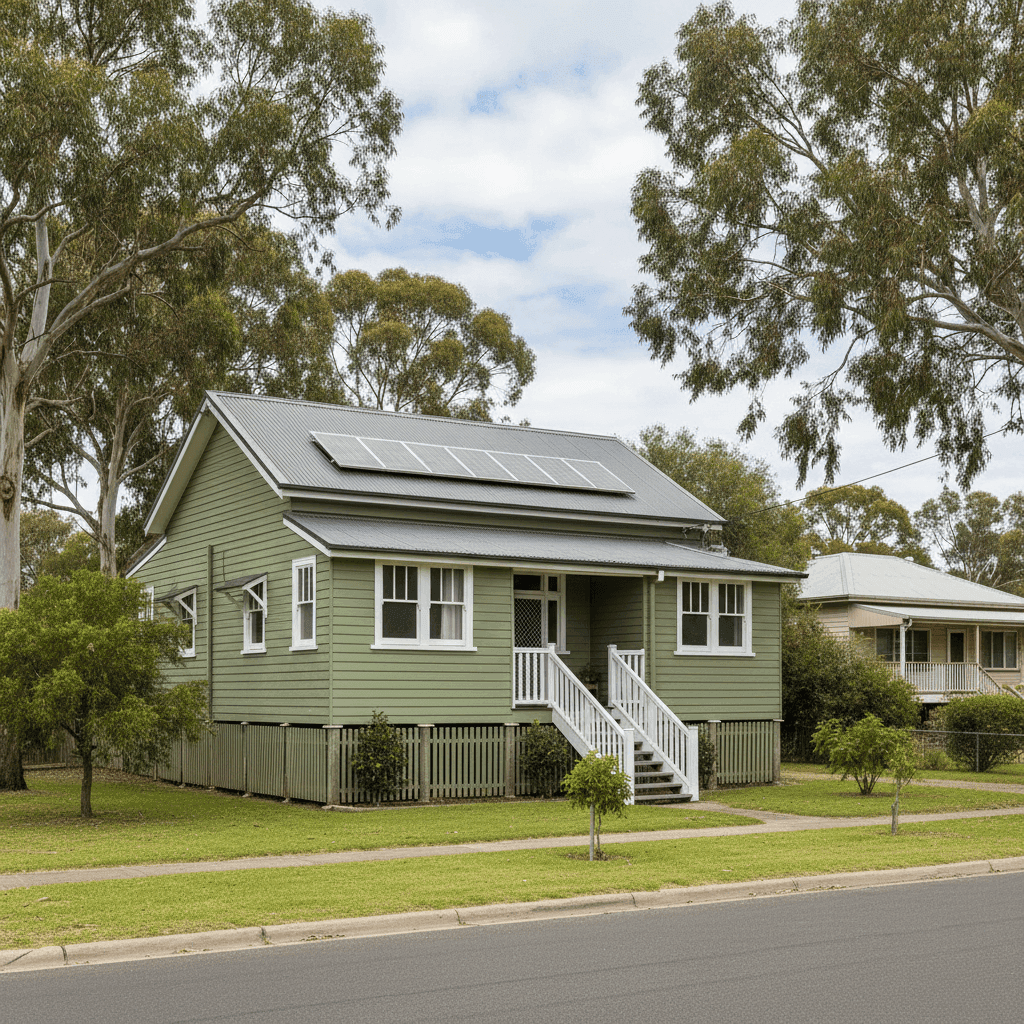
If you own a free standing home in Koondrook, VIC 3580, you've probably wondered whether you're paying a fair price for home insurance — or leaving money on the table. This article breaks down a real home and contents insurance quote for a three-bedroom weatherboard property in Koondrook, comparing it against suburb, state, and national benchmarks to help you make a more informed decision.
---
Is This Quote Fair?
The quote in question comes in at $2,432 per year (or around $226 per month) for combined home and contents cover, with a building sum insured of $200,000 and contents valued at $50,000. Both the building and contents excess are set at $1,000.
Our price rating for this quote? Cheap — below average. That's genuinely good news for the homeowner.
To put it in perspective, the suburb average for Koondrook sits at $5,016 per year, with a median of $5,268. This quote comes in at less than half the suburb average — a significant saving by any measure. Even the 25th percentile (the cheapest quarter of quotes in the area) sits at $3,577 per year, meaning this quote undercuts even the most competitive local prices we've seen.
Whether this reflects a particularly competitive insurer, a well-maintained property, or a combination of both, the outcome is the same: this homeowner is in a strong position.
---
How Koondrook Compares
Understanding where Koondrook sits in the broader insurance landscape is useful context for any homeowner in the area.
| Benchmark | Annual Premium |
|---|---|
| This Quote | $2,432 |
| Koondrook Suburb Average | $5,016 |
| Koondrook Suburb Median | $5,268 |
| Koondrook 25th Percentile | $3,577 |
| VIC State Average | $3,000 |
| VIC State Median | $2,718 |
| National Average | $5,347 |
| National Median | $2,764 |
| Gannawarra LGA Average | $3,536 |
(Based on a sample of 22 quotes in the Koondrook area.)
A few things stand out here. First, Koondrook's suburb average of $5,016 is notably higher than both the Victorian state average of $3,000 and the national median of $2,764. This suggests that insurers price properties in this postcode with a degree of caution — likely reflecting factors such as flood risk along the Murray River corridor and the prevalence of older housing stock in the area.
The Gannawarra LGA average of $3,536 per year also sits well above the Victorian state median, reinforcing that this region carries a higher-than-average risk profile in the eyes of insurers.
Given all of that, securing a quote of $2,432 is a genuinely strong result for a Koondrook homeowner.
---
Property Features That Affect Your Premium
Several characteristics of this property are worth examining, as they each play a role in how insurers calculate risk and set premiums.
Weatherboard timber walls are one of the most significant factors. Older weatherboard homes are considered higher risk than brick or rendered properties because timber is more susceptible to fire and can deteriorate over time. A home built in 1960 adds another layer of consideration — at over 60 years old, insurers will factor in the potential for ageing electrical wiring, plumbing, and structural wear.
Steel/Colorbond roofing is generally viewed favourably by insurers. It's durable, low-maintenance, and performs well in both high-wind and bushfire-prone conditions compared to terracotta or concrete tiles. This could be contributing positively to the premium outcome here.
Stump foundations are common in older regional Victorian homes and are generally well understood by insurers. Being elevated by less than one metre means the property isn't dramatically raised, but there is still some degree of airflow and clearance beneath the floor — a feature that can help in flood-prone areas, though it's a modest benefit at this height.
Solar panels are an increasingly common feature and are typically covered under home insurance as a fixed structure. However, homeowners should confirm with their insurer exactly what is and isn't covered — particularly for inverter damage or storm events.
Ducted climate control adds to the overall replacement value of the home and is a factor insurers consider when assessing building sum insured adequacy. At $200,000, it's worth ensuring this figure genuinely reflects the full cost of rebuilding the home from scratch, including all fixtures and fittings.
No pool simplifies the risk profile slightly, removing liability concerns that can sometimes nudge premiums upward.
---
Tips for Homeowners in Koondrook
1. Review your sum insured regularly Building costs have risen sharply across regional Victoria in recent years. A sum insured of $200,000 for a 139 sqm weatherboard home may be adequate today, but it's worth revisiting annually. Underinsurance is one of the most common — and costly — mistakes homeowners make.
2. Ask about flood cover specifically Koondrook sits near the Murray River and parts of the region have experienced flooding historically. Not all home insurance policies include flood cover by default, and definitions can vary significantly between insurers. Make sure you understand exactly what your policy covers before you need to make a claim.
3. Maintain your weatherboard exterior Insurers can reduce or deny claims if a property is found to be poorly maintained. Keeping your weatherboard walls painted, sealed, and free from rot not only protects the home structurally but also demonstrates to your insurer that the property is well cared for.
4. Compare quotes at renewal — every year The fact that this quote comes in well below the suburb average is a great reminder that premiums vary enormously between insurers. Loyalty doesn't always pay in the insurance market. Shopping around at renewal time is one of the simplest ways to keep your costs down.
---
Find a Better Deal with CoverClub
Whether you're already insured and wondering if you're overpaying, or you're shopping for cover for the first time, CoverClub makes it easy to compare home and contents insurance quotes side by side. Get a quote today and see how your premium stacks up against the Koondrook suburb average, the broader Victorian market, and homeowners right across Australia. A few minutes of comparison could save you hundreds of dollars a year.