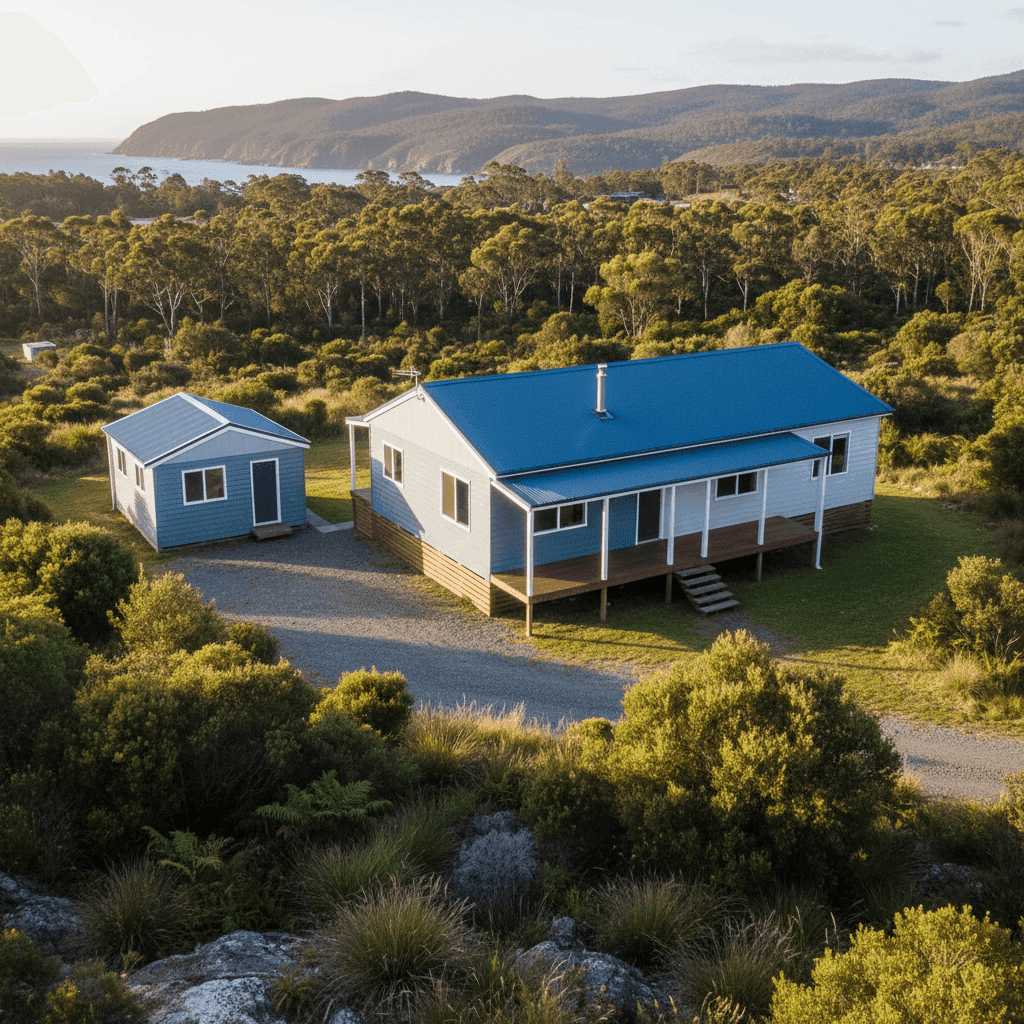
Koonya is a quiet coastal locality nestled in the Tasman Peninsula — one of Tasmania's most scenic and historically rich corners. It's also a place where home insurance costs can vary quite dramatically depending on your property's characteristics. This article breaks down a real home and contents insurance quote for a three-bedroom free-standing home in Koonya, TAS 7187, examining what's driving the price and what local homeowners should know before they renew or switch policies.
---
Is This Quote Fair?
The short answer: yes — and then some. This quote came in at $1,870 per year (or roughly $183 per month), which earns a CHEAP price rating from CoverClub, meaning it sits well below average for the area.
To put that into context:
- The suburb average for Koonya is $3,141/yr
- The suburb median sits at $2,729/yr
- Even the 25th percentile — the cheapest quarter of quotes — is $2,619/yr
That means this quote is coming in at roughly 40% below what most Koonya homeowners are paying. For a home and contents policy covering $903,000 in building value and $135,000 in contents, that's a genuinely strong result.
It's worth noting that the suburb sample size here is relatively small (five quotes), so the averages should be taken as a directional guide rather than a definitive benchmark. That said, the gap is large enough that this quote stands out as legitimately competitive by any measure.
---
How Koonya Compares
Zooming out beyond the suburb level tells an equally interesting story. Check out the TAS state insurance stats and you'll see that:
| Benchmark | Annual Premium |
|---|---|
| This quote | $1,870 |
| Koonya suburb average | $3,141 |
| Koonya suburb median | $2,729 |
| TAS state average | $2,458 |
| TAS state median | $2,272 |
| National average | $2,965 |
| National median | $2,716 |
| Tasman LGA average | $3,431 |
This quote beats every single benchmark — including the national average of $2,965/yr. Most strikingly, it comes in well below the Tasman LGA average of $3,431, which suggests that insurers are pricing some properties in this region quite heavily, making a result like this even more noteworthy.
Tasmania as a whole tends to sit below the national average for home insurance, partly because it's outside cyclone risk zones and experiences fewer of the extreme weather events that push premiums up in Queensland and northern WA. Even so, coastal and peninsula properties in Tassie can attract higher premiums due to wind exposure and remoteness — which makes this quote's competitiveness all the more impressive.
---
Property Features That Affect Your Premium
Several characteristics of this property are likely working in its favour — and a couple may have been scrutinised closely by underwriters.
New build advantage. The home was constructed in 2021, making it a relatively new dwelling. Modern builds are generally priced more favourably by insurers because they comply with current building codes, use contemporary materials, and are less likely to have hidden structural or electrical issues.
Hardiplank/Hardiflex cladding and Colorbond roof. These are both well-regarded materials in the Australian insurance market. Fibre cement cladding like Hardiflex is non-combustible and resistant to rot and pests, while Colorbond steel roofing is durable, low-maintenance, and performs well in wind and rain. Together, they present a lower-risk profile than older timber weatherboard or terracotta tile combinations.
Stump foundation. The home sits on stumps and is elevated by less than one metre. Stump foundations are common in Tasmania and can be a slight wildcard for insurers — they allow for good underfloor ventilation but may raise questions about stability and flood ingress depending on the site. At under one metre of elevation, this property doesn't qualify as a high-set home, but it's worth ensuring your policy covers underfloor areas appropriately.
Timber and laminate flooring. These are considered standard-risk flooring types and unlikely to significantly influence the premium either way, though they are relevant when assessing contents and internal fitout value.
Above-average fittings quality. The property features above-average internal fittings, which is reflected in the building sum insured of $903,000 — a substantial figure for a 105 sqm home. Quality fixtures, joinery, and finishes cost more to replace, so it's important that the sum insured genuinely reflects full rebuild cost rather than just market value.
Granny flat on site. The presence of a granny flat is a notable feature. Some insurers include secondary dwellings under the main home policy up to a certain value; others require separate cover or an endorsement. It's essential to confirm with your insurer that the granny flat is explicitly covered under the policy — both for the structure and any contents within it.
No pool, no solar, no cyclone risk. The absence of a pool and solar panels simplifies the risk profile, and being outside a designated cyclone risk area removes one of the more significant premium loading factors seen in northern Australia.
---
Tips for Homeowners in Koonya
1. Verify your granny flat is covered. Don't assume the secondary dwelling is automatically included in your home and contents policy. Ask your insurer directly whether the granny flat structure and its contents are covered, and to what limit. If it's used as a rental, you may need landlord insurance for that portion of the property.
2. Review your building sum insured regularly. A $903,000 sum insured is significant, and with construction costs rising across Australia, it's worth revisiting this figure annually. Underinsurance is one of the most common — and costly — mistakes homeowners make. Use a building cost calculator or speak to a quantity surveyor if you're unsure.
3. Check your excess structure carefully. This policy has a $2,000 building excess and a $600 contents excess. A higher building excess typically lowers your premium, but make sure you could comfortably cover that amount out of pocket in the event of a claim. If $2,000 feels like a stretch, it may be worth adjusting.
4. Shop around at renewal time. The fact that this quote came in 40% below the suburb average is a reminder that premiums can vary enormously between insurers for the same property. Don't accept your renewal price without checking the market — especially in a region like Tasman where averages are high and the spread between quotes can be significant.
---
Compare Your Own Quote
Whether you're a Koonya local or looking at a property on the Tasman Peninsula, it pays to know what the market looks like before you commit to a policy. CoverClub makes it easy to compare home insurance quotes from multiple insurers in minutes — so you can see whether your current premium is genuinely competitive or quietly overpriced. With suburb, state, and national benchmarks at your fingertips, you'll never have to guess again.