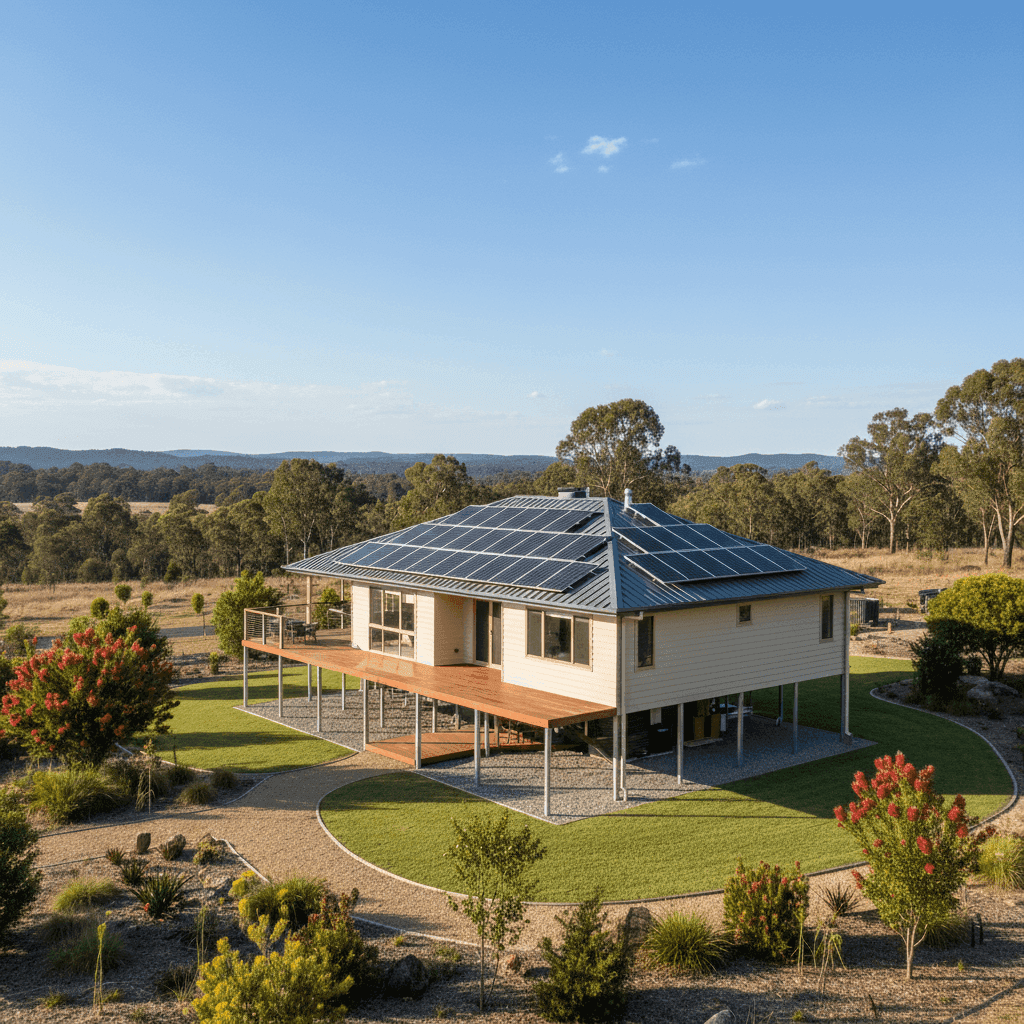
Nestled in the New England region of New South Wales, Kootingal is a quiet rural township sitting just southeast of Tamworth. It's the kind of place where larger homes on generous blocks are common — and insuring them properly is just as important as anywhere else in the country. This article breaks down a real home and contents insurance quote for a five-bedroom free-standing home in Kootingal (NSW 2352), examines whether the price stacks up, and offers practical tips for local homeowners looking to get better value from their cover.
---
Is This Quote Fair?
The annual premium for this property came in at $4,156 per year (or $427/month), covering both building and contents. The building is insured for $1,854,000, with $50,000 in contents cover. The building excess sits at $3,000 and the contents excess at $1,000.
CoverClub's pricing engine has rated this quote as FAIR — Around Average, which is a reasonable outcome for a property of this size and specification. At $4,156/year, the premium lands comfortably within the middle range of what homeowners in this suburb are paying, sitting above the suburb median of $3,237 but well below the 75th percentile of $4,555. In other words, roughly a quarter of comparable properties in the area attract even higher premiums.
It's worth noting that the building sum insured of $1,854,000 is substantial — reflective of a large, above-average quality home with 334 sqm of floor space. A higher insured value naturally drives the premium upward, so comparing this quote purely on price without accounting for the level of cover would paint an incomplete picture.
---
How Kootingal Compares
Understanding where your premium sits relative to local and national benchmarks is one of the most useful things you can do as a homeowner. Here's how this quote measures up:
| Benchmark | Premium |
|---|---|
| This Quote | $4,156/yr |
| Kootingal suburb average | $3,505/yr |
| Kootingal suburb median | $3,237/yr |
| Kootingal 25th percentile | $2,587/yr |
| Kootingal 75th percentile | $4,555/yr |
| NSW state average | $3,801/yr |
| NSW state median | $3,410/yr |
| National average | $2,965/yr |
| National median | $2,716/yr |
| Tamworth LGA average | $4,274/yr |
(Based on 29 quotes sampled in the Kootingal suburb area.)
This quote sits 18.6% above the Kootingal suburb average and 9.3% above the NSW state average, but it's actually slightly below the Tamworth LGA average of $4,274/yr — suggesting that larger or higher-value homes in this region commonly attract premiums in this range.
Compared to the national average of $2,965/yr, this premium looks elevated, but that gap is largely explained by the property's size, construction type, and insured value rather than any particular risk anomaly in the suburb. Across NSW more broadly, premiums tend to run higher than the national average, driven by a mix of weather exposure, property values, and rebuilding costs.
---
Property Features That Affect Your Premium
Several characteristics of this property have a direct bearing on what insurers charge. Understanding them can help you have more informed conversations with your insurer or broker.
Weatherboard Timber Walls
Weatherboard construction is one of the most common external wall types in regional NSW, but insurers typically view it as a higher fire risk compared to brick veneer or double brick. Timber-framed and clad homes can also be more susceptible to termite damage and moisture ingress over time, which may influence underwriting decisions.
Steel / Colorbond Roof
On the positive side, a Colorbond steel roof is generally well-regarded by insurers. It's durable, fire-resistant, and performs well in high-wind conditions. Colorbond roofs are also less prone to hail damage than terracotta or concrete tiles, which can work in your favour at renewal time.
Pole Foundation
Homes built on poles (also known as stumps or piers) are common in regional and rural areas, particularly on sloped or flood-prone land. Pole foundations can introduce additional risk around subfloor exposure and structural vulnerability, which some insurers factor into their pricing.
Timber and Laminate Flooring
Timber flooring adds replacement value to the building sum insured and can also be a consideration in water damage claims, where timber floors can warp or buckle. Ensuring your sum insured accurately reflects the cost to replace these finishes is important.
Solar Panels
This property has solar panels, which are increasingly common across Australia. Solar systems are generally covered under home building insurance, but it's worth confirming with your insurer that the panels and inverter are explicitly included in your policy — and that the sum insured accounts for their replacement cost.
Above-Average Fittings
With above-average fittings quality across a 334 sqm home, the cost to rebuild or repair is meaningfully higher than a standard-spec property. This is a key driver of the $1,854,000 building sum insured, and getting this figure right is crucial — both underinsurance and overinsurance carry their own risks.
Ducted Climate Control
Ducted air conditioning systems are expensive to replace and are typically covered under building insurance. Their presence contributes to the overall replacement cost of the home and is appropriately reflected in the sum insured.
---
Tips for Homeowners in Kootingal
1. Review Your Building Sum Insured Annually
Construction costs in regional NSW have risen sharply in recent years. A sum insured that was accurate two years ago may now fall short of what it would actually cost to rebuild. Use a building cost calculator or speak with a quantity surveyor to make sure you're not underinsured — especially on a property of this size and finish quality.
2. Confirm Solar Panel Coverage
Don't assume your solar system is automatically covered. Check your policy schedule to confirm the panels, inverter, and associated wiring are included, and that the sum insured reflects their current replacement value. Some policies treat solar as a separate item or apply specific sub-limits.
3. Ask About Excess Trade-Offs
This policy carries a $3,000 building excess, which is on the higher end. Depending on your financial position, it may be worth requesting a quote with a lower excess to understand the premium difference — or, conversely, if cash flow allows, a higher excess in exchange for a lower annual premium.
4. Compare at Least Every Two Years
Insurance markets shift, and loyalty doesn't always pay. With 29 quotes sampled in Kootingal alone, there's meaningful variation in what different insurers are charging for similar properties. Comparing your options regularly is one of the simplest ways to avoid overpaying.
---
Ready to Compare Home Insurance in Kootingal?
Whether you're reviewing an existing policy or shopping for the first time, comparing quotes is the best way to make sure you're getting fair value. CoverClub makes it easy to see real premium data for your suburb and get quotes tailored to your property. Start your comparison today — it only takes a few minutes.