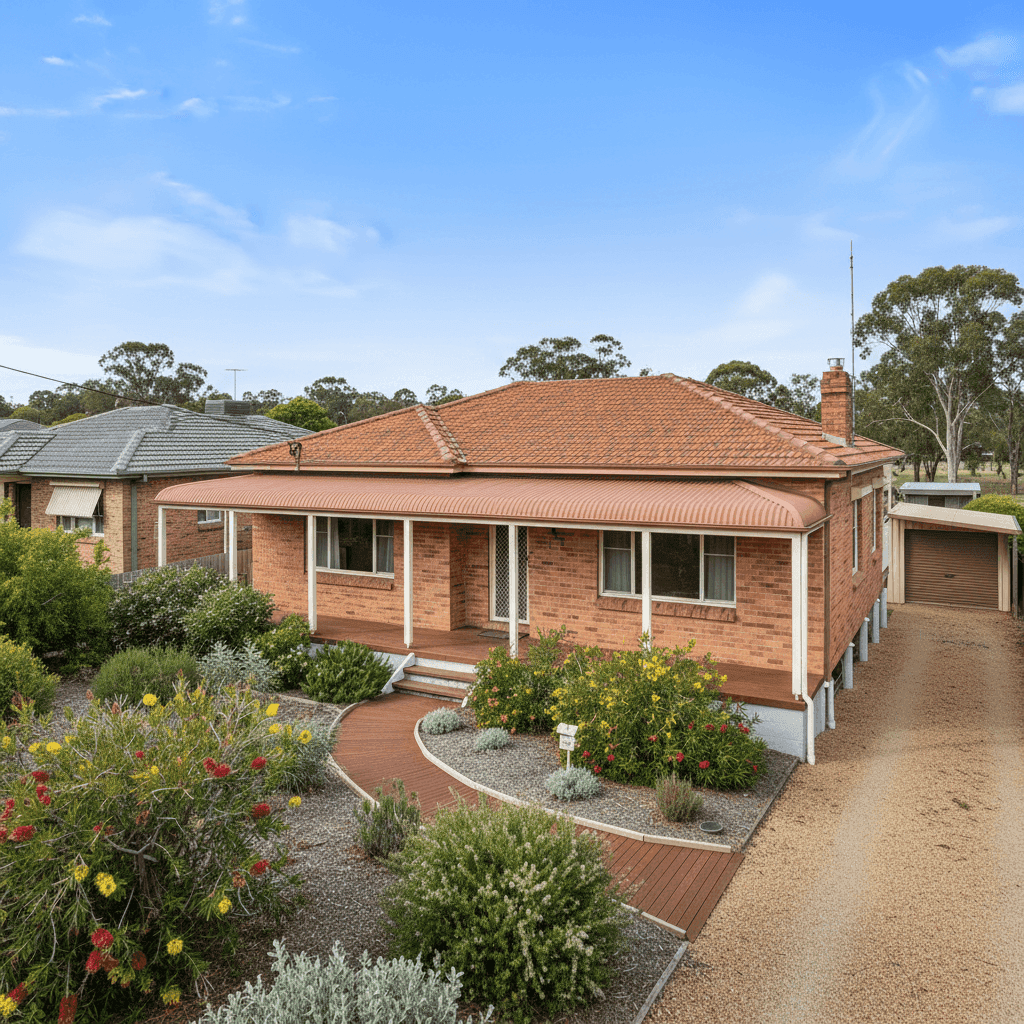
If you own a free standing home in Kootingal, NSW 2352, you've probably wondered whether your home insurance premium is competitive — or whether you're quietly paying more than you should. This article breaks down a real building insurance quote for a three-bedroom brick veneer home in Kootingal, benchmarks it against local, state and national data, and offers practical tips to help you get the best value cover.
---
Is This Quote Fair?
The quote in question comes in at $1,967 per year (or $189/month) for building-only cover on a free standing home with a sum insured of $579,000 and a $2,000 building excess.
Our analysis rates this quote as FAIR — around average for the area. That might sound underwhelming, but in the context of Kootingal's pricing landscape, sitting near the average is actually a reasonably solid outcome. The suburb's 25th percentile premium sits at just $1,959/yr, meaning this quote is only marginally above the cheapest quarter of quotes we've seen in the area. In other words, the homeowner is close to — but not quite at — the most competitive end of the market.
There's room to do better, but this is far from an overpriced policy. For a 1974-built home on stumps with timber flooring and ducted climate control, insurers are pricing in a handful of risk factors that we'll explore below.
---
How Kootingal Compares
To put this quote in proper perspective, it helps to look at the broader pricing picture. Here's how the $1,967 annual premium stacks up:
| Benchmark | Premium |
|---|---|
| This Quote | $1,967/yr |
| Kootingal Suburb Average | $3,436/yr |
| Kootingal Suburb Median | $2,816/yr |
| Kootingal 25th Percentile | $1,959/yr |
| Kootingal 75th Percentile | $4,976/yr |
| Tamworth LGA Average | $4,038/yr |
| NSW State Median | $3,770/yr |
| National Median | $2,764/yr |
The numbers tell an encouraging story. This quote sits well below the Kootingal suburb average of $3,436/yr and is also below the suburb median of $2,816/yr. Compared to the broader Tamworth LGA average of $4,038/yr and the NSW state median of $3,770/yr, this policy is genuinely competitive.
It's worth noting that the national median sits at $2,764/yr, which is slightly higher than this quote — a reminder that Kootingal, despite being a regional NSW town, can offer relatively affordable premiums compared to higher-risk coastal or flood-prone areas around the country.
The suburb sample size of 33 quotes gives us a reasonable (if modest) dataset to work with, and the wide spread between the 25th percentile ($1,959) and 75th percentile ($4,976) shows just how much premiums can vary for similar homes in the same postcode. Shopping around clearly makes a real difference here.
---
Property Features That Affect Your Premium
Every home is unique, and insurers weigh up a combination of construction, location and features when calculating your premium. Here's how the key characteristics of this particular property likely influence its pricing:
Brick Veneer Walls Brick veneer is generally viewed favourably by insurers. It offers solid fire resistance and durability compared to weatherboard or fibre cement, which can help keep premiums lower. It's not as robust as full double-brick construction, but it's a widely accepted and well-understood building material in Australia.
Tiled Roof Terracotta or concrete tiles are considered a low-to-moderate risk roofing material. They're durable, fire-resistant and long-lasting — all factors that can work in your favour at renewal time. Colorbond steel is often rated similarly, but tiles on a well-maintained older home are generally unproblematic.
Stump Foundation & Elevated Design This is where things get a little more nuanced. The home is elevated on stumps by less than one metre. Stump foundations are common in older Australian homes, particularly those built in the 1960s and 70s. While the elevation can offer some protection against minor surface flooding, stumped homes can be more susceptible to subfloor moisture, pest damage and structural movement over time — all of which insurers factor into their risk models.
Construction Year: 1974 At over 50 years old, this home is considered an older build. Ageing electrical wiring, plumbing and roofing materials can increase the likelihood of a claim, which is reflected in premiums. Keeping up with maintenance and updating key systems where possible can help manage this risk.
Timber & Laminate Flooring Timber floors are a fire risk consideration and can also be more susceptible to water damage than tiles. However, they're extremely common in homes of this era and don't typically cause significant premium loading on their own.
Ducted Climate Control The presence of ducted air conditioning adds to the replacement value of the home and is a positive inclusion in the sum insured. It's a relatively minor premium factor but is worth noting when reviewing your building sum insured to ensure it accurately reflects full replacement cost.
No Pool, No Solar Panels, Not in a Cyclone Zone The absence of a pool and solar panels removes two common sources of additional premium loading. Being outside a designated cyclone risk area is also a meaningful cost advantage — cyclone-prone regions in Queensland and northern WA can see premiums two to three times higher for comparable properties.
---
Tips for Homeowners in Kootingal
Whether you're reviewing an existing policy or shopping for the first time, here are four practical steps to make sure you're getting the best deal on home insurance in Kootingal.
- Compare quotes every year. The wide premium spread in Kootingal — from under $2,000 to nearly $5,000 — shows that loyalty doesn't always pay. Insurers regularly adjust their pricing models, and the cheapest option one year may not be the best the following year. Use a comparison tool like CoverClub to check multiple quotes at once.
- Review your sum insured carefully. A sum insured of $579,000 on a 139 sqm home works out to roughly $4,165 per square metre — broadly in line with current rebuild costs for a standard-quality brick home in regional NSW. However, construction costs have risen sharply in recent years. It's worth recalculating your rebuild estimate annually to avoid being underinsured.
- Maintain your stumped subfloor. Homes on stumps benefit from regular subfloor inspections. Check for moisture, pest activity and any signs of stump deterioration. Proactively addressing these issues not only protects your home but also reduces the likelihood of a claim — which can keep your premium history clean.
- Ask about excess trade-offs. This policy carries a $2,000 building excess. Opting for a higher excess is one of the most straightforward ways to reduce your annual premium. If you have the financial buffer to absorb a larger out-of-pocket cost in the event of a claim, increasing your excess could save you a meaningful amount each year.
---
Ready to Compare?
Whether this quote is yours or you're simply doing your research, it pays to see what else is out there. CoverClub makes it easy to compare home insurance quotes from multiple insurers in minutes. Get a quote today at CoverClub and find out whether you could be paying less for the same — or better — cover on your Kootingal home.
You can also explore detailed suburb-level insurance stats for Kootingal (NSW 2352), NSW state-wide data, and national benchmarks to keep building your knowledge.