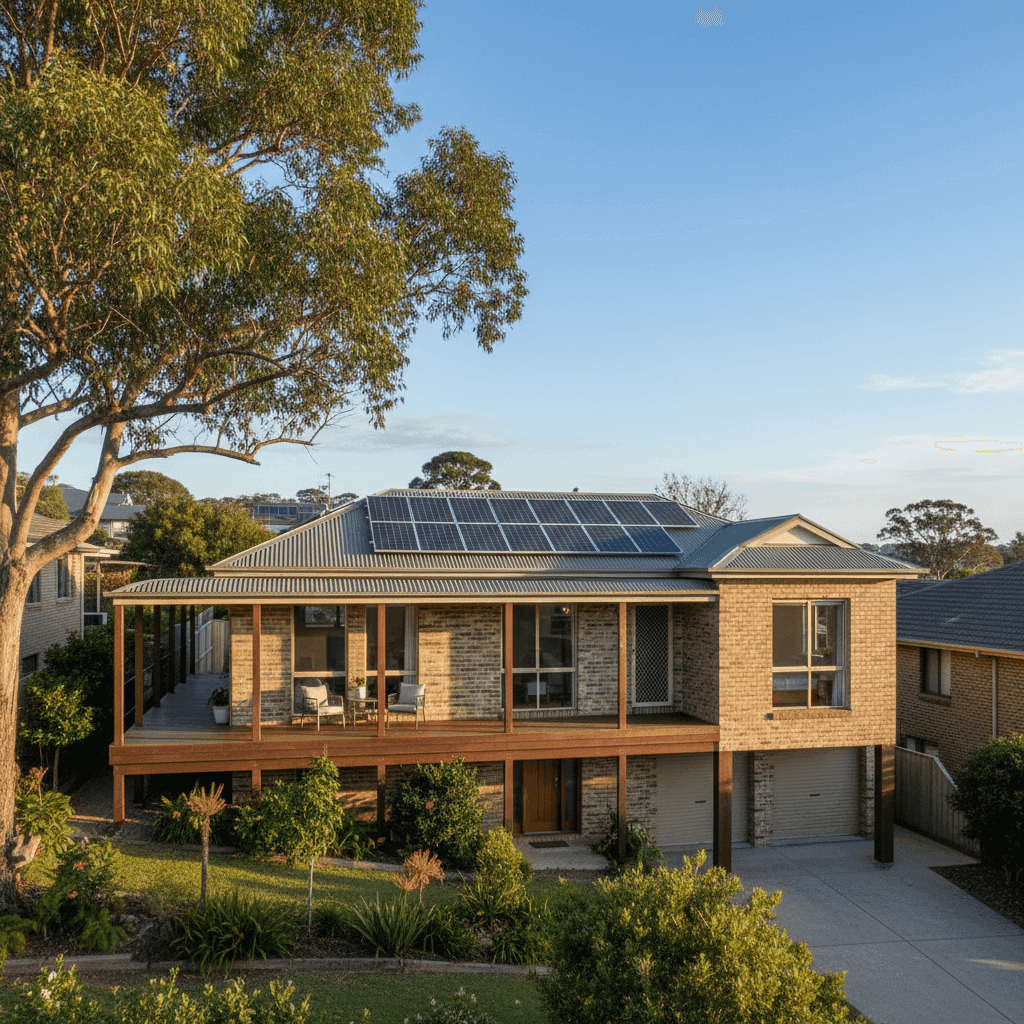
If you own a free standing home in Korora, NSW 2450, you've probably noticed that home insurance premiums on the Mid North Coast can vary enormously — sometimes by thousands of dollars for seemingly similar properties. This article breaks down a real home and contents insurance quote for a four-bedroom, two-bathroom brick veneer home in Korora, comparing it against suburb, state, and national benchmarks so you can make a more informed decision at renewal time.
---
Is This Quote Fair?
The quote in question comes in at $4,023 per year (or $417/month) for combined home and contents cover, with a building sum insured of $1,400,000 and contents valued at $240,000. The building excess is $4,000, and the contents excess sits at $1,000.
Our price rating for this quote is FAIR — Around Average, which is a reasonable outcome for a property of this size and specification in coastal New South Wales.
To put that in perspective: the suburb median premium for Korora is $4,196 per year, meaning this quote lands just below the midpoint of what other homeowners in the area are paying. The suburb average is notably higher at $5,886/yr, which suggests a handful of outlier quotes are pulling the mean upward — a common pattern in coastal suburbs where flood, storm, and erosion risks can cause certain insurers to price aggressively.
At $4,023, this quote sits comfortably between the 25th percentile ($3,277/yr) and the median ($4,196/yr), which is a solid position. You're not getting the cheapest deal on the market, but you're well clear of the upper end — the 75th percentile in Korora reaches $9,101/yr, more than double this quote.
---
How Korora Compares
Understanding how Korora fits into the broader insurance landscape helps contextualise whether a "fair" rating is something to be satisfied with or a signal to keep shopping.
| Benchmark | Average Premium | Median Premium |
|---|---|---|
| Korora (suburb) | $5,886/yr | $4,196/yr |
| NSW (state) | $9,528/yr | $3,770/yr |
| National | $5,347/yr | $2,764/yr |
| Clarence Valley LGA | $31,244/yr | — |
A few things stand out here. First, the NSW state average of $9,528/yr is extremely high relative to the median of $3,770/yr — a classic sign that a small number of very high-risk properties (think flood-prone or coastal erosion zones) are skewing the average dramatically. The national average tells a similar story at $5,347/yr versus a median of just $2,764/yr.
Most striking is the Clarence Valley LGA average of $31,244/yr. This figure is almost certainly driven by high-risk rural and flood-affected properties within the broader local government area, and it underscores just how wide the risk spectrum can be within a single postcode region. Korora itself, as a coastal suburb north of Coffs Harbour, has its own risk profile — but this quote suggests the property has been assessed more favourably than many in the surrounding LGA.
For a 214 sqm home with above-average fittings and a $1.4 million building sum insured, landing near the suburb median is a reasonable result.
---
Property Features That Affect Your Premium
Several characteristics of this property will have influenced how insurers priced the risk. Here's what matters most:
Brick Veneer Walls & Colorbond Roof Brick veneer construction is generally viewed favourably by insurers — it's durable, fire-resistant, and widely understood. A steel Colorbond roof is similarly well-regarded; it performs well in high-wind events and is less susceptible to hail damage than terracotta tiles. Together, these materials typically attract more competitive premiums than timber-clad or fibre cement alternatives.
Stump Foundation & Elevation The home sits on stumps and is elevated by less than one metre. This style of construction is common on the NSW Mid North Coast and can actually assist with drainage during heavy rainfall events. However, it also means the underfloor space needs to be factored into replacement cost calculations, and some insurers apply loading for elevated homes in coastal areas.
Solar Panels Solar panels are increasingly common on Australian homes, but they do add to the replacement cost of a property. Insurers vary in how they treat solar — some include it automatically under building cover, while others require it to be specified. It's worth confirming with your insurer that your system is fully covered under the building sum insured.
Above-Average Fittings With above-average fittings quality, the $1,400,000 building sum insured is likely well-calibrated. Homes with quality fixtures, stone benchtops, and premium appliances cost significantly more to rebuild than standard-spec properties of the same size, and underinsurance is a real risk if the sum insured hasn't been reviewed recently.
Ducted Climate Control Ducted air conditioning systems add meaningful value to a home and are expensive to replace. Like solar panels, it's worth verifying these are captured in your building sum insured rather than sitting in a grey area at claim time.
No Pool, No Cyclone Risk Zone The absence of a pool removes a common liability and maintenance risk factor. Being outside a designated cyclone risk area is also a meaningful premium benefit — cyclone-rated cover can add hundreds of dollars to annual premiums for properties further north.
---
Tips for Homeowners in Korora
1. Review your building sum insured annually Construction costs in regional NSW have risen sharply in recent years. A sum insured set two or three years ago may no longer reflect the true cost of rebuilding your home — especially with above-average fittings and a ducted system to replace. Use a building cost calculator or speak with a quantity surveyor if you're unsure.
2. Confirm solar panel coverage in writing Ask your insurer explicitly whether your solar panels are covered under the building policy and up to what value. Some policies cap solar cover or treat inverters differently from panels. Getting clarity now avoids a nasty surprise after a storm or hail event.
3. Consider the excess trade-off carefully This quote carries a $4,000 building excess, which is on the higher side. A higher excess generally reduces your premium, but it also means smaller claims may not be worth lodging. Think about whether you'd be comfortable absorbing a $4,000 out-of-pocket cost for, say, storm damage to your roof, and adjust accordingly.
4. Compare quotes at renewal — every year The spread of premiums in Korora is wide: from $3,277/yr at the 25th percentile to $9,101/yr at the 75th. That's a difference of nearly $6,000 for broadly similar properties. Loyalty rarely pays in home insurance — insurers often reserve their best pricing for new customers.
---
Ready to Compare?
Whether you're renewing soon or just curious about what else is on the market, it pays to see the full picture. Get a home insurance quote through CoverClub and compare options side by side — it only takes a few minutes and could save you hundreds. You can also explore detailed premium statistics for Korora and the surrounding area to benchmark any quote you receive.