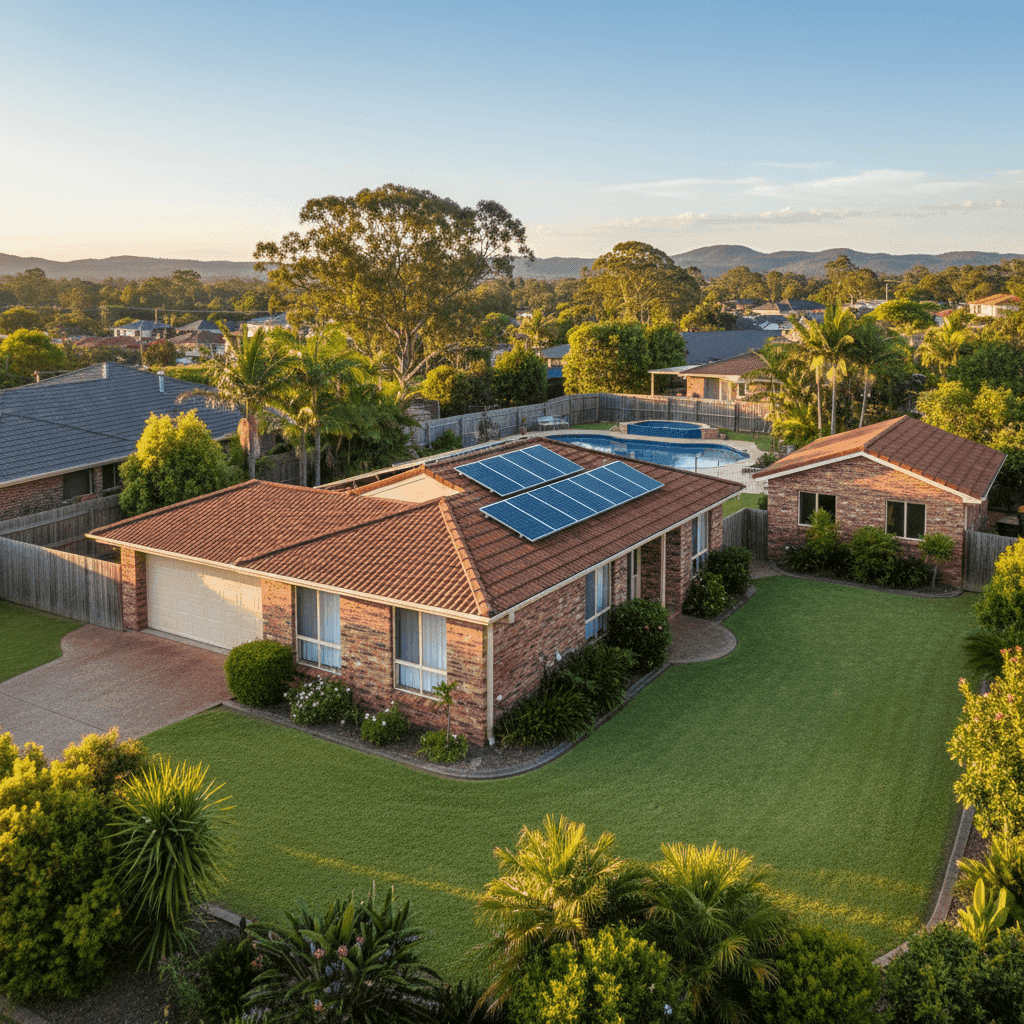
If you own a large free standing home in Korora, NSW 2450, on the Mid North Coast, you already know this part of the world is special — coastal lifestyle, stunning scenery, and a relaxed pace of life. But with great property comes real responsibility, and making sure your home and contents are properly insured is one of the most important financial decisions you can make. This article breaks down a real home and contents insurance quote for a substantial 10-bedroom property in Korora, analyses whether the price stacks up, and offers practical guidance for local homeowners.
---
Is This Quote Fair?
The quote in question sits at $5,140 per year (or $513/month) for combined home and contents cover, with a building sum insured of $1,503,000 and contents valued at $50,000. Both the building and contents excess are set at $2,000.
Our price rating for this quote is FAIR — Around Average, and the data backs that up. Based on 29 quotes collected for the Korora suburb, the suburb average premium sits at $5,886/yr, meaning this quote comes in roughly $746 below the local average — a meaningful saving on a property of this scale. It's also sitting above the suburb median of $4,196/yr, which is expected given the size and value of the property.
In short, this isn't a bargain-basement price, but it's not an overpriced outlier either. For a 457 sqm home with top-of-the-range fittings, a pool, solar panels, ducted climate control, and a granny flat — all insured to a $1.5 million building sum — this premium reflects the genuine complexity and replacement cost of the property.
---
How Korora Compares
Context is everything when evaluating an insurance premium. Here's how this quote sits across different benchmarks:
| Benchmark | Premium |
|---|---|
| This quote | $5,140/yr |
| Korora suburb average | $5,886/yr |
| Korora suburb median | $4,196/yr |
| Korora 25th percentile | $3,277/yr |
| Korora 75th percentile | $9,101/yr |
| NSW state average | $9,528/yr |
| NSW state median | $3,770/yr |
| National average | $5,347/yr |
| National median | $2,764/yr |
| Clarence Valley LGA average | $31,244/yr |
A few things stand out here. First, the NSW state average of $9,528/yr is dramatically higher than this quote — largely because NSW includes high-risk flood and bushfire zones that push averages upward significantly. This quote at $5,140 is well under that figure.
Second, the Clarence Valley LGA average of $31,244/yr is strikingly elevated. This reflects the fact that many properties within the broader LGA face significant flood risk — particularly inland areas — which can send premiums soaring. Korora itself, being a coastal suburb, doesn't carry the same flood exposure as some LGA neighbours, which helps keep premiums more manageable.
Compared to the national average of $5,347/yr, this quote is also slightly below par — impressive for a property of this calibre. The national median of $2,764/yr is less relevant here, as that figure is skewed by smaller, lower-value homes across the country.
Overall, the pricing is well-positioned for what is a genuinely large and feature-rich property.
---
Property Features That Affect Your Premium
Several characteristics of this property have a direct bearing on the premium calculated. Understanding these can help you make sense of your quote — and potentially find ways to optimise your cover.
Size and value are the most obvious drivers. At 457 sqm of living space on a 978 sqm block, this is a substantial home. A building sum insured of $1,503,000 reflects the genuine cost of rebuilding a 10-bedroom, 5-bathroom residence with top-of-the-range fittings — think premium kitchens, quality flooring (timber and laminate throughout), and high-end fixtures. Insurers price accordingly.
Construction type plays a significant role too. Brick veneer external walls paired with a tiled roof is generally considered a favourable combination by Australian insurers — it's durable, fire-resistant, and widely understood. A concrete slab foundation further adds to the structural solidity of the home. These factors can work in your favour compared to, say, a timber-framed home with a metal roof in a high-wind area.
Additional structures and features add layers of complexity to any quote. This property includes a swimming pool, solar panels, ducted climate control, and a granny flat — each of which represents additional replacement cost and liability exposure. A pool, for instance, introduces both structural replacement value and public liability considerations. Solar panels on the roof need to be factored into the building sum insured. The granny flat, depending on how it's used (owner-occupied vs. tenanted), may also affect the nature of cover required.
Cyclone risk is not applicable here — Korora sits outside designated cyclone risk zones — which removes one of the more significant premium loading factors that affect properties further north along the Queensland coast.
---
Tips for Homeowners in Korora
1. Review your building sum insured regularly. With a property of this size and specification, construction costs can shift significantly year on year. The cost to rebuild a 457 sqm home with top-of-the-range fittings has risen sharply in recent years due to labour and materials inflation. Make sure your $1,503,000 sum insured still reflects genuine rebuild costs — underinsurance is one of the most common and costly mistakes homeowners make.
2. Confirm your granny flat is correctly covered. A granny flat can be a fantastic asset, but it needs to be explicitly included in your policy. If it's used as a short-term rental or listed on platforms like Airbnb, standard home insurance may not cover it — you may need a specific landlord or short-stay endorsement.
3. Check what's included for your pool and solar. Not all policies automatically cover in-ground pool structures or solar panel systems to their full value. Confirm with your insurer that these are itemised within your building sum insured and that liability cover extends to your pool area.
4. Compare quotes before renewal. Even a "fair" premium can often be improved. The wide spread of premiums in Korora — from $3,277 at the 25th percentile to $9,101 at the 75th — shows just how much variation exists between insurers for similar properties. Shopping around at renewal time is one of the simplest ways to avoid paying more than you need to.
---
Ready to Compare?
Whether you're reviewing your current policy or insuring a property for the first time, comparing quotes is the smartest first step. At CoverClub, we make it easy to see how your premium stacks up against real data from your suburb, state, and across Australia. Get a quote today and find out if you could be paying less — or make sure you're getting the right level of cover for your home.