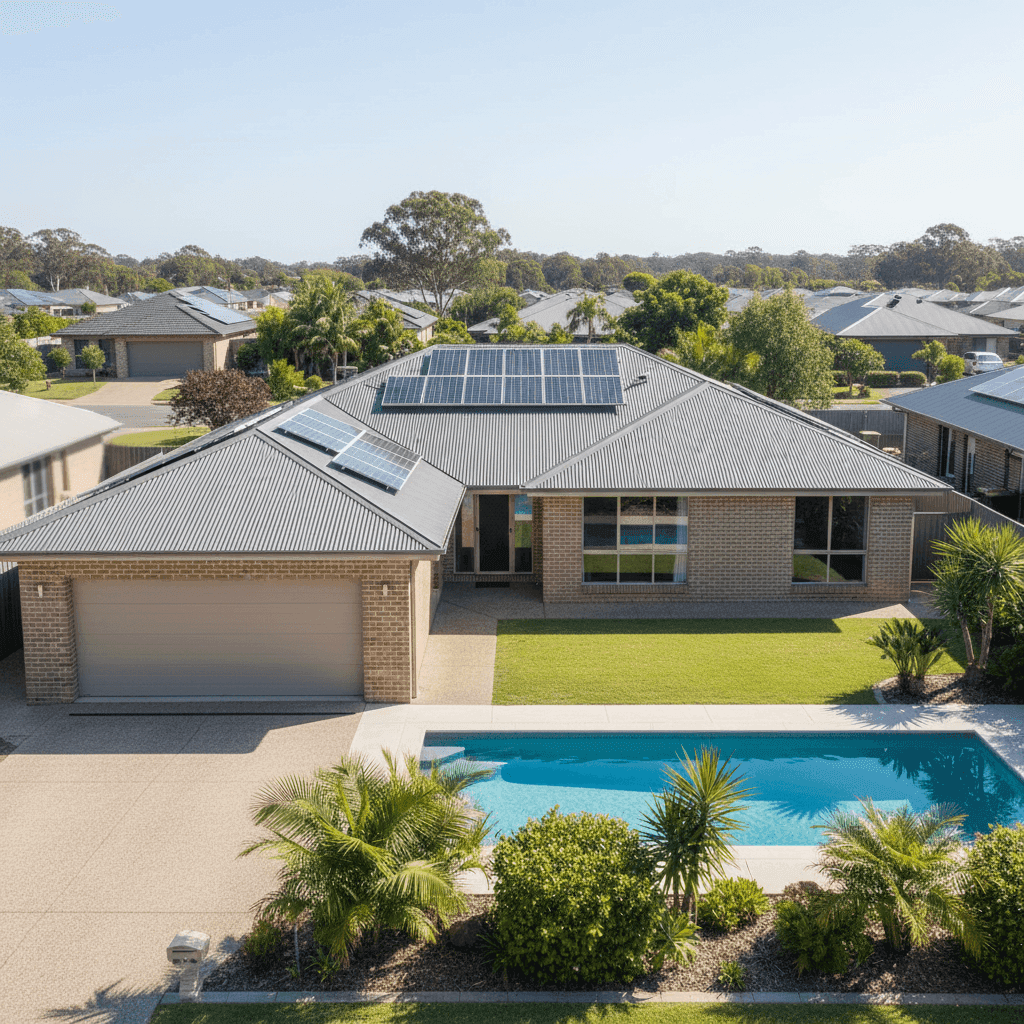
If you own a free standing home in Kungala, NSW 2460, you already know this quiet rural locality in the Clarence Valley has a charm all its own. But charm doesn't pay the insurance bill — and understanding whether your home insurance premium is competitive can save you hundreds of dollars every year. In this article, we analyse a recent building-only insurance quote for a three-bedroom, three-bathroom free standing home in Kungala, breaking down what's driving the price and what you can do about it.
---
Is This Quote Fair?
The quote in question comes in at $3,263 per year (or $323 per month) for building-only cover on a free standing home insured for $400,000, with a building excess of $2,000.
Our price rating for this quote is FAIR — around average. That's a reasonable outcome, but it's worth unpacking exactly what "average" means in this context, because the benchmarks vary significantly depending on which comparison you use.
- NSW state average: $3,801/yr
- NSW state median: $3,410/yr
- National average: $2,965/yr
- National median: $2,716/yr
- Richmond Valley LGA average: $7,371/yr
Compared to the NSW state average, this quote is roughly $538 cheaper — a meaningful saving. It also sits just below the NSW median, suggesting it's genuinely competitive within the state. Against national figures, the premium is higher than both the national average and median, which reflects the elevated risk profile typical of regional NSW properties.
The standout figure, however, is the Richmond Valley LGA average of $7,371/yr — more than double this quote. That's a striking gap, and it likely reflects the LGA's exposure to flood, storm, and other natural hazard risks that affect many properties across the Clarence Valley region. By that local benchmark, this quote looks quite strong.
You can explore more pricing data for this area on our Kungala suburb stats page, or compare it against the broader NSW insurance landscape.
---
How Kungala Compares
Without suburb-level data available for Kungala specifically, we're working with state and LGA comparisons — but they still tell a useful story.
| Benchmark | Annual Premium |
|---|---|
| This Quote | $3,263 |
| NSW State Average | $3,801 |
| NSW State Median | $3,410 |
| National Average | $2,965 |
| National Median | $2,716 |
| Richmond Valley LGA Average | $7,371 |
The wide spread between the national median ($2,716) and the Richmond Valley LGA average ($7,371) highlights just how much geography matters in home insurance pricing. Insurers assess risk at a granular level — flood mapping, storm frequency, fire zones, and proximity to emergency services all feed into the final number.
Kungala sits within the Clarence Valley, a region that has historically experienced significant flooding events. The fact that this particular quote lands well below the LGA average suggests the specific property's characteristics are working in the homeowner's favour. You can benchmark your own property against national insurance data here.
---
Property Features That Affect Your Premium
Several features of this property are worth examining through an insurance lens:
Double Brick Walls
Double brick construction is generally viewed favourably by insurers. It's durable, fire-resistant, and less susceptible to wind damage than timber-framed alternatives. This is likely contributing positively to the premium outcome.
Steel / Colorbond Roof
Colorbond steel roofing is a popular choice in regional Australia for good reason — it handles heat, rain, and wind well. Insurers typically view it as a low-to-moderate risk roofing material, particularly when compared to older tile or terracotta options that can crack or dislodge in storms.
Slab Foundation & Tile Flooring
A concrete slab foundation offers solid structural integrity and is less prone to pest damage than raised timber floors. Combined with tile flooring throughout, this property presents a resilient profile that can help moderate premiums.
Swimming Pool
A pool adds value to the property but also introduces liability considerations. Insurers factor in the cost to repair or replace pool structures, and some policies have specific inclusions or exclusions around pool equipment. It's worth confirming your policy covers the pool shell and associated infrastructure.
Solar Panels
Solar panels are increasingly common on Australian homes, but they do add to the rebuild cost. A $400,000 sum insured should account for the cost of replacing the solar system in the event of a total loss — it's worth double-checking this is adequately covered under your policy.
2014 Construction
A home built in 2014 benefits from relatively modern building codes, which generally means better structural standards and materials. Newer builds tend to attract more competitive premiums than older homes requiring more maintenance or built to outdated standards.
Standard Fittings
Standard-quality fittings keep the replacement cost estimate more predictable. High-end or custom fittings can push rebuild costs — and therefore premiums — significantly higher.
---
Tips for Homeowners in Kungala
1. Make Sure Your Sum Insured Reflects True Rebuild Cost
At $400,000 for a 105 sqm home, the sum insured works out to roughly $3,810 per sqm — a reasonable figure for regional NSW, but building costs have risen sharply in recent years. Use an independent building cost calculator or speak with a local builder to confirm your coverage isn't falling short.
2. Review Your Flood and Storm Cover
Given the Clarence Valley's history with flood events, it's essential to understand exactly what your policy covers. Some policies include flood cover by default; others treat it as an optional extra. Read the Product Disclosure Statement (PDS) carefully and don't assume you're covered.
3. Consider a Higher Excess to Reduce Your Premium
The current building excess on this quote is $2,000. If you have sufficient savings to cover a higher out-of-pocket amount in the event of a claim, opting for a higher excess could meaningfully reduce your annual premium. Just make sure the trade-off makes sense for your financial situation.
4. Compare Quotes Annually
Insurance markets shift year to year, and loyalty doesn't always pay. Premiums can creep up at renewal without a corresponding improvement in cover. Setting a reminder to compare quotes each year — especially as your home ages or as you make improvements — is one of the simplest ways to stay on top of your costs.
---
Ready to Compare?
Whether you're happy with your current quote or suspect you might be overpaying, the best way to know for sure is to compare. At CoverClub, we make it easy to see how your premium stacks up and explore alternatives — all in one place. Get a home insurance quote today and find out if there's a better deal waiting for you.