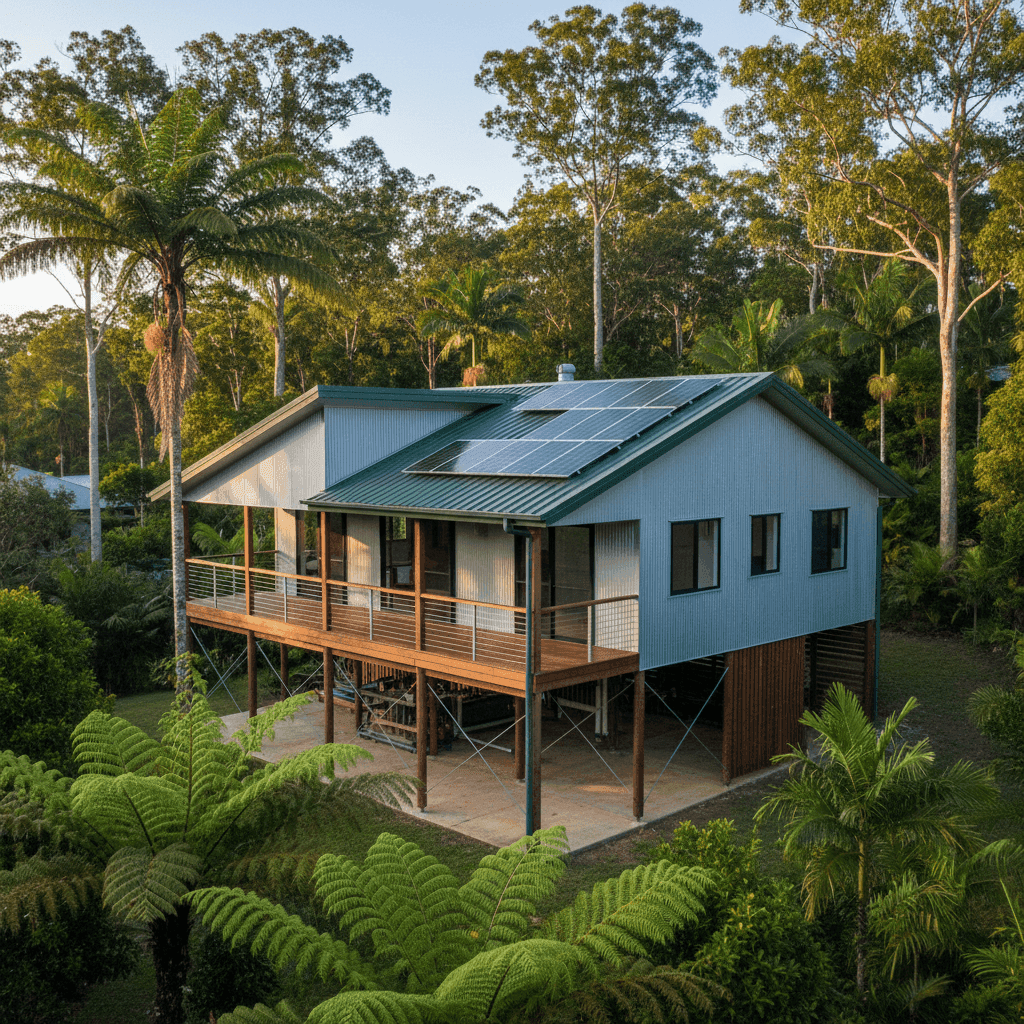
Kuranda is one of Far North Queensland's most iconic communities — a lush, rainforest-fringe village perched in the ranges above Cairns. It's a beautiful place to call home, but insuring a property here comes with its own set of considerations. This article takes a close look at a real home and contents insurance quote for a four-bedroom, two-bathroom free-standing home in Kuranda (postcode 4881), breaking down whether the price stacks up and what's driving the cost.
---
Is This Quote Fair?
The quote in question comes in at $5,078 per year (or $501/month) for combined home and contents cover, with a building sum insured of $1,899,000 and contents valued at $100,000. The building excess is $3,000 and the contents excess is $1,000.
Our price rating for this quote is Expensive — above average for the area.
To put that in context: the suburb average premium in Kuranda sits at $3,976/yr, with a median of $4,394/yr. This quote lands above the 75th percentile for the suburb (which is $4,755/yr), meaning it's pricier than at least three-quarters of comparable quotes we've seen in the area.
That said, "expensive" doesn't automatically mean "wrong." A number of property-specific factors — which we'll unpack below — can legitimately push a premium higher than the local norm. The key question is whether those factors justify the gap, and whether there's room to shop around for a better deal.
---
How Kuranda Compares
It helps to zoom out and look at the broader pricing landscape. Here's how this quote measures up across different benchmarks:
| Benchmark | Premium |
|---|---|
| This Quote | $5,078/yr |
| Kuranda Suburb Average | $3,976/yr |
| Kuranda Suburb Median | $4,394/yr |
| QLD State Average | $4,547/yr |
| QLD State Median | $3,931/yr |
| Mareeba LGA Average | $5,392/yr |
| National Average | $2,965/yr |
| National Median | $2,716/yr |
A few things stand out here. First, Queensland is already a high-premium state — the QLD state average of $4,547/yr is well above the national average of $2,965/yr, reflecting the elevated risk profile of tropical and cyclone-prone regions. Second, the Mareeba LGA average ($5,392/yr) is actually higher than this quote, suggesting that at the local government level, premiums in this region are broadly elevated. So while this quote is above the Kuranda suburb average, it's not wildly out of step with the wider Mareeba district.
It's worth noting that the suburb sample size is 14 quotes — a relatively small dataset — so the suburb averages should be treated as a guide rather than a definitive benchmark.
---
Property Features That Affect Your Premium
Several characteristics of this property are likely contributing to the higher-than-average premium. Let's walk through them:
Cyclone Risk Zone
Kuranda sits within a designated cyclone risk area. This alone is one of the most significant premium drivers in Far North Queensland. Insurers price cyclone exposure heavily, and properties in this region carry a structural risk surcharge that simply doesn't apply to homes in southern states.
Elevated Construction on Stumps
The home is elevated by at least one metre on stumps — a classic Queenslander-style build. While this design is excellent for flood mitigation and airflow, it can increase rebuild costs due to the complexity of the subfloor structure. Insurers factor in the full cost of reconstruction, including stumps, bearers, and joists.
High Building Sum Insured
At $1,899,000, the building sum insured is substantial. This reflects the 268 sqm floor area, above-average fittings quality, and the elevated construction. A higher sum insured directly increases the premium, as the insurer's maximum liability is greater.
Above-Average Fittings Quality
The property features above-average fittings — think quality kitchen appliances, premium fixtures, and higher-spec finishes. These cost more to repair or replace, which is reflected in the premium.
Aluminium Walls and Steel/Colorbond Roof
Aluminium cladding and Colorbond roofing are both durable, low-maintenance materials that generally attract reasonable insurance treatment. In cyclone-prone areas, metal roofing is often viewed more favourably than tiles, as it's less susceptible to wind-driven damage. This may actually be moderating the premium slightly.
Solar Panels and Ducted Climate Control
The presence of solar panels and ducted air conditioning adds to the overall replacement value of the home. These systems are expensive to repair or replace and are factored into the building sum insured calculation.
Timber/Laminate Flooring
Timber and laminate floors are susceptible to water damage — a real consideration in a high-rainfall area like Kuranda. This can influence how insurers assess internal damage risk.
---
Tips for Homeowners in Kuranda
If you're looking to get better value from your home insurance, here are four practical steps worth taking:
1. Review Your Sum Insured Carefully
A building sum insured of $1,899,000 is significant. Make sure it reflects the actual cost to rebuild your home — not its market value. Overcooking the sum insured is a common mistake that leads to unnecessarily high premiums. Use a building cost calculator or consult a quantity surveyor to get an accurate figure.
2. Consider a Higher Excess
The building excess on this quote is $3,000. If you're in a financial position to absorb a larger out-of-pocket cost in the event of a claim, opting for a higher excess (say, $5,000) can meaningfully reduce your annual premium. Just make sure the saving justifies the increased risk.
3. Shop Around — Especially in Cyclone Zones
Insurer appetite for cyclone-exposed properties varies considerably. Some insurers price this risk more aggressively than others, and the difference between the cheapest and most expensive quote for the same property can be thousands of dollars. Get a comparison quote through CoverClub to see what other insurers are offering.
4. Check What's Actually Covered for Cyclone Events
Not all policies treat cyclone damage the same way. Some apply a separate cyclone excess, others have specific sub-limits for storm-related damage. Before switching purely on price, read the Product Disclosure Statement (PDS) carefully and make sure you understand what you're covered for — and what you're not.
---
Compare Your Options with CoverClub
Whether you're renewing your policy or taking out cover for the first time, it pays to compare. CoverClub makes it easy to see how your quote stacks up against the market and find a policy that gives you genuine value — not just the lowest price. Start your comparison at CoverClub and see what's available for your Kuranda home today.
For more suburb-specific data, visit the Kuranda insurance stats page or explore Queensland home insurance benchmarks to see how your premium compares across the state.