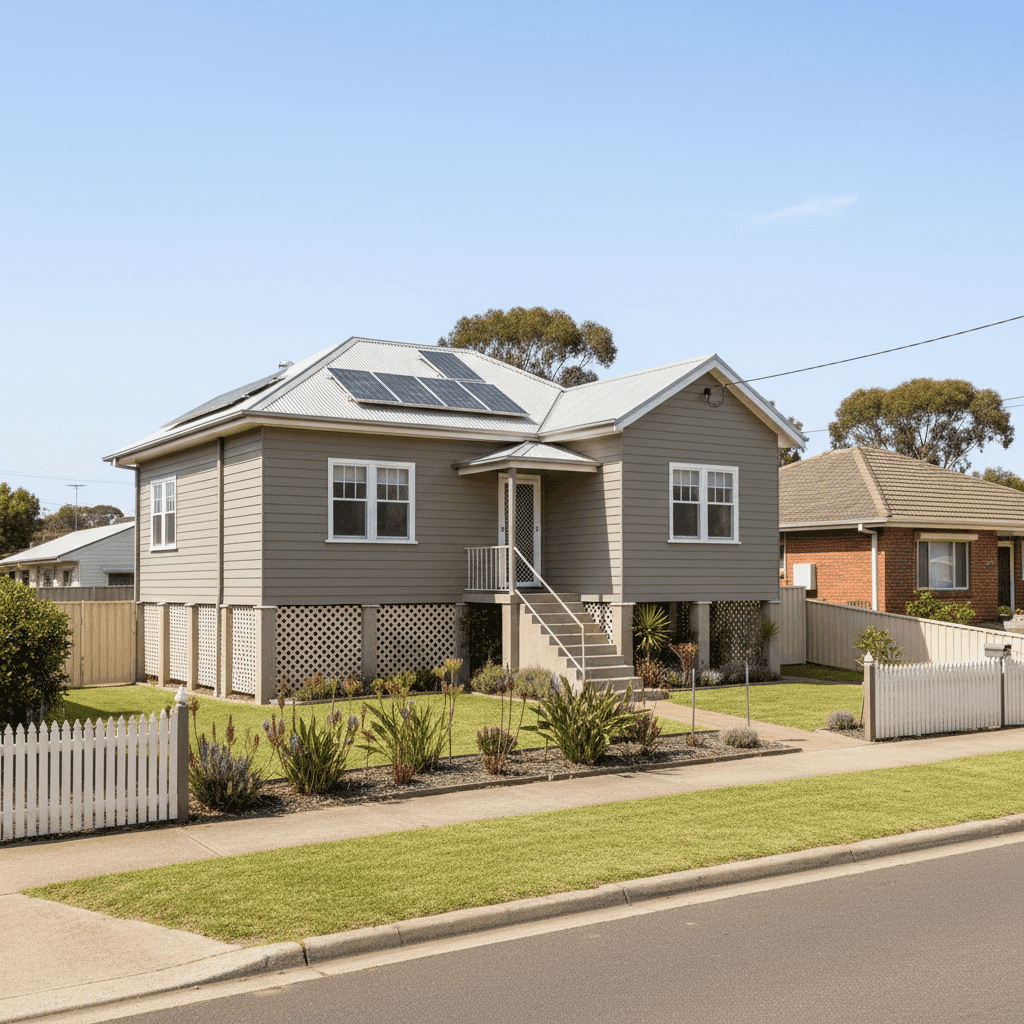
If you own a free standing home in Kurri Kurri, NSW 2327, you're likely no stranger to the challenge of finding competitive home insurance. Nestled in the Hunter Valley, Kurri Kurri is a well-established regional town with a mix of older character homes and more modern builds. This article breaks down a real home and contents insurance quote for a 3-bedroom, 2-bathroom weatherboard home in the area — and helps you understand whether the price stacks up.
---
Is This Quote Fair?
The quote in question comes in at $4,500 per year (or $431/month) for combined home and contents cover, with a building sum insured of $800,000 and contents valued at $170,000. Both the building and contents excess sit at $1,000.
Our price rating for this quote is EXPENSIVE — above average for the Kurri Kurri area.
To put that in perspective: the suburb average annual premium across 117 quotes collected for Kurri Kurri is just $2,097/year, with a median of $1,922/year. This quote is more than double the local median — a significant gap that warrants a closer look.
That said, "expensive" doesn't automatically mean "wrong." A higher sum insured, older construction, and certain property features can all push premiums upward. The key is understanding why the price is elevated, and whether there's room to shop around.
---
How Kurri Kurri Compares
To get a full picture, it helps to zoom out and look at how Kurri Kurri sits within the broader insurance landscape.
| Benchmark | Average Premium | Median Premium |
|---|---|---|
| Kurri Kurri (2327) | $2,097/yr | $1,922/yr |
| LGA — Cessnock | $2,462/yr | — |
| NSW State | $9,528/yr | $3,770/yr |
| National | $5,347/yr | $2,764/yr |
A few things stand out here. The NSW state average of $9,528/year is heavily skewed by high-risk coastal and flood-prone areas, which is why the median ($3,770) tells a more useful story. Similarly, the national average of $5,347 is pulled up by expensive markets in Queensland and parts of WA.
Kurri Kurri's local averages are actually quite favourable compared to many parts of NSW — the suburb 75th percentile sits at just $2,569/year, meaning most homeowners in the area are paying well under $3,000. At $4,500, this quote lands significantly above even the top quartile of local pricing.
The Cessnock LGA average of $2,462/year further confirms that the broader region tends to attract moderate premiums. This quote is nearly double that figure, suggesting there may be scope to find a better deal with a different insurer.
---
Property Features That Affect Your Premium
Several characteristics of this property are likely contributing to the elevated premium. Here's what insurers typically weigh up:
Weatherboard Timber Construction
Older weatherboard homes are generally considered higher risk by insurers. Timber is more susceptible to fire, termite damage, and general wear compared to brick or rendered masonry. A home built in 1961 with weatherboard external walls will often attract a loading on the base premium.
Age of Construction
At over 60 years old, this property predates modern building codes by several decades. Insurers factor in the likelihood of ageing electrical wiring, plumbing, and structural elements — all of which can increase the risk of a claim.
Stump Foundation
Homes built on stumps (also called bearer-and-joist construction) are common in regional NSW and can be more vulnerable to subsidence, moisture damage, and pest ingress. This foundation type can influence how insurers assess structural risk.
Solar Panels
The property includes solar panels, which add replacement value to the roof structure. Most home insurance policies cover solar panels as part of the building, so a higher sum insured is appropriate — but it does contribute to a higher premium.
Ducted Climate Control
Ducted air conditioning is a significant fixture that adds to the replacement cost of the building. This is correctly reflected in the sum insured calculation.
Building Sum Insured: $800,000
For a 139 sqm home, an $800,000 building sum insured is on the higher end. While it's always better to be adequately covered than underinsured, it's worth reviewing whether this figure accurately reflects the rebuild cost (not the market value) of the property. An independent quantity surveyor assessment can help ensure you're not over-insured, which could be contributing to the premium.
---
Tips for Homeowners in Kurri Kurri
1. Review Your Building Sum Insured
The single biggest lever on your premium is the sum insured. Make sure your $800,000 figure reflects the actual cost to rebuild — not the real estate market value or a rough estimate. Many homeowners in older regional properties find they're over-insured once they get a professional assessment.
2. Compare Multiple Insurers
With a quote sitting well above both the suburb average and the 75th percentile, this is a clear case where shopping around could yield meaningful savings. Different insurers price weatherboard and older homes very differently — some specialise in heritage and character properties and offer more competitive rates.
3. Consider a Higher Excess
Increasing your excess from $1,000 to $2,500 or even $5,000 can noticeably reduce your annual premium. If you have the financial buffer to cover a larger out-of-pocket cost in the event of a claim, this is a straightforward way to bring your premium down.
4. Bundle and Ask About Discounts
If you have car insurance or other policies, check whether bundling them with the same insurer unlocks a discount. Many Australian insurers offer 5–15% off for multi-policy customers. It's also worth asking directly about loyalty discounts, security system discounts, or discounts for paying annually rather than monthly.
---
Ready to Find a Better Deal?
Whether you're renewing your current policy or shopping for the first time, comparing quotes is the smartest move you can make. At CoverClub, we make it easy to see what insurers are actually charging for homes like yours in Kurri Kurri — so you can make an informed decision with real data behind it.
Get a home insurance quote today at CoverClub and find out if you could be paying less for the same level of cover.