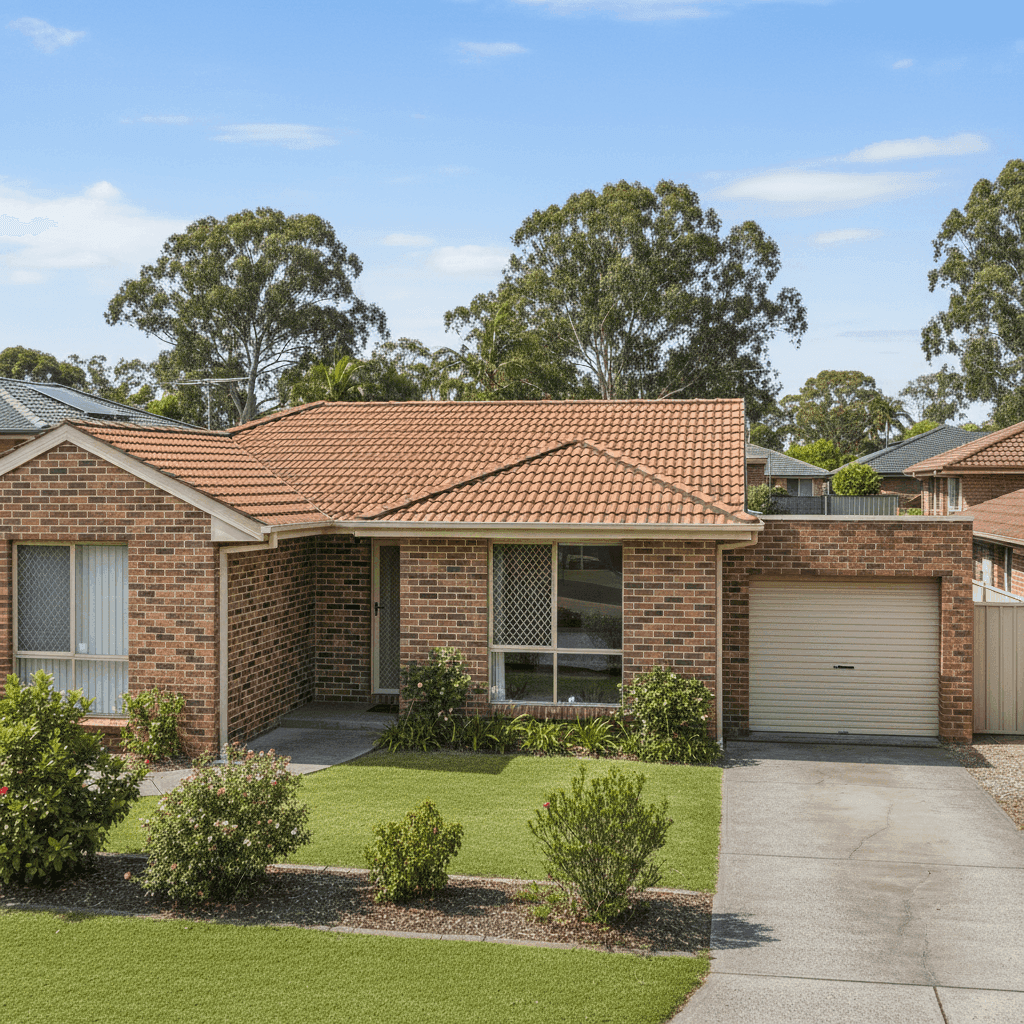
If you own a semi detached home in Labrador, QLD 4215, you've probably wondered whether you're paying a fair price for building insurance — or leaving money on the table. Labrador sits on the northern fringe of the Gold Coast, a suburb that blends coastal lifestyle with suburban convenience. It's a popular area for owner-occupiers and investors alike, which makes understanding the local insurance landscape all the more important. This article breaks down a real building-only quote for a three-bedroom, one-bathroom semi detached property in the area, and puts the numbers into context so you can make a more informed decision.
---
Is This Quote Fair?
The quote in question comes in at $1,572 per year (or about $160 per month) for building-only cover, with a $3,000 building excess and a sum insured of $540,000. Our analysis rates this quote as CHEAP — below the suburb average — which is genuinely good news for the homeowner.
To put that in perspective: the median home insurance premium for Labrador sits at $2,876 per year, meaning this quote is nearly 45% below the local median. Even compared to the 25th percentile of suburb quotes (i.e., the cheapest quarter of policies sampled), which sits at $2,261 per year, this premium still comes in well under the mark. That's a meaningful saving — roughly $700 or more annually compared to what many neighbours are likely paying.
It's worth noting that the $3,000 excess is on the higher side. Insurers often offer lower premiums in exchange for a higher excess, meaning the policyholder agrees to cover more out-of-pocket in the event of a claim. This trade-off can work well for homeowners who have the financial buffer to absorb that cost and who aren't expecting to make frequent claims. If cash flow is a concern, it may be worth requesting a quote with a lower excess to see how the premium changes.
---
How Labrador Compares
The pricing data paints an interesting picture of just how variable home insurance can be — even within a single suburb.
| Benchmark | Annual Premium |
|---|---|
| This Quote | $1,572 |
| Labrador Median | $2,876 |
| Labrador 25th Percentile | $2,261 |
| Labrador 75th Percentile | $3,629 |
| Labrador Average | $53,896* |
| QLD State Median | $3,903 |
| National Median | $2,764 |
| Gold Coast LGA Average | $8,161 |
\The suburb average is heavily skewed by outlier quotes in the sample of 20, which is why the median is a more reliable benchmark.*
You can explore the full data for Labrador and postcode 4215, as well as Queensland-wide insurance statistics and national home insurance benchmarks on the CoverClub stats pages.
Queensland homeowners generally pay more than the national median — largely due to the state's exposure to severe weather events including storms, flooding, and hail. The Gold Coast LGA average of $8,161 reflects the elevated risk profile of coastal and near-coastal properties in the region. Against that backdrop, a $1,572 premium looks even more competitive.
---
Property Features That Affect Your Premium
Several characteristics of this particular property work in the homeowner's favour from an insurance pricing perspective.
Brick veneer construction is generally viewed favourably by insurers. While not as robust as full brick, brick veneer walls offer solid weather resistance and are less susceptible to fire damage than timber-framed exteriors. Combined with a tiled roof, the property sits in a construction category that typically attracts lower premiums — tiles are durable, fire-resistant, and perform well in hail events compared to Colorbond or corrugated iron in some scenarios.
The slab foundation is another positive. Slab-on-ground homes are structurally stable and don't carry the underfloor moisture or pest-related risks sometimes associated with older timber stumped foundations. For a home built in 1987, a slab foundation is standard and suggests the property was constructed to the building codes of that era, which — while not as stringent as today's standards — still represent a reasonable baseline.
At 130 square metres, this is a modestly sized home, and the $540,000 sum insured reflects a reasonable rebuild cost for the Gold Coast market, where construction costs have risen sharply in recent years. Getting the sum insured right is critical — underinsurance is a widespread problem in Australia, and many homeowners only discover the shortfall when they need to make a claim.
The ducted climate control system is worth flagging. Ducted systems are more expensive to repair or replace than split-system units, and they are factored into building insurance valuations. Homeowners should confirm that their sum insured accounts for the full replacement cost of this system.
The absence of a pool and solar panels simplifies the risk profile. Both features can add complexity (and cost) to insurance assessments, so their absence here contributes to a cleaner, lower-risk property profile.
Labrador is not classified as a cyclone risk area, which is a significant factor. Properties in cyclone-prone parts of Queensland — particularly far north Queensland — can attract substantially higher premiums. Being outside that zone gives Labrador homeowners a meaningful pricing advantage.
---
Tips for Homeowners in Labrador
1. Review your sum insured annually. Construction costs on the Gold Coast have increased considerably over the past few years. The cost to rebuild your home today may be higher than it was when you first took out your policy. Use an independent building cost calculator or speak with a quantity surveyor to make sure your cover keeps pace with reality.
2. Understand your excess before you commit. A $3,000 excess is reasonable if you're financially prepared for it, but it's not the right fit for everyone. Ask your insurer to quote at multiple excess levels — sometimes a modest increase in premium buys you a significantly lower excess, which can be worthwhile peace of mind.
3. Compare quotes at renewal time. The insurance market is competitive, and loyalty doesn't always pay. Even if your current premium is already below the suburb median, it's worth running a comparison at renewal to ensure you're still getting value. Premiums can shift year to year based on insurer risk models and reinsurance costs.
4. Check what's actually covered. Building-only cover protects the structure of your home but not your belongings. If you rent the property out or have recently moved your contents cover elsewhere, double-check there are no gaps. For owner-occupiers, a combined building and contents policy may offer better overall value.
---
Compare Your Own Quote
Whether you're buying, renewing, or simply curious about what the market looks like, CoverClub makes it easy to see how your premium stacks up. Our free comparison tool draws on real quote data from across Australia, so you can benchmark your policy with confidence. Get a quote today at CoverClub and find out if you're paying a fair price — or if there's a better deal waiting for you.