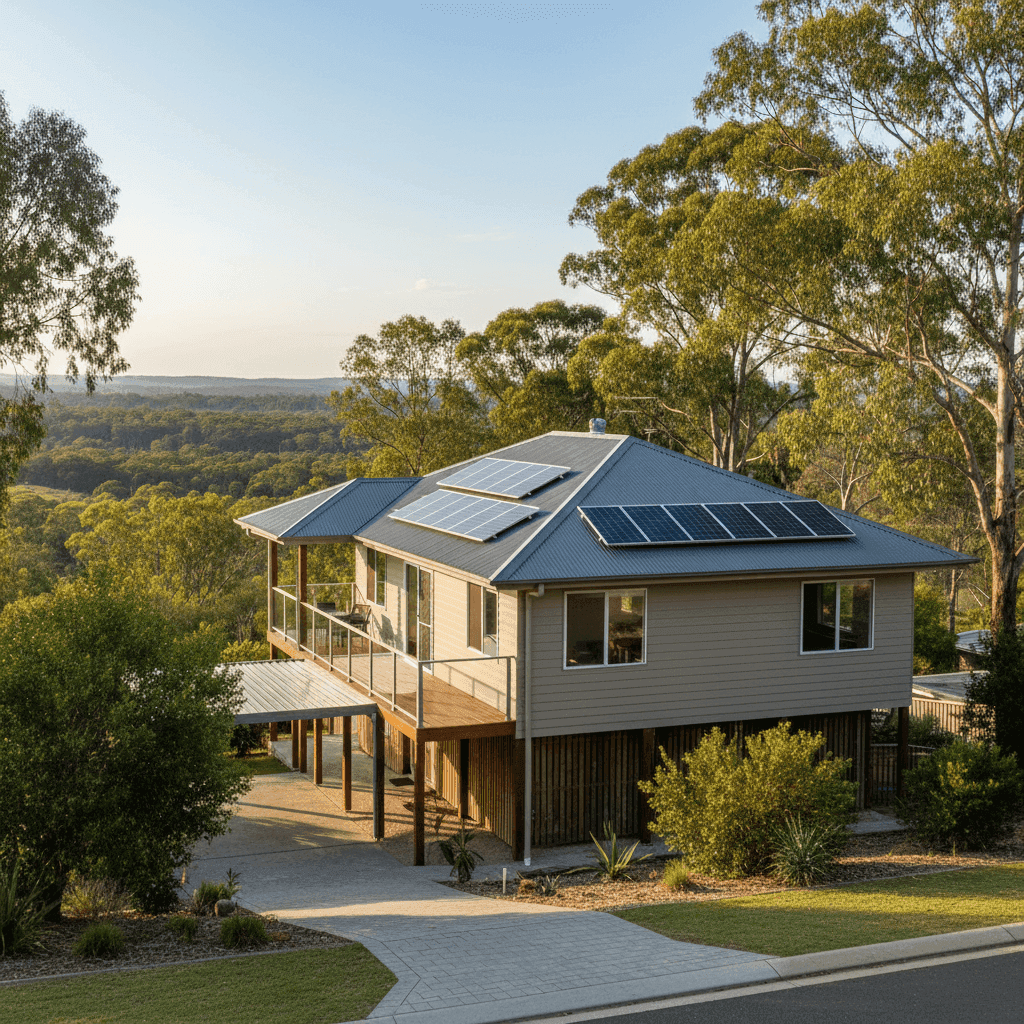
Laidley Heights is a quiet residential pocket in Queensland's Lockyer Valley, sitting above the township of Laidley with a mix of established and newer homes enjoying elevated views across the region. If you own a free standing home here, understanding what you should be paying for building insurance — and why — can make a real difference to your household budget.
This article breaks down a recent building-only insurance quote for a four-bedroom, three-bathroom free standing home in Laidley Heights (postcode 4341), compares it against local, state, and national benchmarks, and offers practical advice for homeowners looking to get the best value cover.
---
Is This Quote Fair?
The quote in question comes in at $2,983 per year (or $279 per month) for building-only cover with a $1,000,000 sum insured and a $5,000 building excess. Our analysis rates this as CHEAP — below average for the area.
That's genuinely good news for the homeowner. At nearly $700 less than the suburb average of $3,678/yr and sitting well below the suburb median of $3,900/yr, this quote represents solid value. Even compared to the suburb's 25th percentile — meaning 75% of quotes in the area cost more — this premium of $2,983 edges just below that $3,089 threshold, placing it among the more competitive offers available in Laidley Heights.
It's worth noting that the $5,000 building excess is on the higher side. Insurers often offer lower premiums in exchange for a higher excess, so part of the reason this quote looks attractive up front is that the homeowner would carry more out-of-pocket cost in the event of a claim. That's a trade-off worth weighing carefully, particularly in a region where weather events can cause significant structural damage.
---
How Laidley Heights Compares
To put this quote in proper context, it helps to look at the broader picture. You can explore the full data on the Laidley Heights insurance stats page.
| Benchmark | Premium |
|---|---|
| This quote | $2,983/yr |
| Suburb average (Laidley Heights) | $3,678/yr |
| Suburb median | $3,900/yr |
| Suburb 25th percentile | $3,089/yr |
| Suburb 75th percentile | $4,339/yr |
| LGA average (Lockyer Valley) | $11,404/yr |
| QLD state average | $9,129/yr |
| QLD state median | $3,903/yr |
| National average | $5,347/yr |
| National median | $2,764/yr |
A few things stand out here. The LGA average for Lockyer Valley is a striking $11,404/yr — dramatically higher than what this homeowner is paying. This figure is likely skewed by high-risk properties in flood-prone parts of the Lockyer Valley, which has a well-documented history of severe flooding. Laidley Heights, being elevated, may benefit from a lower flood risk profile compared to lower-lying areas in the same LGA, which could partly explain the more competitive premiums available here.
The QLD state average of $9,129/yr is also notably high, again reflecting the concentration of cyclone, flood, and storm risk properties across Queensland. The state median of $3,903/yr is a more useful comparison for typical homes, and this quote sits comfortably below it.
Against national benchmarks, the picture is mixed. The national average of $5,347/yr is well above this quote, but the national median of $2,764/yr is actually slightly lower — a reminder that averages can be pulled upward by extreme premiums in high-risk regions like Far North Queensland and parts of Western Australia.
Overall, this quote looks competitive both locally and in a broader context.
---
Property Features That Affect Your Premium
Several characteristics of this property influence how insurers price the risk:
Hardiplank / Hardiflex external walls are a fibre cement cladding product that offers good durability and resistance to rot, fire, and pests. Insurers generally view this material favourably compared to older weatherboard, which can be more susceptible to fire and deterioration over time.
Steel / Colorbond roofing is another positive signal for insurers. Colorbond is widely regarded as one of the more resilient roofing materials available in Australia — it handles heat, wind, and rain well, and is less prone to the cracking or lifting that can affect older tile roofs. In a region like the Lockyer Valley, where severe storms are not uncommon, a robust roof can meaningfully reduce claim risk.
Stump foundations are common in Queensland and well-suited to the local climate, allowing airflow beneath the home and providing some flexibility in reactive soils. However, stumps do require periodic inspection and maintenance, and insurers may factor in the age and condition of the subfloor structure when assessing risk.
Timber and laminate flooring is worth noting from a contents perspective (though this is a building-only policy). From a building standpoint, timber subfloors on stumps can be vulnerable to moisture ingress, so ensuring the underfloor space is well-ventilated and free from water damage is important for both maintenance and insurability.
Solar panels, present on this property, are increasingly common and most modern building policies include them as part of the insured structure. It's worth confirming with your insurer that your panels and inverter are explicitly covered under your policy, as coverage terms can vary.
Construction year of 2011 means this is a relatively modern home, built to post-2011 Queensland building codes, which introduced more stringent wind and weather resistance requirements following the 2010–11 flood and cyclone season. Newer builds often attract more competitive premiums as a result.
---
Tips for Homeowners in Laidley Heights
1. Review your sum insured regularly A $1,000,000 sum insured is generous for a 214 sqm home, but building costs have risen sharply in recent years. Make sure your sum insured reflects the true cost to rebuild — not the market value of your property. Underinsurance is one of the most common and costly mistakes homeowners make.
2. Understand your excess before you commit The $5,000 building excess on this policy is high. While it contributes to the lower premium, it means you'd need to fund the first $5,000 of any claim yourself. If a storm damages your roof or a pipe bursts, that's a significant out-of-pocket cost. Compare policies with different excess levels to find the right balance for your situation.
3. Check your flood cover explicitly Given that the broader Lockyer Valley has experienced devastating floods, it's essential to confirm whether your policy includes flood cover and how it's defined. Some policies distinguish between "flood" (rising water from a waterway) and "storm surge" or "rainwater runoff." Even if your home sits on higher ground, understanding your cover is non-negotiable.
4. Ask about discounts for home safety features Solar panels, modern construction, and quality roofing materials may already be working in your favour. But it's also worth asking your insurer about discounts for smoke alarms, deadbolts, security systems, or other risk-reduction measures. Some insurers reward proactive homeowners with lower premiums.
---
Compare Quotes and Find Better Value
Whether you're renewing your policy or shopping for the first time, comparing multiple quotes is the single most effective way to ensure you're not overpaying. CoverClub makes it easy to see what insurers are offering for homes like yours in Laidley Heights — in minutes, not hours.
Get a home insurance quote today at CoverClub and see how your current premium stacks up against the market.