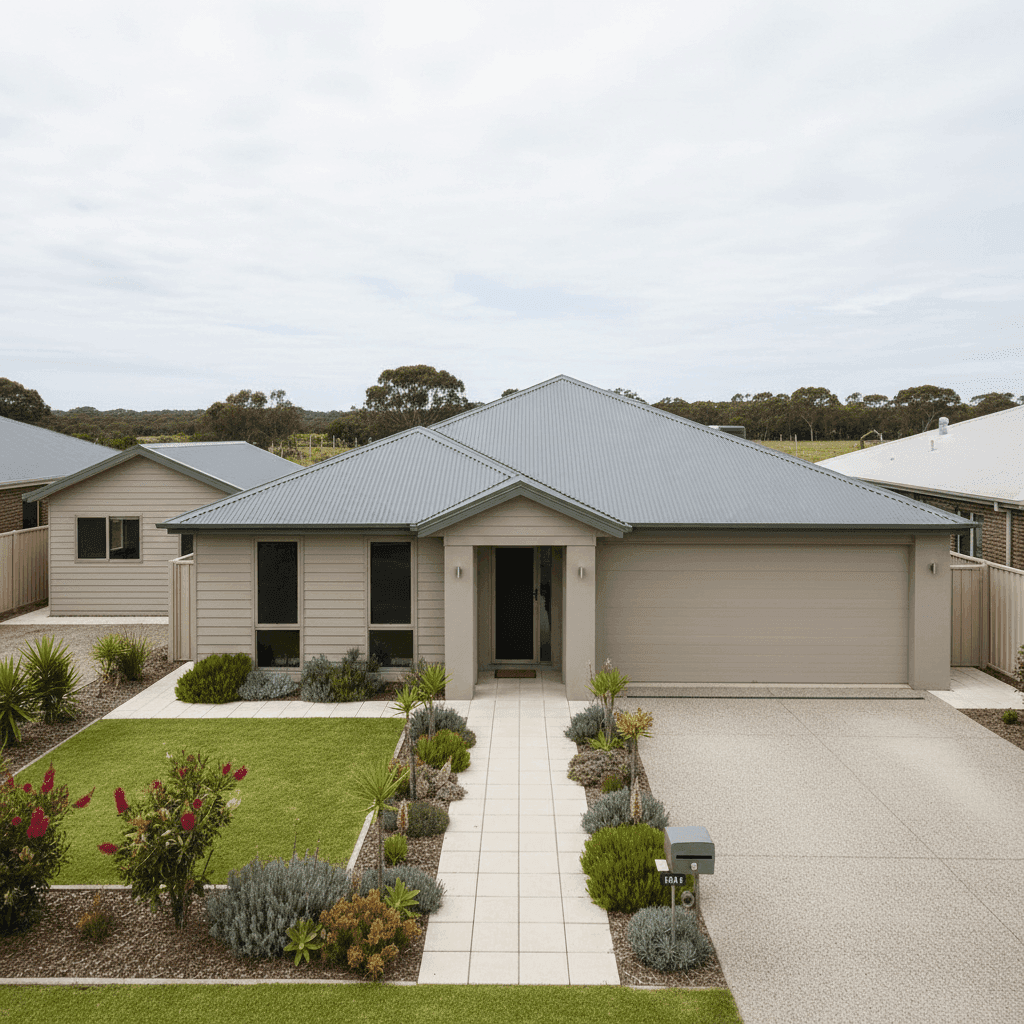
If you own a free standing home in Lake Bunga, VIC 3909, you're likely no stranger to the unique considerations that come with insuring a coastal Gippsland property. Lake Bunga is a quiet residential and holiday destination nestled near the Gippsland Lakes, and while it offers a relaxed lifestyle, it also sits in a region where insurers pay close attention to environmental and geographic risk factors. This article breaks down a real home and contents insurance quote for a four-bedroom, two-bathroom property in the area — and helps you understand whether the price stacks up.
---
Is This Quote Fair?
The quote in question comes in at $2,730 per year (or $287/month) for combined home and contents cover, with a building sum insured of $600,000 and contents valued at $50,000. The building excess is set at $3,000, with a separate $1,000 excess applying to contents claims.
Our analysis rates this quote as Expensive (Above Average). To understand why, it helps to look at the local market context.
Based on quote data collected for Lake Bunga (postcode 3909), the suburb average premium sits at $2,059/year, with a median of $1,983/year. The quote we're analysing lands well above both of those benchmarks — and even above the suburb's 75th percentile of $2,556/year. In plain terms, this quote is pricier than roughly three-quarters of comparable quotes in the same suburb.
That said, it's worth noting the relatively small sample size of 23 quotes for this suburb, which means the averages can shift meaningfully with each new data point. Still, the gap between $2,730 and the suburb median of $1,983 — nearly $750 per year — is significant enough to warrant a closer look.
---
How Lake Bunga Compares
Zooming out gives a more nuanced picture. Here's how this quote sits relative to broader benchmarks:
| Benchmark | Average Premium | Median Premium |
|---|---|---|
| Lake Bunga (3909) | $2,059/yr | $1,983/yr |
| Victoria (VIC) | $3,000/yr | $2,718/yr |
| National | $5,347/yr | $2,764/yr |
| East Gippsland LGA | $3,003/yr | — |
Compared to the Victorian state average of $3,000/year, this quote is actually slightly below — suggesting that while it's expensive for Lake Bunga specifically, it's not out of step with what Victorian homeowners are paying more broadly. The East Gippsland LGA average of $3,003/year tells a similar story.
When measured against national figures, the picture shifts dramatically. The national average of $5,347/year is heavily skewed by high-risk regions in Queensland and Western Australia — cyclone-prone and flood-affected areas that push premiums to eye-watering levels. The national median of $2,764/year is a more useful comparison, and this quote sits just below that figure.
So while the quote is above average for the suburb, it is broadly in line with Victorian and national norms. The key question is whether Lake Bunga homeowners should be paying closer to the local suburb median — and the answer is: possibly yes, with the right insurer and the right coverage settings.
---
Property Features That Affect Your Premium
Several characteristics of this property influence how insurers price the risk:
Hardiplank/Hardiflex external walls are generally viewed favourably by insurers. Fibre cement cladding is non-combustible, resistant to rot and termites, and holds up well in coastal environments — all of which can help moderate premiums compared to timber weatherboard homes.
Steel/Colorbond roofing is another positive signal. It's durable, fire-resistant, and performs well in high-wind conditions — a relevant consideration for a coastal Gippsland location. Insurers typically apply lower risk weightings to metal roofing compared to older tile or terracotta options.
Slab foundation is standard for many Australian homes of this era and is generally considered low-risk from an underwriting perspective, particularly in areas without significant soil movement or flood risk.
Construction year of 1989 means the home is now over 35 years old. While not ancient, older homes can attract slightly higher premiums due to the potential for ageing plumbing, wiring, and structural components. Some insurers may factor this into their pricing.
The granny flat is an important inclusion. Additional dwelling structures on the property increase the total replacement cost and add complexity to a claim. If the granny flat is not explicitly listed on the policy, it may not be covered — so it's essential to confirm with your insurer that the outbuilding is included within the building sum insured.
Contents value of $50,000 is on the modest side for a four-bedroom home. It's worth doing a thorough stocktake — furniture, appliances, clothing, electronics, and valuables can add up quickly. Underinsuring contents is one of the most common mistakes Australian homeowners make.
---
Tips for Homeowners in Lake Bunga
1. Shop around — the suburb data suggests room to save. With a suburb median of $1,983/year, there's a reasonable chance a comparable policy could be found for several hundred dollars less annually. Use a comparison tool like CoverClub to run multiple quotes side by side and identify better value options.
2. Review your building sum insured carefully. A $600,000 sum insured for a 214 sqm home works out to roughly $2,800 per square metre — which is broadly in line with current construction costs in regional Victoria, though costs vary. It's worth checking against a quantity surveyor's estimate or an online building cost calculator to ensure you're neither over- nor under-insured.
3. Consider your excess settings. The $3,000 building excess on this policy is relatively high. While a higher excess lowers your premium, it also means a larger out-of-pocket expense when you make a claim. Think about whether this level of excess is genuinely affordable in the event of storm, fire, or accidental damage.
4. Confirm granny flat coverage explicitly. As noted above, secondary dwellings can be a grey area in home insurance policies. Ask your insurer directly whether the granny flat is covered under the building sum insured, and whether it's covered for the same events as the main dwelling. Get confirmation in writing.
---
Compare Your Options with CoverClub
Whether you're reviewing an existing policy or shopping for cover for the first time, it pays to compare. CoverClub makes it easy to see how your quote stacks up against real data from your suburb and beyond. Get a quote today and find out if you could be paying less for the same level of protection — or getting more cover for what you're already spending.