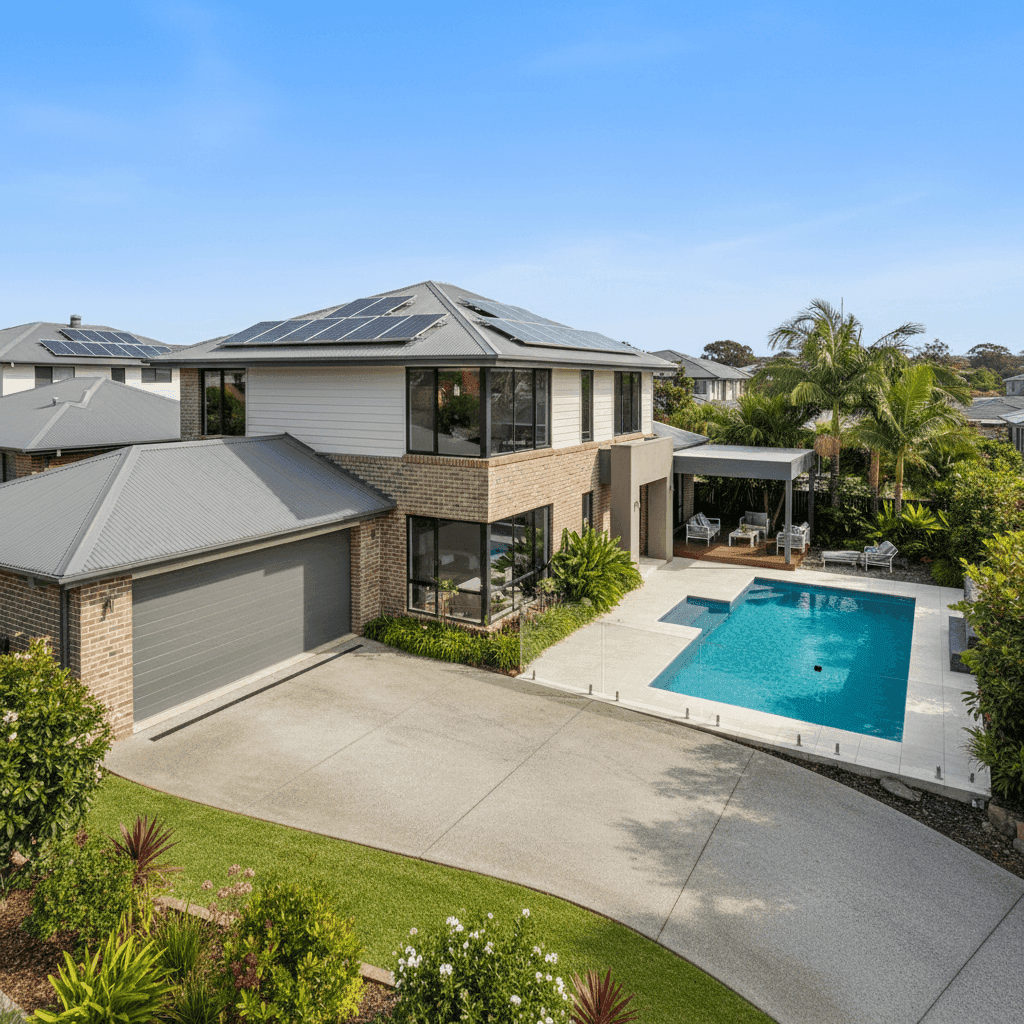
Lake Cathie is a relaxed coastal suburb on the Mid North Coast of New South Wales, sitting just south of Port Macquarie. With its lagoon frontage, beach access, and a strong mix of family homes, it's a highly sought-after place to live — and that desirability comes with real considerations when it comes to protecting your property. This article breaks down a real home and contents insurance quote for a five-bedroom free standing home in Lake Cathie (postcode 2445), examines whether the price is fair, and offers practical guidance for local homeowners.
---
Is This Quote Fair?
The annual premium for this property came in at $6,737 per year (or $639/month), covering a building sum insured of $1,401,000 and contents valued at $203,000. Both the building and contents excess are set at $5,000.
Our pricing analysis rates this quote as Expensive (Above Average) — and the data backs that up.
When compared to other quotes collected in Lake Cathie, this premium sits well above the local suburb average of $2,447/year and the suburb median of $2,393/year. Even at the 75th percentile — meaning 75% of Lake Cathie quotes are cheaper — the figure is only $2,939/year. This quote is more than double that benchmark.
That said, context matters. The building sum insured here is $1,401,000, which is substantially higher than what many standard homes in the area are insured for. A larger insured value naturally drives up the premium, as does the inclusion of above-average fittings, a swimming pool, solar panels, and ducted climate control. These features collectively represent a significantly higher replacement cost than a more modestly appointed property.
It's also worth noting that both excesses are set at $5,000 — a relatively high figure. Choosing a higher excess is a common strategy to reduce the annual premium, so the quoted price may already reflect some cost savings from that trade-off.
---
How Lake Cathie Compares
Understanding where this quote sits in the broader market helps put the figure in perspective.
| Benchmark | Premium |
|---|---|
| Lake Cathie suburb average | $2,447/yr |
| Lake Cathie suburb median | $2,393/yr |
| Port Macquarie-Hastings LGA average | $7,001/yr |
| NSW state average | $9,528/yr |
| NSW state median | $3,770/yr |
| National average | $5,347/yr |
| National median | $2,764/yr |
Interestingly, the quote of $6,737 is actually below the NSW state average of $9,528/year and also below the Port Macquarie-Hastings LGA average of $7,001/year. Viewed through that lens, the premium is more competitive than it might first appear — particularly for a large, well-appointed home with a high sum insured.
Compared to the national average of $5,347/year, this quote is moderately above average, but again, the property's size and features justify a portion of that gap. For NSW specifically, the state's average is inflated by high-risk properties and premium metropolitan areas, which means the Lake Cathie quote compares reasonably well at the state level.
The suburb-level figures are based on a sample of 46 quotes in Lake Cathie, which gives a reasonable — though not exhaustive — picture of the local market. Premiums in the same suburb can vary significantly depending on the insurer, the sum insured, and the specific features of each property.
---
Property Features That Affect Your Premium
Several characteristics of this property have a direct bearing on the insurance premium. Here's how each one plays a role:
Size and sum insured: At 277 sqm, this is a large home. The building sum insured of $1,401,000 reflects the cost to fully rebuild the property, including above-average fittings. Higher rebuild costs mean higher premiums — this is one of the biggest drivers in this quote.
Brick veneer construction: Brick veneer walls are generally viewed favourably by insurers. They offer solid fire resistance and structural durability, which can help moderate premiums compared to timber-framed or clad alternatives.
Colorbond steel roof: Steel roofing is durable, low-maintenance, and performs well in coastal and storm-prone environments. Insurers typically regard it as a lower-risk roofing material, which can work in the homeowner's favour at premium time.
Slab foundation and tile flooring: A concrete slab foundation is considered stable and resistant to subsidence. Combined with tile flooring — which is durable and resistant to water damage — these features present a lower-risk profile to underwriters.
Swimming pool: Pools add to the replacement value of a property and can introduce liability considerations. They are a contributing factor to a higher premium.
Solar panels: Solar systems are increasingly common but add to the insured value of the home. Damage to panels from storms or hail can be costly to repair or replace, and insurers factor this into their pricing.
Ducted climate control: Like solar panels, ducted air conditioning systems represent a significant asset. Their inclusion increases the overall replacement cost of the home, nudging the premium upward.
Above-average fittings: Kitchen and bathroom fittings of above-average quality — think stone benchtops, quality tapware, and premium cabinetry — cost more to replace and are reflected in a higher sum insured and, consequently, a higher premium.
No cyclone risk: Lake Cathie is not classified as a cyclone risk area, which is a meaningful factor in keeping premiums lower than they might be for comparable properties further north along the Queensland coast.
---
Tips for Homeowners in Lake Cathie
1. Make sure your sum insured is accurate — not just affordable It can be tempting to lower your building sum insured to reduce your premium, but underinsurance is a serious risk. With a large home and above-average fittings, the cost to rebuild could easily exceed expectations. Use a professional quantity surveyor or an online building calculator to verify your figure before adjusting it.
2. Review your excess strategy This quote carries a $5,000 excess on both building and contents. While a higher excess reduces your annual premium, it also means a larger out-of-pocket cost if you need to claim. Consider whether that trade-off suits your financial situation, particularly for a higher-value property.
3. Check what's covered for your pool and solar panels Not all policies treat pools and solar panels the same way. Some insurers cover solar panels as part of the building, while others require a separate endorsement. Similarly, pool equipment, fencing, and liability coverage can vary. Read the Product Disclosure Statement (PDS) carefully or ask your insurer directly.
4. Shop around — even if you're happy with your current insurer The Lake Cathie market shows meaningful variation in premiums. With 46 quotes in the sample, the range between the 25th percentile ($1,890/yr) and the 75th percentile ($2,939/yr) is substantial. Getting multiple quotes each year remains one of the most effective ways to ensure you're not overpaying — especially as your property's features and the insurance market both evolve.
---
Compare Your Home Insurance Today
Whether you're a long-term Lake Cathie local or you've recently made the move to the Mid North Coast, it pays to regularly review your home and contents cover. CoverClub makes it easy to compare quotes from multiple insurers in one place, so you can see exactly where your premium sits relative to the market.
Get a home insurance quote at CoverClub and find out if you're getting a fair deal — or if there's a better option waiting for you.