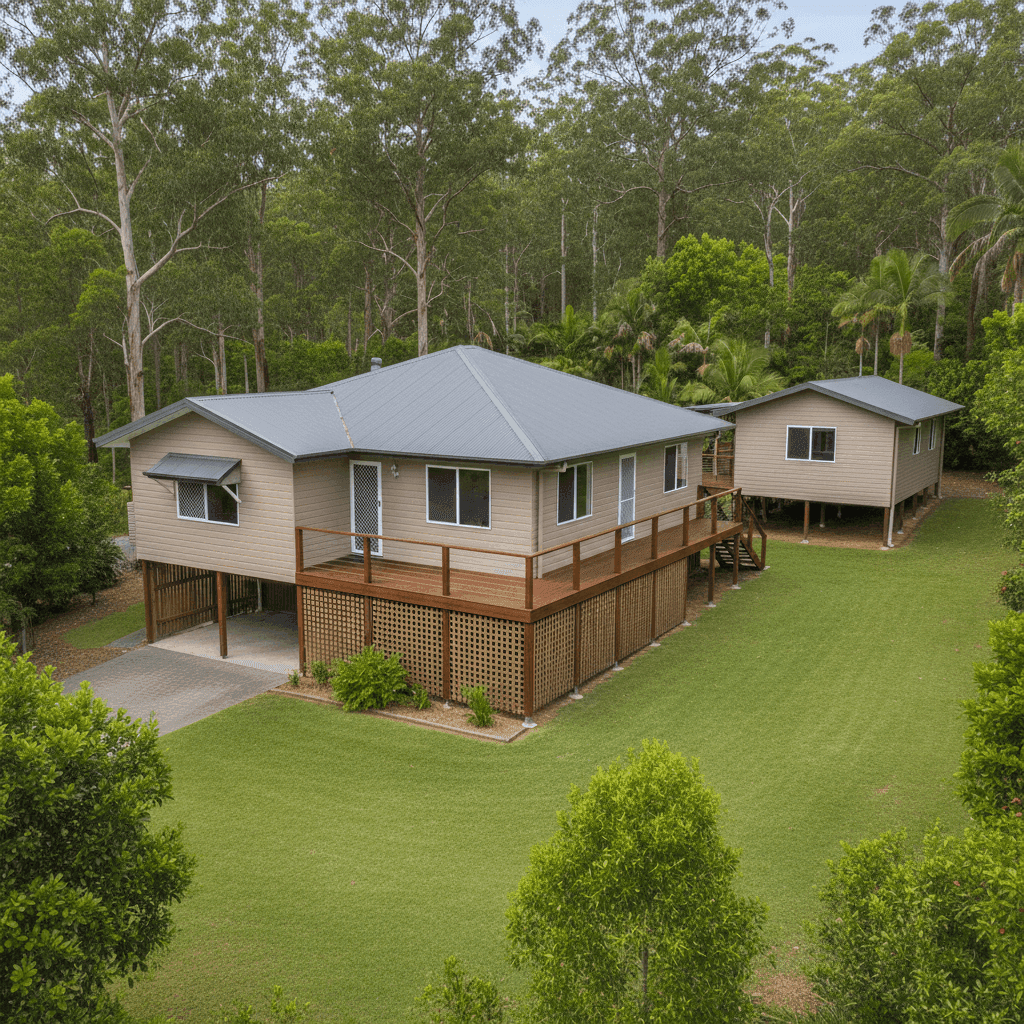
If you own a free standing home in Lake Macdonald, QLD 4563, you're living in one of the Sunshine Coast hinterland's most appealing pockets — lush, leafy, and close enough to Noosa to enjoy the best of both worlds. But like any Queensland property owner, making sure your home and contents are properly protected is a serious financial consideration. This article breaks down a real home insurance quote for a four-bedroom, two-bathroom property in the suburb, and puts the numbers into context so you can judge whether you're getting a fair deal.
---
Is This Quote Fair?
The quote we're analysing comes in at $2,619 per year (or $256 per month) for combined home and contents cover — with a building sum insured of $557,000 and contents valued at $40,000. The building excess sits at $2,000 and the contents excess at $1,000.
Our pricing engine rates this quote as CHEAP — Below Average, which is genuinely good news for the homeowner. To understand why, it helps to look at what other properties in the same suburb are paying.
The suburb average premium for Lake Macdonald sits at $4,233 per year, with a median of $3,850. That means this quote is roughly $1,614 cheaper than the local average — a saving of around 38%. Even compared to the 25th percentile (the cheapest quarter of quotes in the area), which sits at $3,319, this premium still comes in well below the pack.
In short: if you received a quote in this range for a Lake Macdonald property, you'd be doing very well.
---
How Lake Macdonald Compares
To give this quote even more context, let's stack it up against broader benchmarks.
| Comparison Point | Premium |
|---|---|
| This quote | $2,619/yr |
| Lake Macdonald suburb average | $4,233/yr |
| Lake Macdonald suburb median | $3,850/yr |
| Gympie LGA average | $4,135/yr |
| QLD state average | $4,547/yr |
| QLD state median | $3,931/yr |
| National average | $2,965/yr |
| National median | $2,716/yr |
A few things stand out here. First, Queensland premiums are notably higher than the national average — the state average of $4,547 is more than $1,500 above the national figure of $2,965. This reflects the elevated risk profile across much of Queensland, including flood exposure, storm damage, and in some areas, cyclone risk.
Lake Macdonald itself sits within the Gympie LGA, where the average premium of $4,135 is broadly in line with the broader Queensland picture. The suburb's own average of $4,233 suggests local risk factors — likely related to weather events and the hinterland's exposure to heavy rainfall — push premiums above the national norm.
The quote we're examining, at $2,619, even undercuts the national average, which is a strong result for a Queensland hinterland property. It's worth noting the suburb sample size is eight quotes, so the local data is indicative rather than exhaustive — but the trend is clear.
---
Property Features That Affect Your Premium
Several characteristics of this particular property likely contribute to its competitive premium. Let's unpack the key ones.
Elevated Foundation on Stumps
The home is elevated by at least one metre on stumps — a classic Queensland construction style. Elevation is a meaningful flood-risk mitigator. When floodwaters rise, a home on stumps has a much better chance of avoiding inundation than a slab-on-ground property. Insurers recognise this, and it can translate directly into lower premiums.
Hardiplank/Hardiflex Cladding
The external walls are constructed from Hardiplank Hardiflex, a fibre cement product well regarded for its durability and resistance to rot, termites, and fire. Compared to older timber weatherboard homes, this material is generally viewed more favourably by underwriters.
Steel/Colorbond Roof
A Colorbond steel roof is another tick in the right column. It's durable, low-maintenance, and performs well in high-wind and storm conditions — all relevant in southeast Queensland. Older roofing materials like terracotta or ageing concrete tiles tend to attract higher premiums.
Construction Year: 1998
At around 27 years old, this home is neither brand new nor ageing to the point where structural concerns become a factor. Properties built in the late 1990s generally benefited from improved building codes, particularly around cyclone and storm resistance, without the wear-and-tear issues that can affect much older homes.
Granny Flat
The property includes a granny flat, which adds to the overall insured value and complexity of the risk. It's important to ensure the granny flat is explicitly covered under the policy — some standard policies may require an endorsement or may limit cover for secondary dwellings.
No Pool, No Solar, No Cyclone Zone
The absence of a pool and solar panels simplifies the risk profile. The property is also outside a designated cyclone risk area, which is a significant factor — cyclone-rated cover in northern Queensland can add substantially to premiums.
---
Tips for Homeowners in Lake Macdonald
1. Review your building sum insured regularly. With a sum insured of $557,000, it's worth checking this figure reflects current rebuild costs — not just market value. Construction costs have risen sharply in recent years, and being underinsured can leave you significantly out of pocket after a major claim. Ask your insurer or a quantity surveyor to help you verify the figure.
2. Confirm your granny flat is covered. Secondary dwellings can sometimes fall into grey areas in standard home insurance policies. Read your Product Disclosure Statement carefully to confirm the granny flat is included, and ask your insurer directly if you're unsure.
3. Understand your flood and storm cover. Lake Macdonald is in a hinterland region that receives significant rainfall. Make sure your policy clearly covers both storm damage and flood — these are sometimes treated as separate events with different terms. Don't assume one covers the other.
4. Compare quotes before renewal. Even if your current premium seems reasonable, the insurance market shifts every year. Loyalty doesn't always pay — new customers often access better rates. Set a reminder to compare at least 30 days before your renewal date.
---
Ready to Compare?
Whether you're buying, renewing, or just curious about what you should be paying, comparing quotes is the single most effective way to make sure you're not overpaying. At CoverClub, we make it easy to see how your premium stacks up — and to find a better deal if one exists. Get a quote today and see what Lake Macdonald homeowners are really paying.