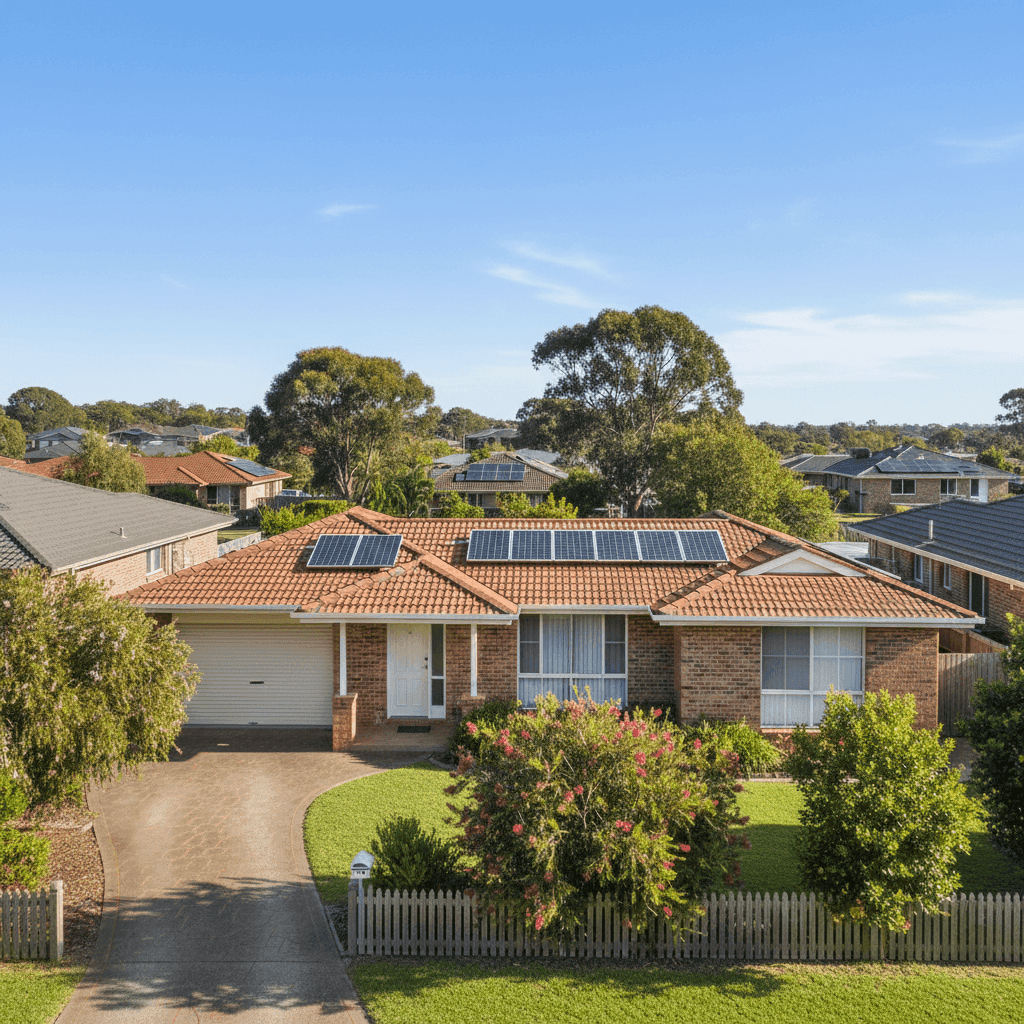
Lake Munmorah is a relaxed lakeside suburb on the NSW Central Coast, known for its proximity to Lake Macquarie and its mix of established family homes. If you own a free standing home in this area and you're wondering whether your home and contents insurance premium is reasonable, you're in the right place. This article breaks down a real quote for a 3-bedroom, 1-bathroom brick veneer home in Lake Munmorah (postcode 2259), compares it against local, state, and national benchmarks, and offers practical tips to help you get the best value cover.
---
Is This Quote Fair?
The annual premium for this property came in at $1,165 per year (or around $109 per month), covering both building (sum insured: $400,000) and contents ($50,000). Our pricing analysis rates this as CHEAP — below average for the area.
To put that in perspective, the suburb average premium in Lake Munmorah sits at $2,197 per year, and the median is even higher at $2,257. That means this quote is roughly 47% below the suburb average — a significant saving by any measure. Even compared to the 25th percentile of quotes in the area ($1,714/yr), this premium still comes in well under, placing it among the most competitively priced policies available for this type of property.
For homeowners on a budget, this is an encouraging result. That said, it's always worth scrutinising the excess levels — this policy carries a $2,000 building excess and a $1,000 contents excess, which are on the higher side and contribute to keeping the premium lower. Higher excesses mean more out-of-pocket costs if you do need to make a claim, so it's important to weigh up the trade-off between upfront savings and potential claim costs.
---
How Lake Munmorah Compares
Understanding how your suburb stacks up against broader benchmarks gives you a clearer picture of what's driving your premium. Here's how Lake Munmorah (NSW 2259) compares:
| Benchmark | Average Premium |
|---|---|
| Lake Munmorah (suburb avg) | $2,197/yr |
| Lake Munmorah (suburb median) | $2,257/yr |
| LGA – Cessnock | $2,585/yr |
| NSW State Average | $3,801/yr |
| NSW State Median | $3,410/yr |
| National Average | $2,965/yr |
| National Median | $2,716/yr |
A few things stand out here. Lake Munmorah's suburb average of $2,197 is notably lower than both the NSW state average ($3,801) and the national average ($2,965). This suggests that the Central Coast region — or at least this part of it — is considered a relatively moderate risk area by insurers compared to many other parts of New South Wales.
NSW as a whole carries some of the highest premiums in the country, largely driven by flood-prone regions, bushfire-exposed areas, and densely populated metropolitan zones. Lake Munmorah's coastal but sheltered position, combined with its established housing stock, appears to work in homeowners' favour when it comes to pricing.
It's also worth noting that the Cessnock LGA average ($2,585) sits above the suburb average, suggesting that Lake Munmorah itself is priced more favourably within the broader local government area.
---
Property Features That Affect Your Premium
Every property is different, and insurers weigh up a range of physical characteristics when calculating your premium. Here's how the features of this particular home are likely influencing its cost:
- Brick Veneer Walls: Brick veneer is one of the most common external wall types in Australian suburban homes, and insurers generally view it favourably. It offers solid fire resistance and structural durability, which can help moderate premiums compared to timber-clad or weatherboard homes.
- Tiled Roof: Terracotta or concrete tile roofs are considered a low-to-moderate risk by most insurers. They're durable, fire-resistant, and less susceptible to storm damage than some alternatives, all of which can positively influence your premium.
- Stump Foundation: Homes built on stumps — particularly those constructed around 1990 — can present a slightly different risk profile compared to slab-on-ground homes. Stumped foundations allow for underfloor access and ventilation, but may require periodic maintenance. Insurers may factor this in, though it's rarely a major premium driver.
- Tile Flooring: Hard flooring like tiles is generally seen as lower risk than carpet in terms of water damage claims, which can be a minor positive factor in premium calculations.
- Solar Panels: This property has solar panels installed, which adds value to the building sum insured. It's important to ensure your building cover adequately accounts for the replacement cost of solar infrastructure — panels, inverters, and associated wiring — as these can be expensive to replace after storm or hail damage.
- Construction Year (1990): Homes built in 1990 are now over three decades old. While well-maintained properties of this era are generally insurable without issue, older homes can attract slightly higher premiums if insurers perceive a greater likelihood of wear-related claims (e.g., ageing plumbing or electrical systems).
- Standard Fittings: With standard-quality fittings throughout, the rebuild cost is more predictable and typically lower than homes with high-end finishes, helping to keep the sum insured — and therefore the premium — more manageable.
---
Tips for Homeowners in Lake Munmorah
Whether you're renewing your policy or shopping around for the first time, here are some practical steps to make sure you're getting the right cover at the right price:
- Review your sum insured regularly. Building costs have risen sharply in recent years due to labour and material price increases. A sum insured of $400,000 for a 130 sqm home may be adequate today, but it's worth using a building cost calculator annually to ensure you're not underinsured. Underinsurance is one of the most common — and costly — mistakes homeowners make.
- Factor in your solar panels. Make sure your policy explicitly covers your solar panel system under building insurance. Some policies include it automatically; others require it to be listed separately. Given the cost of replacing a solar system, this is worth confirming with your insurer.
- Compare your excess options. This policy has a $2,000 building excess and $1,000 contents excess. If you have the financial buffer to cover a higher excess in the event of a claim, keeping it elevated is a legitimate way to reduce your premium. However, if a $2,000 out-of-pocket cost would cause financial stress, it may be worth paying slightly more in premium to bring the excess down.
- Shop around at renewal time. Insurers often reserve their best pricing for new customers. If you've been with the same insurer for several years without comparing, there's a good chance you could find a more competitive rate. Use a comparison platform like CoverClub to see multiple quotes side by side before your renewal date.
---
Compare Your Own Quote
Curious how your home insurance stacks up? CoverClub makes it easy to compare home and contents insurance quotes from multiple insurers in one place. Whether you're in Lake Munmorah or anywhere else in Australia, you can get a clearer picture of what you should be paying — and find out if you're overpaying. Get a free quote comparison at CoverClub today.