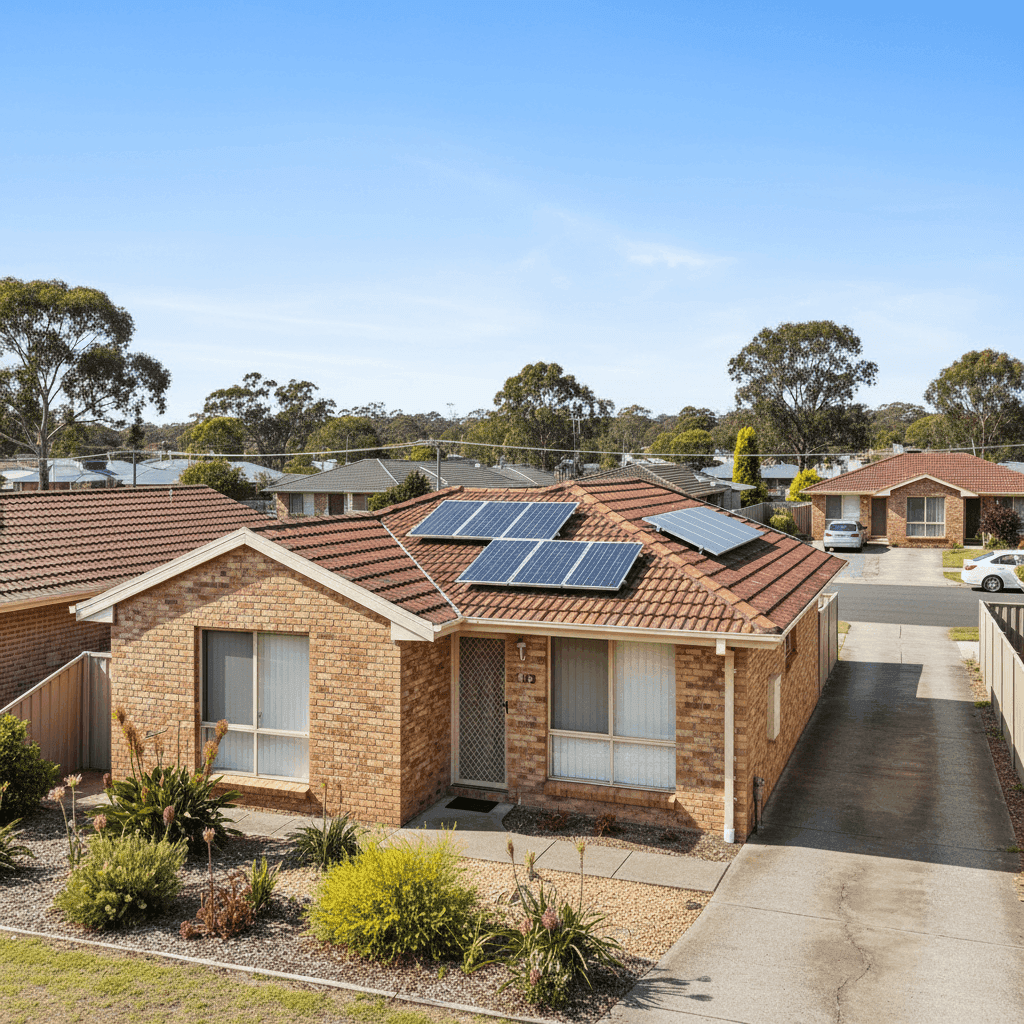
If you own a semi detached home in Lake Munmorah, NSW 2259, you might be wondering whether you're getting a fair deal on your home insurance. This Central Coast suburb sits within the Lake Macquarie region and is home to a mix of established brick homes, many built during the 1980s and 1990s. To help you benchmark your own policy, we've analysed a real home and contents insurance quote for a three-bedroom semi detached in the area — and the results are worth a look.
---
Is This Quote Fair?
The quote in question comes in at $1,557 per year (or around $150 per month), covering a building sum insured of $358,000 and $50,000 in contents, with a $2,000 excess on both building and contents claims.
Our price rating for this quote is CHEAP — below average for the suburb. That's genuinely good news for the homeowner. Based on 18 quotes collected for Lake Munmorah (postcode 2259), the suburb average sits at $2,197 per year and the median at $2,257 per year. Even the 25th percentile — meaning only 25% of quotes came in cheaper — is $1,714 per year. At $1,557, this quote is well below that threshold, placing it firmly in the most competitive tier of pricing for the area.
In practical terms, this homeowner is saving roughly $640 per year compared to the suburb average. Over a five-year period, that's more than $3,200 in potential savings — money that could go toward home improvements, an emergency fund, or simply reducing everyday cost-of-living pressures.
---
How Lake Munmorah Compares
To put this quote in broader context, it helps to zoom out and look at how Lake Munmorah stacks up against the rest of New South Wales and the country as a whole.
| Benchmark | Annual Premium |
|---|---|
| This Quote | $1,557 |
| Lake Munmorah Suburb Average | $2,197 |
| Lake Munmorah Suburb Median | $2,257 |
| Cessnock LGA Average | $2,585 |
| NSW State Average | $3,801 |
| NSW State Median | $3,410 |
| National Average | $2,965 |
| National Median | $2,716 |
A few things stand out here. First, Lake Munmorah is actually a relatively affordable suburb to insure compared to both the NSW average and the national average. The suburb average of $2,197 is well below the NSW state average of $3,801 — a difference of over $1,600 per year. This is likely driven by the area's low natural hazard exposure (no cyclone risk, no significant flood or bushfire overlay for most properties) and the prevalence of sturdy brick construction throughout the suburb.
Second, the Cessnock LGA average of $2,585 is notably higher than the Lake Munmorah suburb average, suggesting that pricing varies meaningfully even within the same local government area. Coastal and lakeside suburbs like Lake Munmorah may benefit from different risk profiles compared to inland parts of the LGA.
For a deeper dive into local pricing trends, visit the Lake Munmorah suburb stats page.
---
Property Features That Affect Your Premium
Several characteristics of this particular property are likely contributing to its competitive premium. Here's how each feature plays a role:
Brick Veneer Walls
Brick veneer is one of the most common and well-regarded external wall types in Australian residential construction. Insurers generally view it favourably because it offers solid fire resistance and structural durability. Compared to timber weatherboard or fibre cement cladding, brick veneer tends to attract lower premiums.
Tiled Roof
A concrete or terracotta tile roof is considered a low-risk roofing material by most insurers. Tiles are durable, fire-resistant, and less susceptible to storm damage than corrugated iron or Colorbond in many scenarios — though they can crack under hail impact. Overall, a tiled roof is a neutral-to-positive factor for pricing.
Slab Foundation
A concrete slab foundation is standard for homes of this era and is generally seen as a stable, low-maintenance base. It doesn't carry the same risk profile as older stumped or pier-and-beam foundations, which can be prone to subsidence or termite damage.
Construction Year: 1987
Homes built in the late 1980s are well past the era of asbestos-heavy construction but predate some of the more modern energy efficiency and structural standards. They're generally considered mid-range in terms of risk — older than a brand-new build but not so old as to attract significant age-related loading.
Solar Panels
This property has solar panels installed, which is worth noting. Solar panels can add complexity to a home insurance claim — particularly in the event of storm, hail, or fire damage. Some insurers include panels under building cover automatically, while others require them to be specifically listed. It's worth confirming with your insurer that your solar system is fully covered under your building sum insured of $358,000.
Timber and Laminate Flooring
Flooring type can influence contents and building claims, particularly in the event of water damage. Timber and laminate floors can be costly to replace or repair, and homeowners should ensure their sum insured accounts for this — especially if the flooring is throughout the home.
---
Tips for Homeowners in Lake Munmorah
1. Review your building sum insured regularly With construction costs rising across Australia, the cost to rebuild a home has increased significantly in recent years. A sum insured of $358,000 for a 130 sqm semi detached may be appropriate today, but it's worth recalculating every year or two using a building cost estimator to make sure you're not underinsured.
2. Confirm your solar panels are covered As mentioned above, solar panels are a common gap in home insurance coverage. Check your Product Disclosure Statement (PDS) to confirm whether your panels are included under building cover, and whether there are any exclusions for panel-specific damage such as hail or electrical fault.
3. Don't set and forget — compare at renewal Even if your current premium is below the suburb average, insurers adjust their pricing annually. A policy that's competitively priced this year may not be next year. Set a reminder to compare quotes before your renewal date to ensure you're still getting good value.
4. Consider whether your contents sum insured is sufficient A contents value of $50,000 is on the lower end for a three-bedroom home. Take some time to walk through your home and estimate the replacement cost of your furniture, appliances, clothing, electronics, and other belongings. Many Australians are underinsured on contents without realising it.
---
Ready to Compare?
Whether you're a homeowner in Lake Munmorah or anywhere else in Australia, comparing home insurance quotes is one of the easiest ways to make sure you're not overpaying. At CoverClub, we make it simple to see how your current premium stacks up — and to find a better deal if one exists. Get a quote today and see what you could be saving.